Cómo puede ayudarte nuestro plugin de seguimiento del tiempo de Jira

Las aplicaciones de Marketplace, como ActivityTimeline, ofrecen información más detallada sobre la productividad del equipo.

Boost productivity
Aumenta la productividad
¿Tu equipo se siente frustrado al registrar el trabajo? Deja que se concentre en las tareas, no en los procesos. Supervisa fácilmente el tiempo dedicado a las actividades, registra el tiempo de forma eficiente, comprueba en qué empleas tu tiempo y mejora tu dominio de la gestión de proyectos.
Track Billable vs Non-Billable
Registra horas facturables vs. no facturables
Cuando necesites distinguir fácilmente las horas facturables de las no facturables, calcular las inversiones de tiempo de CapEx y OpEx y generar facturas de clientes sin esfuerzo, nosotros nos encargamos. Mantén los proyectos al día y dentro de los plazos.
Simplify timesheet reporting
Simplifica la creación de informes de hojas de tiempo
Ahorra tiempo con nuestros paneles de hojas de tiempo personalizados y genera informes de seguimiento del tiempo a medida y fáciles de entender. Con un excelente plugin de hojas de tiempo para Jira, puedes mostrar el rendimiento de tu equipo con solo unos clics. El plugin elimina la introducción manual, lo que reduce los errores y aumenta la eficiencia de tu equipo.

Donde la precisión se une a la simplicidad

Empieza por registrar el tiempo con el plugin Activity Timeline

Step 1
Paso

Registra el tiempo

Un registrador de tiempo automático permite a los usuarios centrarse en sus tareas sin preocuparse de registrar cuándo empiezan a trabajar en ellas. Registra el trabajo haciendo clic en el botón «Registrar trabajo» de una incidencia y obtén una visión clara de cómo se asigna el tiempo a las distintas tareas y proyectos. Crea registros de trabajo y supervisa el progreso de forma eficiente.

Track the time
Step 2
Paso

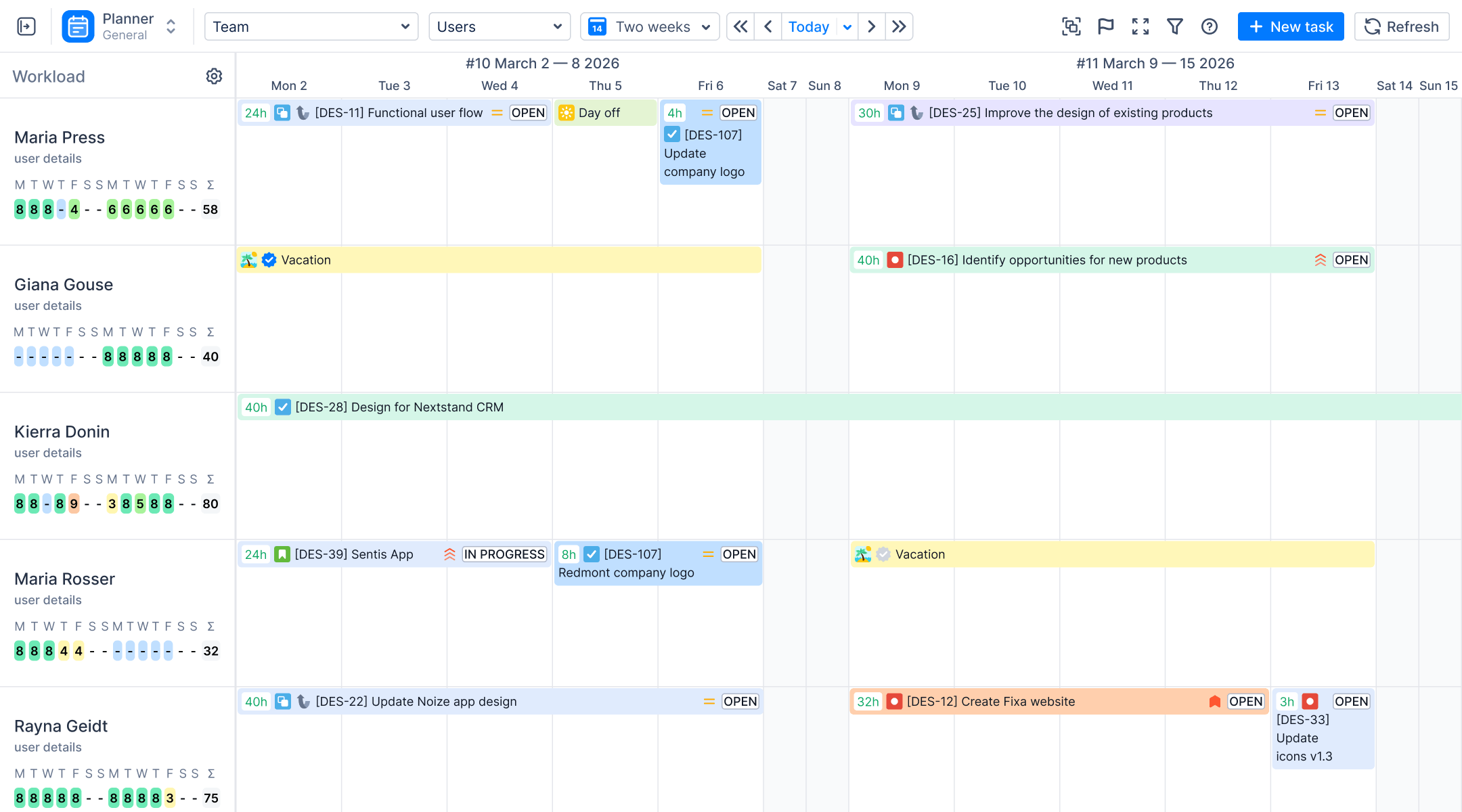
Controla la carga de trabajo personal

Revoluciona la forma en que haces el seguimiento del progreso de los empleados con nuestros gráficos de registro de trabajo especializados, que proporcionan una visualización intuitiva del trabajo basada en las horas requeridas y registradas. Con ActivityTimeline, los usuarios disfrutan de la ventaja de contar con un Panel de Planificación Personal, que garantiza que ninguna tarea pase desapercibida. También pueden ver, editar y descargar todas las tareas de Jira con los detalles del registro de trabajo.

Control personal workload
Step 3
Paso

Factura a los clientes por el tiempo trabajado

Los usuarios pueden elegir qué horas son facturables y cuáles no, así como diferenciar entre diferentes categorías de trabajo, como CapEx y OpEx, etc., para adaptarse con precisión a las necesidades y proyectos únicos de su organización.

Bill clients for the time
Step 4
Paso

Obtén informes detallados

Genera informes sencillos para revisar tus horas registradas y el progreso del proyecto. Obtén flujos de trabajo de aprobación personalizados para hojas de tiempo individuales y un seguimiento fluido de las tareas que no son de Jira. Agrupa los informes por diversas categorías: proyecto, epic y campos personalizados, para que sepas en qué se está empleando el tiempo.

Get simple reports

Olvídate de los informes manuales en Excel

Clasifica el tiempo con atributos personalizados para obtener más información directamente en la aplicación.

Cómo elegir las herramientas de seguimiento del tiempo adecuadas para Jira

Con más de 290 aplicaciones de seguimiento del tiempo disponibles en Atlassian Marketplace, la elección correcta puede marcar la diferencia. ActivityTimeline puede ayudarte a:

Allocate resources
Asignar recursos
Track billable hours
Registra las horas facturables
Manage logged time
Administrar el tiempo registrado
Analyze past entries
Analiza las entradas pasadas
Generate time reports
Generar informes de tiempo
Compare actual vs. original estimate
Compara la estimación real con la original
Oversee Project Management Tasks
Supervisa las tareas de gestión de proyectos
Get a lightweight and adaptable solution
Obtén una solución ligera y adaptable

Frequently Asked Questions

What are all the ways employees can log time in ActivityTimeline?
Employees can log time via six different methods, including a quick "Log Work" dialog from the timeline, a real-time tracking stopwatch, or by dragging and resizing worklogs. They can also use daily bar chart shortcuts, input hours via an inline table, or log directly from native Jira issue pages.
Can managers log time on behalf of other team members?
Yes, privileged users can log time for managed individuals by using the User Selector in the Workspace module. This feature must be enabled in the configuration settings, and if Tempo is integrated, the corresponding Jira project permissions must also be granted.
Can I log time for activities that don't have a Jira ticket?
Yes, you can create non-Jira Booking events for internal work or meetings and configure the system to treat them as active worklogs in timesheets. You can also define custom booking types as billable or non-billable, or import external calendar events from Google or Outlook to serve as worklogs.
Is there a time limit on how far back employees can log work?
While unrestricted by default, admins can enforce a Past Worklog Limit to restrict historical backdating. Additionally, organizations can close weekly or monthly reporting periods to block any unauthorized retroactive additions or modifications once a grace period expires.
How does billable vs. non-billable tracking work?
Every worklog is assigned a category, such as Billable or Non-Billable, which users select from a dropdown when submitting hours. Admins can create up to 100 custom categories for finance workflows or set a default category per Jira project to automate the routing.
Can I add custom attributes to worklogs beyond just the category?
Yes, Worklog Attributes allow you to append extra metadata like Cost Center or Client Name to entries as required, optional, or hidden fields. These attributes act as grouping filters in Detailed Timesheets and can be imported directly from third-party tools like Tempo.
How do I mark time logged via Jira's native time tracking as non-billable?
When ActivityTimeline can be a time tracking provider in Jira, you only need to enable it and then select the category right within Jira’s UI.
What's the difference between the three timesheet views?
Progress Timesheets evaluate logged hours against a user's capacity to check completion percentages, while Timeline Timesheets offer a color-coded grid to spot team-wide logging trends. Detailed Timesheets itemize every worklog entry with comments and approval statuses, making them perfect for audits and client billing.
How does the timesheet approval workflow work?
This optional workflow assigns statuses to worklogs based on whether they are open, closed, or manager-approved. Admins and Team Leads can review entries individually or use Bulk Approve to process a team's entire period at once, locking approved items from further edits.
Can I enforce reporting periods and prevent employees from backdating entries?
Yes, the Time Tracking Period Closure feature lets you lock weekly or monthly intervals to prevent users from adding or editing worklogs. A flexible grace period can be established for late entries, working alongside a flat past worklog restriction for comprehensive control.
How do I stop employees from logging more hours than their daily capacity?
By enabling the maximum allowed worklog restriction, the system will block users from exceeding their defined daily capacity. Managers can bypass this cap when needed by creating an Overtime event type on a specific user's timeline.
How does the Planned vs. Actual report help with estimation accuracy?
This report measures initial task estimates against hours logged plus remaining work to label items as On Track, Underestimated, or Overestimated. It utilizes an acceptable deviation percentage to handle expected variations across issues, epics, or projects.
Can I group timesheet reports by custom Jira fields like client or cost center?
Yes, both Timeline and Detailed views allow you to group worklog metrics by any active Jira custom field, such as Client or Cost Center. These custom grouping views can be saved as shared dashboards for quick future access.
How does ActivityTimeline work with Tempo Timesheets?
On Jira Cloud, ActivityTimeline syncs with Tempo via an API token to automatically import worklogs, teams, attributes, and holiday schemes. On Jira Server or Data Center, all worklogs submitted via Tempo sync natively without additional configuration.
Can meeting time from Google Calendar or Outlook count as logged work?
Yes, connected external calendars will push events to the timeline, which can be configured to automatically count as logged worklogs. Alternatively, users can choose to manually map individual calendar events to specific Jira issues on a case-by-case basis.
Empieza gratis ahora. Es el momento de poner a tu equipo en el buen camino.
Comienza tu prueba gratuita de 30 días. No se requiere tarjeta de crédito.
Planer | ActivityTimeline