Learn how PM and teams use ActivityTimeline for

Full overview
Full overview
Does the absence of visualization leave you in the dark about the project's progress? Get a timeline-based overview of workloads across teams and stakeholders to advance your timeline planning in Jira.
Collaboration
Collaboration
ActivityTimeline makes the process more fun and visually appealing which encourages team members to be involved in the project.
Planning
Planning
Pinpoint bottlenecks and focus on areas where productivity can be improved. Dashboard provides a calendar timeline view, so you can manage long-term projects, and plan future project milestones.

Where accuracy meets simplicity

Discover how to use ActivityTimeline for creating a timeline in Jira

Step 1
Step

Begin with a detailed scope

Before you know how to create a project timeline in Jira, make sure you've nailed down the project's goals and all the requirements. Doing this helps generate User/Team Timelines and a full list of tasks linked to your Jira projects. The best part? Any changes you make in ActivityTimeline or Jira instantly sync up, keeping your Jira project's timeline and all your data consistent and up-to-date.

Begin with a detailed scope
Step 2
Step

Take all advantages of the Timeline planner

The dashboard operates on a straightforward drag-and-drop concept. Assign or split tasks to team members directly from the ActivityTimeline. As well as add internal custom events such as vacations, days off, sick leaves, and more, which are not present in the default Jira timeline view.

Take all advantages of the Timeline
Step 3
Step

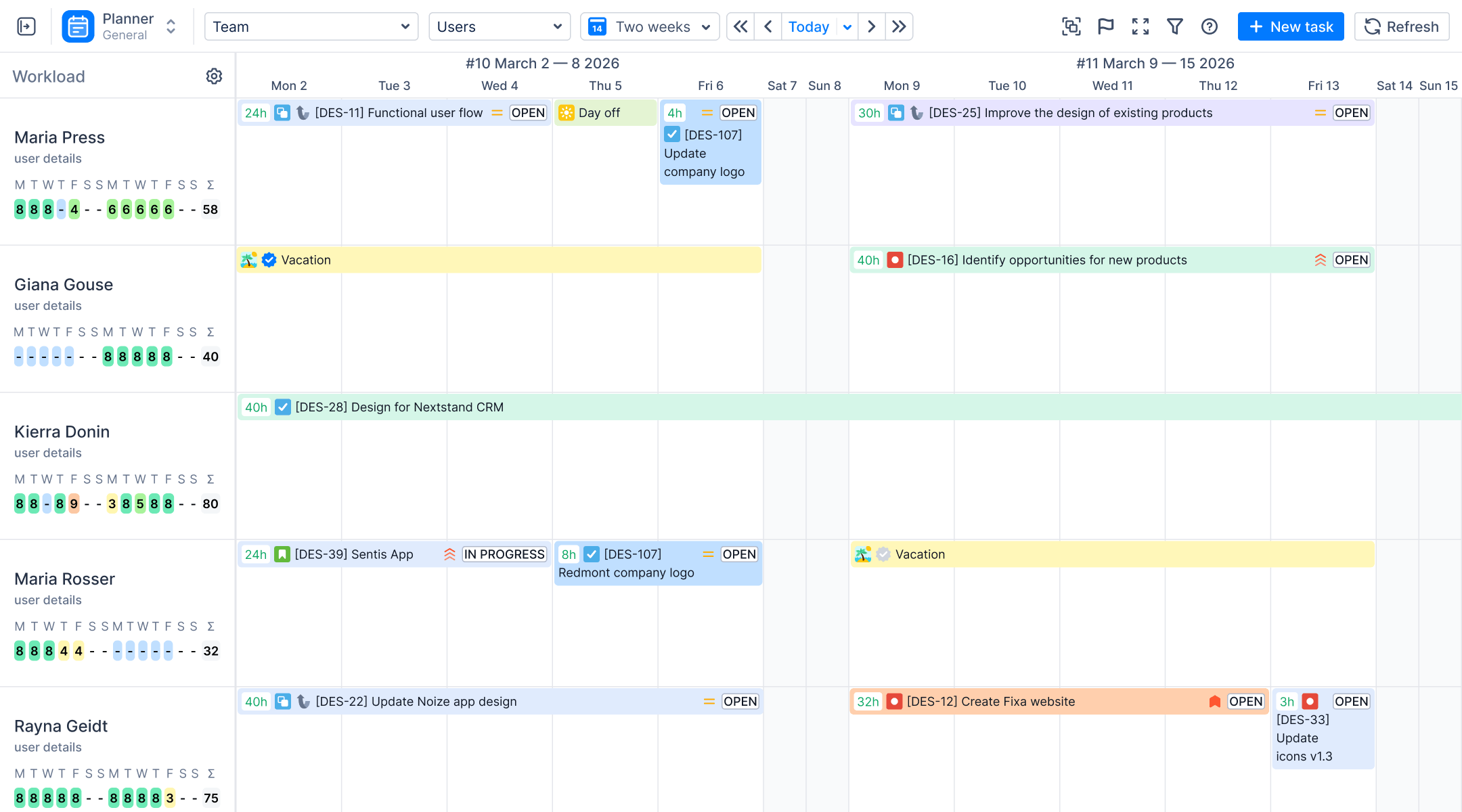
Monitor workload on Team timeline

This solution streamlines long-term planning, pick the timeframes that suit you, whether it's in weeks, months, or quarters. Also, keep an eye on the Team Panel to see how much work each team has, ensuring everyone's workload stays balanced and things run smoothly.

Monitor workload on Team timeline
Step 4
Step

Monitor workload on Individual timeline

Personal workspace view for each employee helps to gain a clear overview of their tasks, projects, and personal calendar. The visualization charts also depict workload and availability status for the chosen timeframe.

Monitor workload on Individual timeline
Step 5
Step

Review progress regularly

The app makes it simple to keep track progress of multiple projects using Special Filters features. With timesheet timelines, you can easily keep tabs on how much time you spend on specific tasks and projects.

Review progress regularly

Connect your tools, connect your teams

Discover your team's everyday favorites with one-click integration

What Sets Us Apart?

Workload Indicator
Each user gets color-coded indicators — yellow for lighter work loads, red for heavy workloads, and green for balanced tasks. These indicators auto-update when tasks are scheduled and completed, ensuring everyone's workload is easily managed!
Internal Custom Events
Unlock ActivityTimeline's Custom Event: from Vacations and Days-off to Sick Leaves, Bookings, and Placeholders — plan easily. These tailored events are a game-changer, helpful for managing holidays and planning workloads effectively.
Time Tracking
Save valuable time by logging work hours directly from the dashboard! Enjoy substantial time-saving advantages and plan work out with this streamlined process. Teams can visualize how long tasks take to complete, track the status of each project timeline, and view detailed summaries for individual and team-managed projects.
Multiple Assignees for a Single Task
Seamlessly split tasks among assignees by simply holding the 'Shift' button. The drag-and-drop feature allows you to quickly assign, rearrange, or adjust tasks directly within the timeline view. The intuitive interface allows team members to set priorities, add or adjust start and end dates, and manage dependencies effortlessly.
Begin with a detailed scope
Timesheets provide a complete summary of each team member’s contribution and allow you to view end-to-end task timelines for the entire project or specific groups. All timesheet data can be exported in Excel, making it easy to present or analyze time allocation, task durations, and project dependencies.
Customizable View Options | ActivityTimeline
Quickly organize and adjust timelines, while grouping options allow you to categorize tasks by teams, project status, or duration. Choose how to display tasks, milestones, and other key data points. Whether you're interested in a high-level overview or a detailed view of each task’s timing and dependencies, ActivityTimeline adapts to your needs.  
Milestones Panel | ActivityTimeline
Plan long-term roadmaps and visualize major milestones to track progress over weeks, months, or even quarters! Visualizing key dates and major project goals gives stakeholders a comprehensive view of project progress, helping with forecasting, strategic planning, and milestone tracking.

Frequently Asked Questions

What does ActivityTimeline add that Jira's built-in timeline doesn't have?
ActivityTimeline provides a resource-centric view where rows represent people or teams rather than just issues. It lets you view tasks from all projects simultaneously, maps schedules against actual working hours, and allows drag-and-drop reassignment.
Are there differences between Cloud and Data Center feature sets?
The core functionality, including drag-and-drop planning and cross-project views, is identical across both versions. However, the Cloud version includes exclusive features like Google Calendar integration and automatic Dark theme switching.
How does drag-and-drop scheduling work and what does it change in Jira?
Dragging an issue onto a person's timeline assigns it to them and immediately updates its Start and End dates in Jira. You can resize or move the task bar to adjust the schedule, with all changes syncing back to Jira instantly.
What happens to scheduled tasks when someone takes a vacation?
ActivityTimeline automatically accounts for time-off, reflecting zero available capacity for those days. Scheduled tasks aren't auto-rescheduled; instead, they appear as overloads, letting you manually adjust them or use the Bulk Reschedule tool.
How does bulk rescheduling work when a project deadline slips?
The Bulk Reschedule wizard allows you to shift multiple tasks forward by a specific number of days or weeks simultaneously. You can preview changes to dates and workloads before applying them, updating all corresponding Jira fields in one operation.
What's the difference between Users, Teams, and Team with Users views?
Users view shows individual timelines for daily task allocation, while Teams view aggregates capacity for high-level portfolio planning. The Team with Users view combines both, showing a team aggregate row alongside individual member timelines for comprehensive planning.
Can I see issues grouped by epic, project, or status rather than by person?
Yes, the Aggregated View replaces individual issue bars with summary blocks grouped by Project, Epic, or Issue Status. This provides a high-level visual audit of time allocation on each person's timeline without focusing on specific issue details.
How can I create non-Jira tasks or tentative placeholders on the timeline?
You can use Bookings to reserve hours for non-Jira activities or Placeholders for tentative planning before creating actual tickets. Once ready, a single click converts a placeholder into a real Jira issue, automatically setting its dates and assignee.
How do Jira sprint dates show up on the timeline?
The Milestones Panel displays full-duration sprint bars above the resource rows, allowing you to view all issues within a sprint. Additionally, issues assigned to active or planned sprints automatically appear on team members' timelines matching the sprint's dates.
Can I track release versions and project milestones alongside resources?
Yes, the Milestones Panel tracks Jira Fix Versions as color-coded flags or diamonds pinned to release dates. You can also create Custom Milestones that aren't tied to Jira data to serve as visual warnings for upcoming deadlines.
How do I filter the timeline to show only what's relevant to me?
You can use the Issue Panel filters to narrow down the backlog and push these same filters to the timeline panel. Alternatively, use the top toolbar's Timeline Filter for quick project and issue type filtering, and save these configurations as Dashboards to share with others.
Can I see cross-project issue dependencies or blocked tasks?
When the "Track blocked issues" setting is enabled, ActivityTimeline highlights schedule conflicts based on standard Jira link types. An exclamation mark icon will appear on the timeline if a blocked issue is scheduled to start before its blocker finishes.
Does ActivityTimeline integrate with Jira Advanced Roadmaps (Jira Plans)?
Yes, ActivityTimeline reads Start/Due dates from Advanced Roadmaps to render issues on the resource timeline. This allows it to serve as the execution and resource allocation layer for your high-level plans.
Can I export my resource timeline schedule to external calendars?
You can export individual or team schedules to Google Calendar, Outlook, or Apple iCal as live, auto-updating feeds. This is especially useful for sharing real-time schedules with stakeholders who do not have access to Jira.
Collaborate your way to a successful project planning process for free
Start your 30-day free trial. No credit card required.
Planer | ActivityTimeline