
Atlassian Team '26 in Anaheim is officially wrapped — and for our ActivityTimeline team, it was one of the most intense, insightful, and energizing weeks of the year.
From unconference discussions to Partner Accelerate sessions, hallway conversations, and nonstop booth activity, the event felt less like a conference and more like a living ecosystem of teams trying to solve real work problems together.
Here's our recap.
Kicking off at The Harley Club Unconference
Everything started outside the main conference floor at The Harley Club Unconference.
It set the tone immediately — no polished slides, no theory-heavy talks, just honest conversations about updates and challenges in the Atlassian Ecosystem.
For us at ActivityTimeline, this was the most grounded way to begin the week. We saw firsthand how teams think about planning, capacity, and time tracking when there's no "marketing layer" involved — just real operational pressure.
Where context matters
As a proud sponsor of Build IT Together, we dove headfirst into the challenges teams actually face. No theory. No fluff. Real Jira problems, real solutions, real conversations
In between sessions, we soaked up every moment at Atlassian Partner Accelerate: braindates, keynotes, and the kind of hallway conversations that only happen when the right people are in the same room.
Between all these sessions, one theme was consistent:
Teams are struggling less with tools — and more with alignment, visibility, and planning under uncertainty.
These conversations reinforced why structured time and capacity visibility remains a critical gap in Jira environments, especially for scaling teams.
And just as valuable as the sessions were the in-between moments — hallway conversations where the most honest insights usually emerge.
Atlassian Team '26 main conference: energy at scale

Once the main conference began, everything accelerated.
The Atlassian expo floor, partner pavilion, and session tracks created a constant flow of customer meetings at our booth, product conversations and demos, Atlassian Community Champion activities, and spontaneous discussions with partners and users.
Every day followed the same rhythm: meetings → demos → hallway chats → coffee → more meetings → repeat.
And honestly, that's where most of the value came from.
Our booth: where conversations turned real
Having a booth at Team '26 was one of the most meaningful parts of the event for our team.
It wasn't just about showcasing ActivityTimeline — it was about creating a space where people could pause and talk openly about their actual challenges.
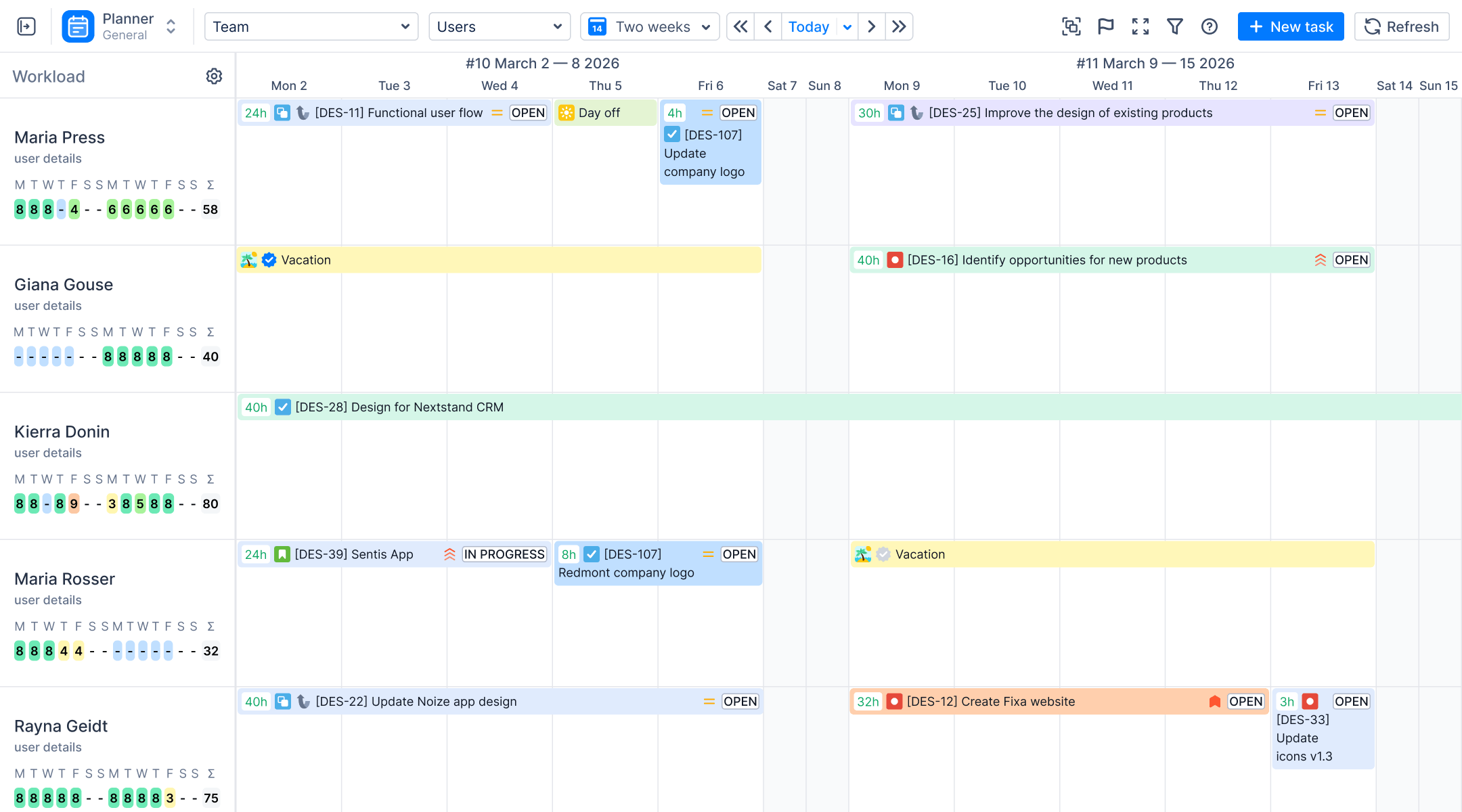
We had conversations with teams struggling with capacity planning across multiple Jira projects, managers trying to understand real workload vs. planned workload, and organizations looking for better visibility into team performance and delivery risk.

What stood out most was how often the same problem appeared in different forms: teams are still planning based on assumptions, not real capacity data.
The bigger signal: AI everywhere, context still missing
Across keynotes, partner sessions, and vendor conversations, one thing was impossible to miss: AI is now fully embedded into Atlassian's direction.
The headline announcement from the main stage was Atlassian opening its Teamwork Graph — their map of connections between people, projects, documents, and decisions — to third-party agents and tools. With over 150 billion connections and 12 billion changes happening inside it every day, the Graph is now accessible via a new CLI and an MCP server, meaning tools like Claude Code, Cursor, and other AI agents can query your organizational context directly. Atlassian CEO Mike Cannon-Brookes put it plainly:
"The real moat is your institutional memory: every plan, document, and decision your teams have ever made."
Rovo also made a significant leap at this event — moving from assistive AI to autonomous agents. Agents in Jira reached general availability, meaning teams can now assign work items directly to Rovo agents the same way they'd assign a human, with full audit logging behind every action. Agentic automations across Atlassian's customer base have grown 7x in just the last six months, and Rovo is now used by over 90% of Atlassian's enterprise cloud customers. A new Max mode (coming soon) will let users hand off complex, multi-step tasks from Rovo Chat, where Rovo builds an action plan and executes it autonomously across connected tools.
But underneath the AI narrative, a more practical challenge kept surfacing in our conversations: AI is only as useful as the quality of context it has access to.
One community retrospective from the event put it well:
"A Teamwork Graph built on stale documentation, inconsistent Jira usage, and disconnected workflows doesn't suddenly become intelligent because AI can now query it. If anything, AI-native workflows raise the importance of operational discipline."
That resonated with us. The teams doing well with AI aren't the ones with the most advanced tools — they're the ones with the most trustworthy underlying data.
And that's where conversations naturally shifted back to structured data, time tracking, and real execution visibility — the foundations that make AI actually useful in team planning.
What we're taking away from Team '26
For our team, Team '26 was about validation of what we see every day:
- Teams want clarity, not more dashboards
- Planning needs to reflect reality, not assumptions
- Capacity and time data are still the missing layer in many Jira setups
- Conversations beat presentations when it comes to real insight
And there's a new urgency here. As Atlassian pushes AI agents deeper into Jira workflows, the quality of your work data matters more than ever. Agents in Jira will only make good decisions if the underlying project and resource data is accurate — which is exactly the problem ActivityTimeline is built to solve. The more AI takes on execution, the more important it becomes to have clean, structured visibility into who's doing what, and when.

Most importantly, we saw how valuable it is to sit directly with users and partners — not just to present solutions, but to understand how work actually happens.
Final thoughts
Team '26 in Anaheim was chaotic in the best possible way — packed schedules, constant movement, and nonstop conversations. But that chaos is exactly what made it valuable.
Because somewhere between the demos, the keynotes, and the hallway discussions, one thing became very clear: the future of team planning is about connecting real work data to real decisions. And with AI now embedded across the entire Atlassian stack, that foundation matters more than it ever has.
That's exactly where we're focused next.