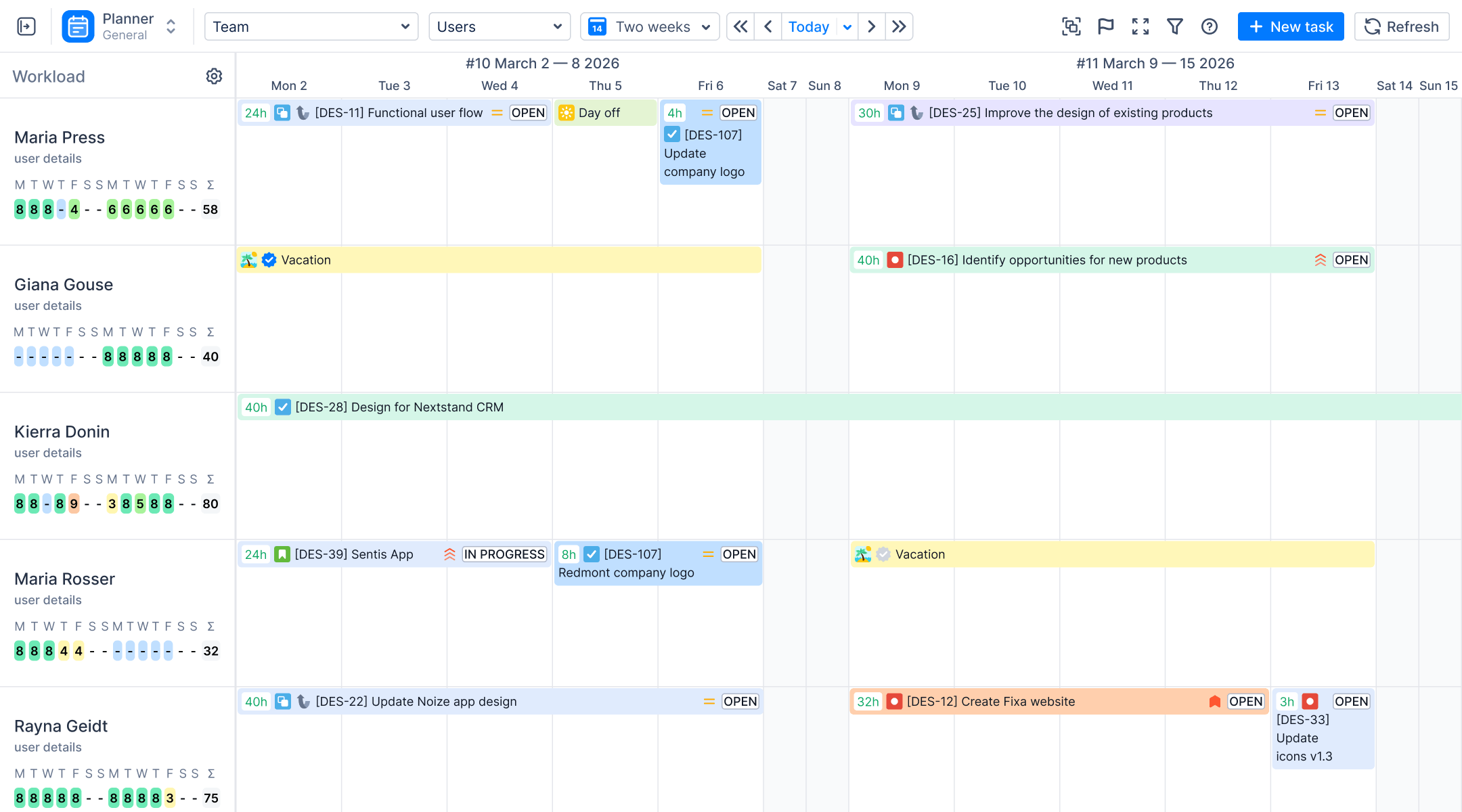
Need a better way to organize project tasks? Efficiently edit issues in Jira with our quick guide on bulk updates. Streamline your workflow and enhance productivity. Read the article now!
Managing tasks in Jira can sometimes feel harsh sometimes. But when you've got a slew of issues that require updating, Jira's bulk update feature is your best friend. Let's dive into how you can harness this tool to keep your projects running smoothly.
{{key-takeaways}}
{{rich-cta-4}}
What is Bulk Update
Bulk changes in Jira provide an efficient way to edit multiple issues quickly and easily within a single action. You can update different aspects of an issue, like fields, assignees, and statuses, all at the same time. This is an essential feature for project managers and teams when they need to apply updates to a large volume of issues simultaneously. Manual updates reduce productivity: sales teams lose 3 to 6 hours weekly to CRM data entry, and manual processes cost the global economy $2.9 trillion per year in lost productivity.
A similar situation was faced by IMCD Group, where managers lacked a standardized way to review and approve time entries across multiple Jira tickets. As their IT department scaled, manually updating and verifying issues became inefficient and time-consuming. After streamlining their bulk workflows, they reduced invoice sign-off time from five minutes to one minute per approval, saving several hours per manager each month.
It's important to note that certain restrictions are applied to specific bulk operations. For example, if you select multiple issues with different workflows, you can only transition them in groups that share the same workflow, and one group at a time. Additionally, you can only bulk change up to 1000 issues at once because attempting to load more than that might result in an "Out Of Memory" error. The restrictions are explained further in the relevant sections.
Preparing for Bulk Update
Before you jump in, it's crucial to ensure you've got the right permissions. Here's the lowdown:
- Project-Specific Permission. You must have the specific project permissions related to the exact action you are trying to perform. For example, 'Move Issue' permission for the specific project you're working on.
- Global Permission. You must have the global 'Make bulk changes' permission to perform bulk operations.
Without these specific rights, Jira will give you the cold shoulder when you attempt a bulk update. You should double-check your permissions with your Jira administrator to avoid any unexpected hiccups.
Performing Bulk Update
When deadlines change, managers don’t just move one task, they need to update multiple issues at once. Questions like “How do I bulk reschedule a set of Jira tasks to the following week?” become common in fast-paced teams. You can use Jira.
Using bulk changes in Jira is easy. Here's how to do it:
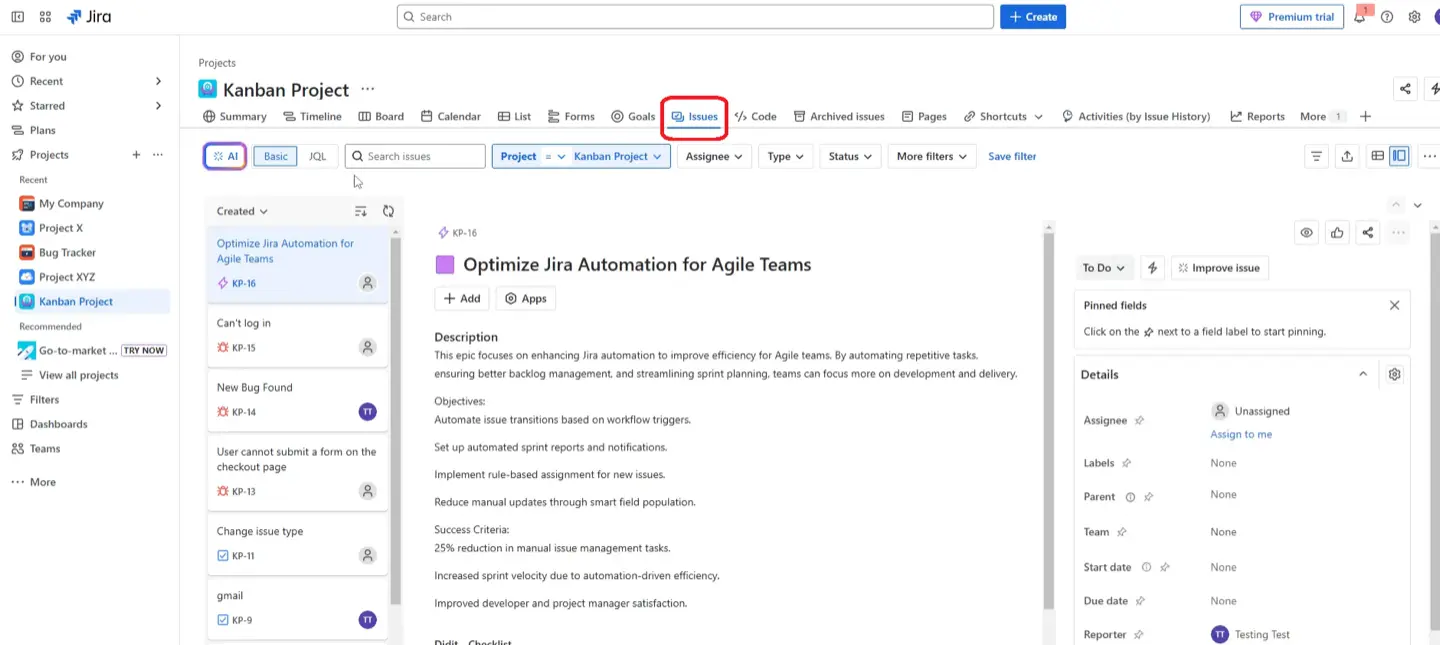
- Select "Issues": This will take you to the issues page, where you can see all the issues in your project.
- Select the project and issues you want to change: You can use filters or search criteria to narrow down the list of issues to the ones you would like to update.
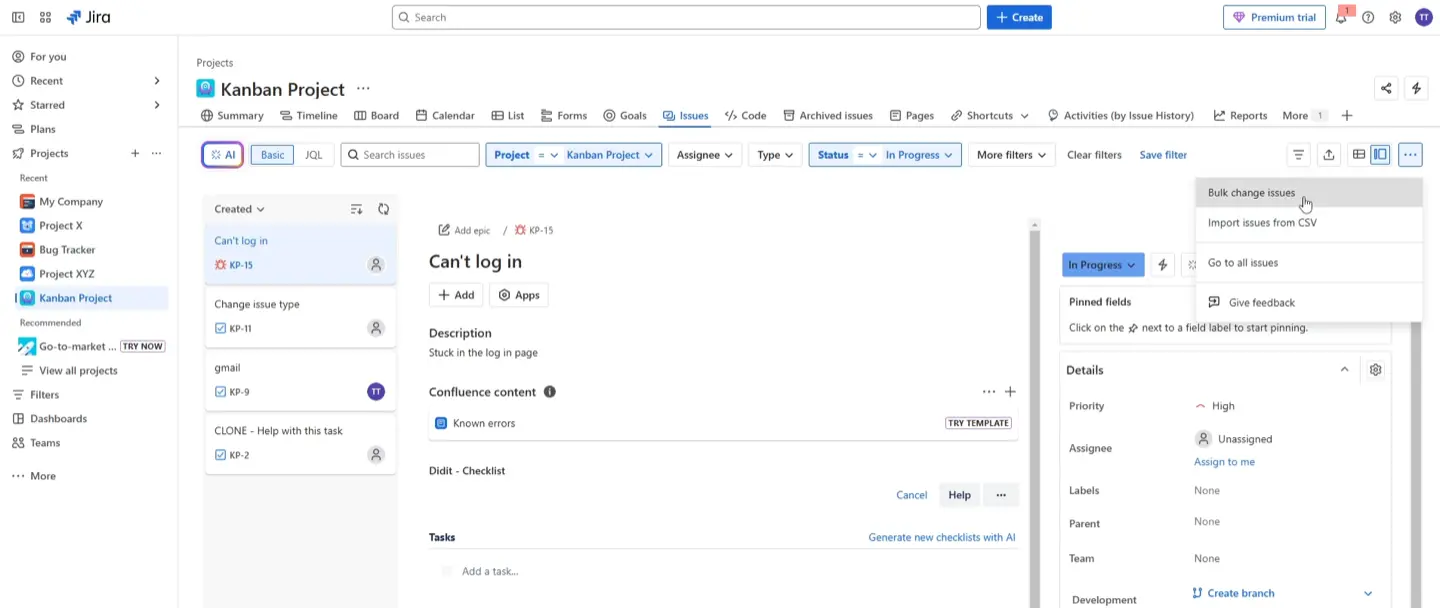
- Click on the three dots (…) then click "Bulk Change": This will open the Bulk Operation dialog box.
- Choose the issues you intend to update: You can choose individual issues or use filters to select multiple issues at once.
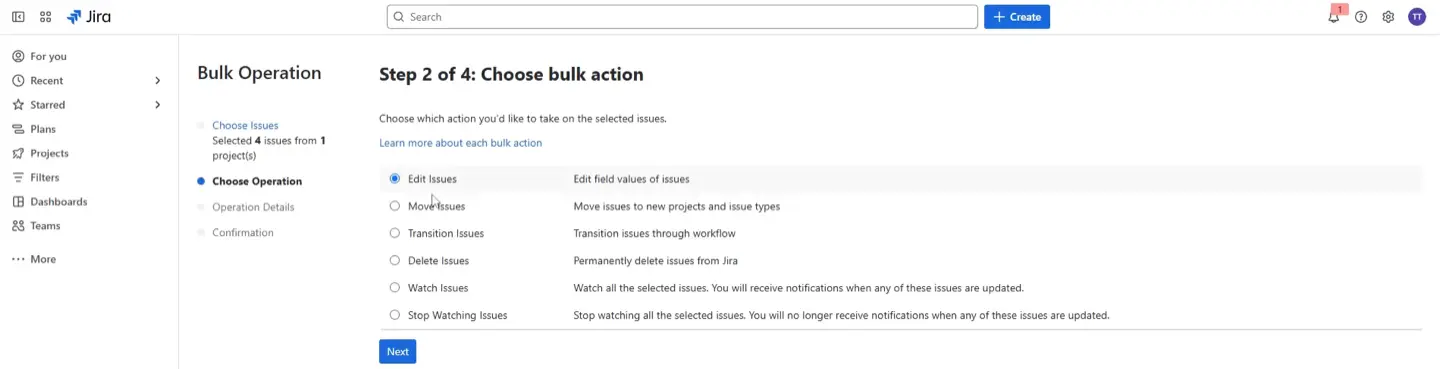
- Choose the operation you want to perform: You can update fields, assignees, statuses. You can also archive issues or start and stop watching them. Find detail on each operation available in Jira here.
- Provide the operation details: You may need to provide additional information depending on the operation you've chosen.
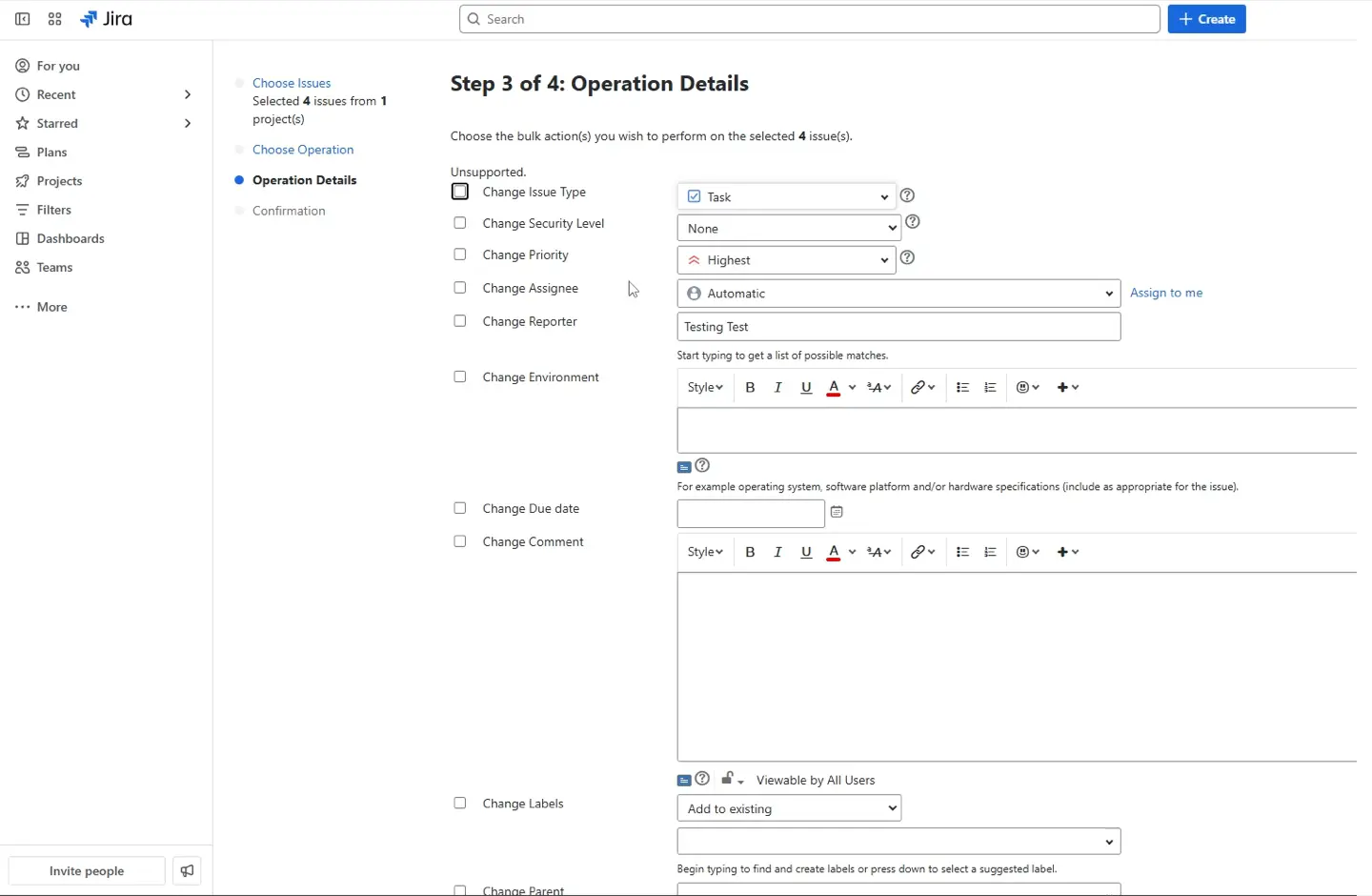
- Preview your changes: Before you apply your changes, you can preview them to ensure that they are correct.
- Confirm your changes: Once you're happy with your changes, click the "Confirm" button to apply them to all the selected issues.
Please wait until all issues have been processed before closing the dialog. Otherwise, the remaining issues will not be edited. You can click "Cancel" at any time before the final confirmation to stop the process.
You can also perform bulk updates from the Backlog. Hold the "Shift" key to select multiple issues. Right-click the selected items and choose the bulk change operation.
Following these steps, you can quickly and easily make bulk changes to multiple issues in Jira. Remember to plan your changes carefully, preview them before applying, and test them to ensure they work properly.
Bulk Change Strategies
Bulk updates aren't just about quick fixes; they're strategic tools. Here are some savvy ways to use them:
- Backlog Management: Tidy up your backlog by updating priorities, assigning tasks to team members, and setting due dates all together. This keeps your project on track and guarantees that everyone understands their responsibilities.
- Migrating to Jira: If you're transitioning from another project management tool to Jira, bulk updates can be a lifesaver. They allow you to swiftly update fields, statuses, and assignees. This makes the migration much smoother.
- Adapting to Project Changes: Projects evolve, and so do their requirements. Use bulk updates to modify issue types or custom fields, ensuring your Jira setup reflects the current state of play.
- Sprint Planning: You can move several issues into a future sprint at once to prepare for upcoming work. Note that Jira requires the Sprint ID rather than the name when you perform this specific bulk edit.
- Bulk Delete for Test Data: If your team has been testing new workflows or automations, you might have hundreds of "test" tickets. Use the bulk delete operation to clean up your data.
Managing Bulk Update Operations
Jira's bulk editing is a powerful tool that lets you change multiple issues in one go. You can update fields, assign tasks, or change statuses across several issues simultaneously.
Here's a breakdown of what you can adjust with bulk changes and the requirements needed to perform them:
- Change Affects Version/s: If you want to update the Affects Version/s field, make sure all the selected issues are in the same project with versions already configured. This field shouldn't be hidden in any field configurations tied to these issues. You'll need the 'edit issue' permissions for all selected issues.
- Change Assignee: To reassign issues, ensure the Assignee field is visible in the field configurations of the selected issues. You must also have 'assign issue' permissions for all of them.
- Add or Edit Comments: Do you want to add or edit comments in bulk? The Comment field shouldn't be hidden, and you'll need 'comment issue' permissions for all selected issues.
- Change Components: To update components, all selected issues should be within the same project that has components defined. Ensure the Component/s field isn't hidden, and you have 'edit issue' permissions.
- Set Due Dates: The Due Date field must be visible when updating due dates in bulk. For all selected issues, you'll need both 'edit issue' and 'schedule issue' permissions.
- Update Fix Version/s: For changing the Fix Version/s, all issues must be in the same project with versions set up. The field shouldn't be hidden, and 'edit issue' permissions are necessary.
- Change Issue Type: Are you switching issue types? If so, just ensure you have 'edit issue' permissions for all selected issues.
- Adjust Priority: The Priority field must be visible, and you must have 'edit issue' permissions to change priorities.
- Modify Reporter: Changing the reporter requires the field to be visible. You'll need 'edit issue' and 'modify reporter' permissions for all selected issues.
- Set Security Level: To adjust the security level, ensure the field isn't hidden, all selected projects share the same issue-level security scheme, and you have both 'edit issue' and 'set issue security' permissions.
- Update Custom Fields: Bulk editing of custom fields is possible if a global custom field exists or an issue type custom field exists for that specific type. If it is a project custom field, all issues must be within that same project.
- Edit Closed Issues: Your workflow must allow edits to closed issues to make changes here.
- Change Organization: For Jira Service Management users, you can change the organization if all issues are in the same project and you have the agent role for that project.
- Update Sprint: To change sprints, specify the sprint ID. This affects active and future sprints; closed/completed sprints aren't included when bulk editing the Sprint field.
- Bulk Delete: The Bulk Delete operation permanently removes the selected issues from your Jira instance. This is a quick way to clean up redundant data, but use it carefully as deleted issues cannot be recovered.
- Bulk Archive (with the Jira Data Center license): This operation hides outdated issues. Archiving a parent issue automatically archives all of its sub-tasks.
Unavailable Operations to Tweak in Bulk in Jira
While Jira's bulk change feature is handy, some fields aren't up for mass editing. These fields either require an alternative method or don't make sense to edit in bulk. Here's what you can't change using bulk operations:
- Attachments: Adding or removing attachments in bulk isn't possible.
- Summary: You can't change the summary of multiple issues at once.
- Description: Bulk editing descriptions isn't supported.
- Environment: The environment field can't be updated in bulk.
- Project: To move issues between projects, use the "Bulk Move" operation instead.
- Resolution: Changing the resolution for multiple issues requires the "Bulk Workflow Transitions" operation.
- Time Tracking Fields: Fields like original estimate, remaining estimate, or time spent can't be bulk edited.
Some custom field types are also off-limits for bulk editing:
- Import Id: This field isn't editable in bulk.
- Read-only Text: You can't bulk edit read-only text fields.
Remember, if certain fields don't appear for bulk editing, it might be due to field configurations, permissions, or the specific setup of your Jira projects. Also, an issue in a specific workflow step, such as a 'Closed' status, cannot be updated unless your workflow is specifically configured to allow the editing of closed issues.
{{rich-cta-5}}
Advanced Bulk Update Techniques with ActivityTimeline
For more complex project management needs, Jira's bulk update feature offers advanced capabilities. You can perform bulk workflow transitions, which is particularly useful for active and future sprints. Updating project or global custom fields across multiple issues ensures data uniformity. If you need to stop watching several issues, bulk editing simplifies this task. Moreover, you can execute bulk operations across all the selected projects, provided the necessary permissions are in place.
Have you ever had urgent Jira tasks appear from nowhere that needed to be assigned ASAP? Or did you receive a morning call from your teammate telling you that they are ill and won’t be available for the next couple of days, so you have to move all the tasks to another resource? It’s a common situation, and we cannot predict everything. In such cases, we have to act fast.
Do you need more complex project planning software with resource management?
If so, ActivityTimeline provides the ideal solution. Managers need to free up space for urgent Jira tasks that just appeared or reassign tasks on the Jira timeline to another person because the current assignee is unavailable. With ActivityTimeline, which provides the possibility of Bulk Rescheduling, this task is no longer a headache! This feature is very useful, as it helps save time and perform bulk actions with several clicks.
Bulk Reschedule allows you to reschedule, unschedule, or reassign Jira tickets, bookings, placeholders, and notes that are visible on the dashboard's timelines. You can perform all these actions in one operation.
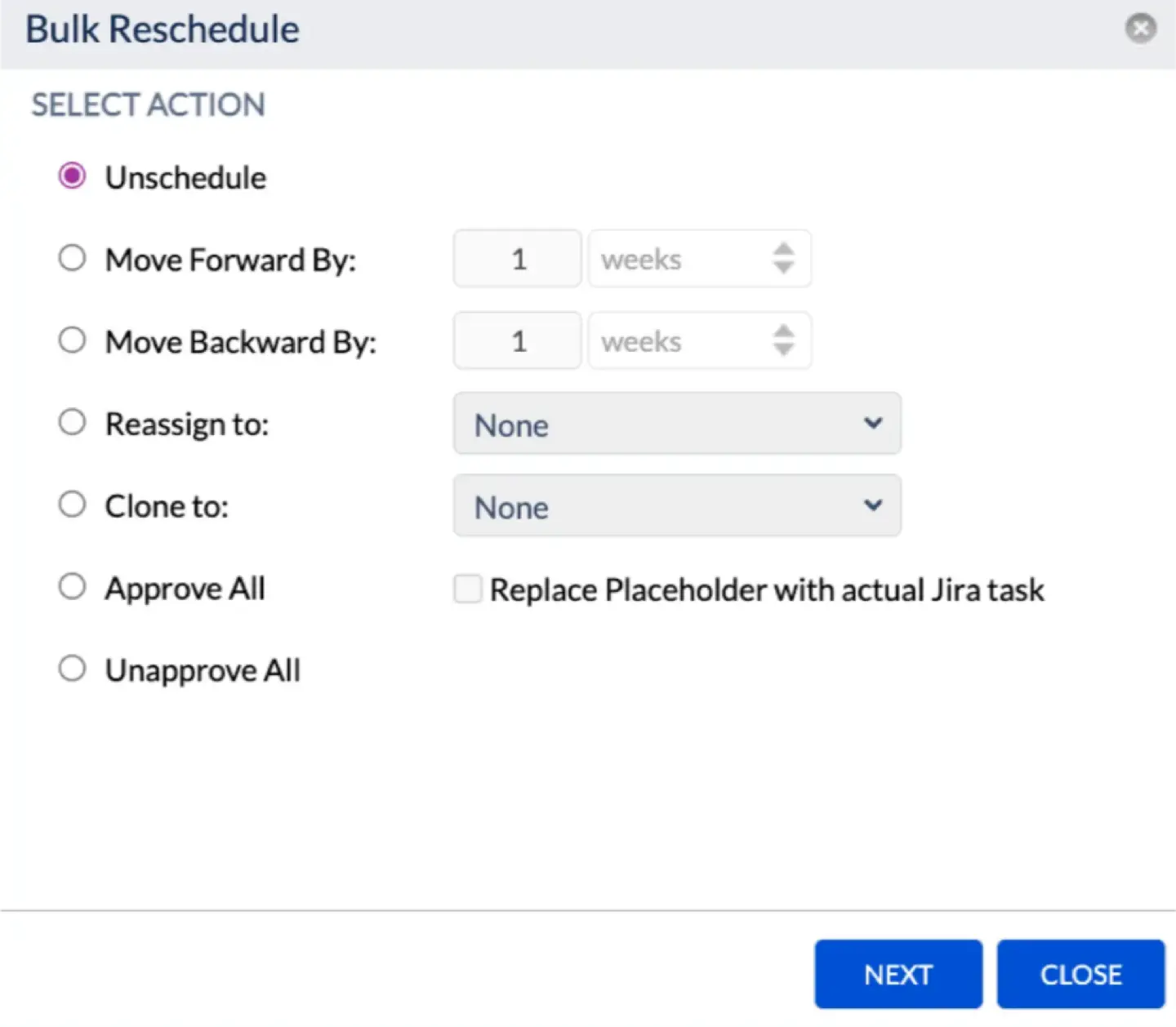
This can be used if:
- Projects are delayed or moved forward.
- Urgent work appears and you need to move previous Jira tasks.
- An employee takes unexpected sick leave or time off and you need to reassign their tasks quickly.
To shift related items on the timelines forward or backward and thus bulk update Jira tasks, you will have to:
- Click on a specific user and choose the Bulk Reschedule option on the User Card.
- Choose the desirable action, such as moving tasks forward or backward by a specific number of days, weeks, or years.
- Specify the User related to the issues.
- Specify the Project to which issues are related.
- Define the date range in the From and To fields.
- Specify the Type of issues.
- Select the exact Items you wish to move.
The system will move all current Jira issues and events starting from the first visible day on the screen by the exact amount of time you specify. This includes all Jira issues, placeholders, bookings, and notes.
However, the system automatically excludes official events like Days Off, Holidays, and Sick Leaves. This ensures that predefined non-working days remain accurate and are not accidentally shifted. Also, the tool processes these shifts without considering weekends, which keeps the calendar logic consistent.

The Bulk Reschedule feature is not limited to managers. Users with the "Employee" role can also take control of their schedules. While they cannot modify team-wide plans, employees can bulk shift their tasks forward or backward within their personal timelines. This self-service capability allows team members to reorganize their workload quickly. It reduces the need for constant administrative intervention.
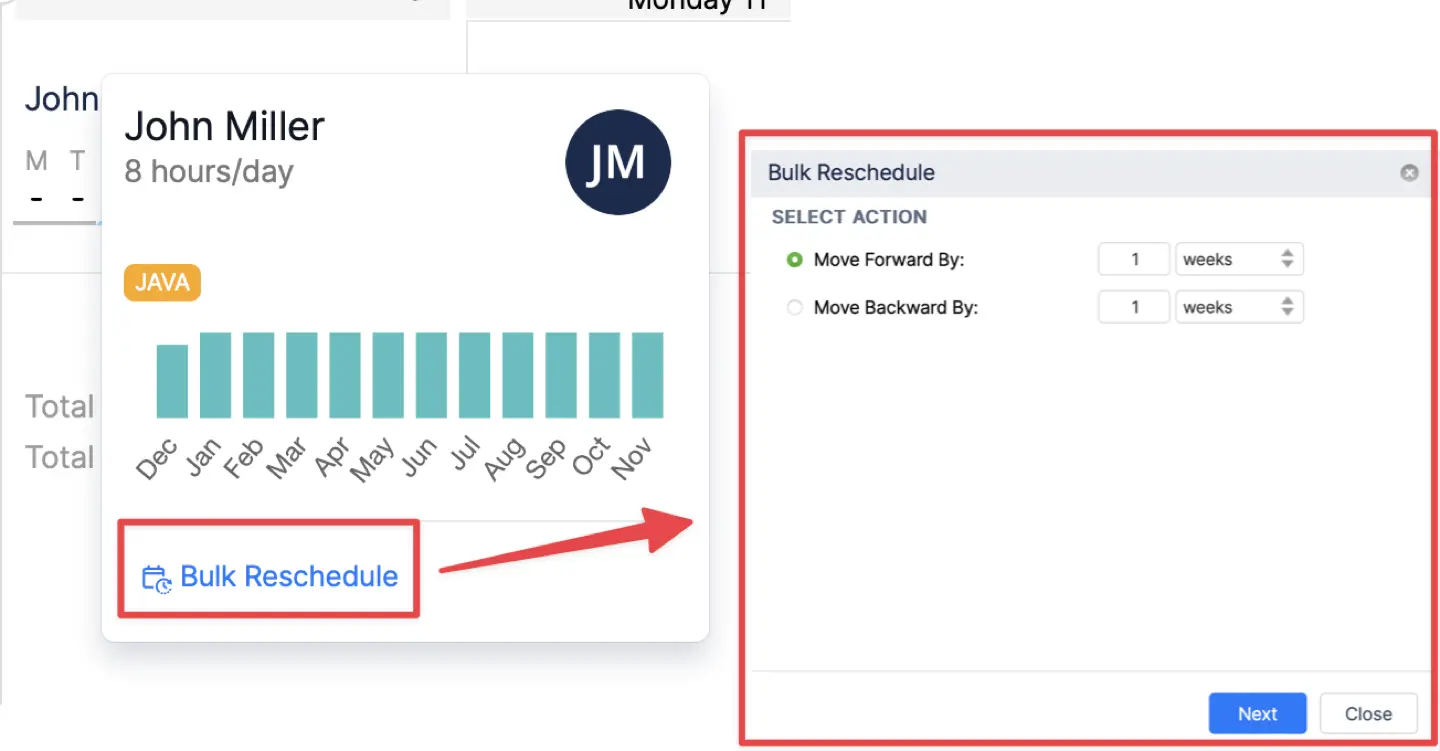
Bulk Rescheduling is available for both specific users and entire teams!
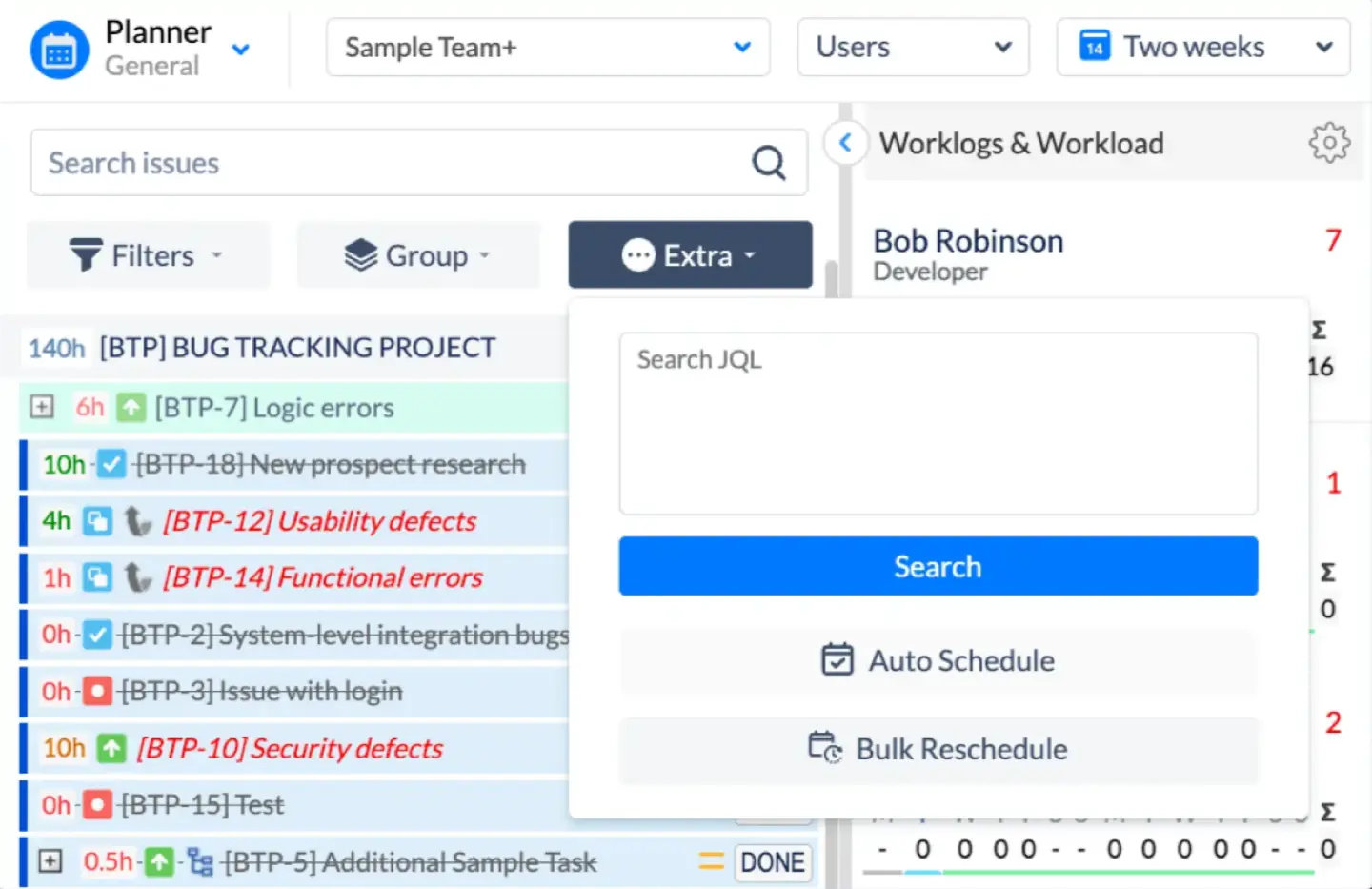
To move scheduled Jira tasks for a specific team, find the “Extra” tab on the Left Panel and choose the Bulk Reschedule option. Then, specify the team instead of a specific user.
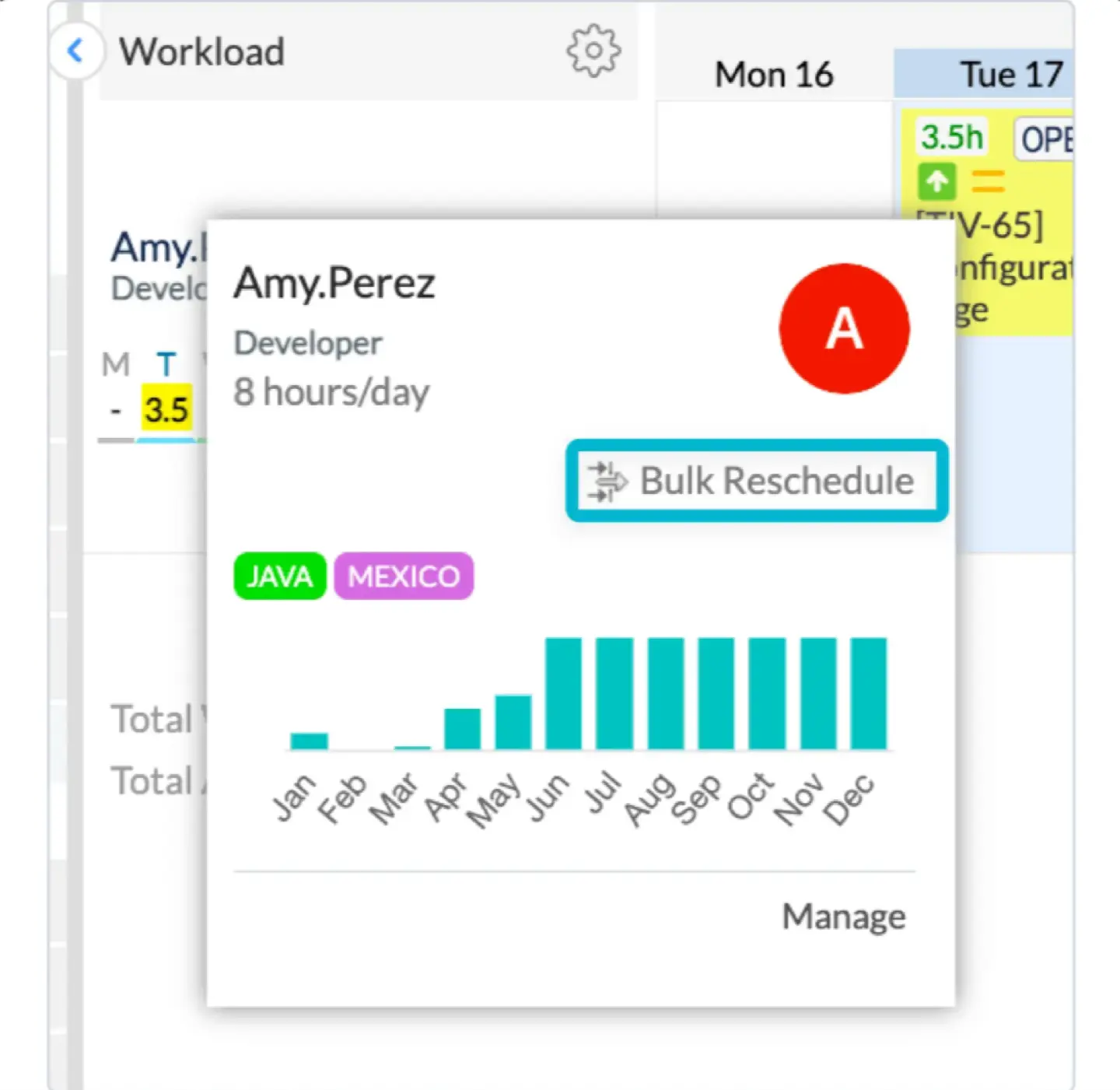
If a user gets sick and you need to reassign their work, take the following actions:
- Open User Card and click on the Bulk Reschedule.
- Choose the “Reassign to” action and select a new assignee.
- Specify the team or user related to the issues.
- Specify the project related to the issues.
- Specify the Period in From and To fields that issues should be covered.
- Specify the Type of issues.
- Select exact Items to be reassigned.
Conclusion
Mastering Jira's bulk update feature can transform how you manage projects, saving time and reducing manual effort. By understanding the ins and outs of this tool, you can keep your projects organized and your team focused on what matters most. So, next time you're faced with a mountain of Jira issues, remember: bulk updates are your ticket to efficiency.





.png)