
Tracking billable hours is an important yet challenging process. When done manually, it’s prone to errors and inefficiencies. However, with automated time tracking, companies have access to tools that make time tracking easier, more precise, and less resource-consuming.
Jira offers various add-ons that simplify billable hour tracking, helping businesses streamline their workflows and enhance profitability. In this article, we explore how to track billable hours in professional services and what capabilities of Jira add-ons can help to make this process seamless.
{{tl-dr}}
Why Track Billable Hours?
Tracking billable hours is essential for ensuring fair pay, better resource allocation, and overall business profitability. Here’s why it matters:
Understanding Resource Allocation
Separate time spent on client work from non-billable tasks like internal meetings to optimize their workflows and balance workloads. Using time-tracking software allows you to spot inefficiencies and make better use of your resources.
Fair Compensation and Profitability
Accurate tracking guarantees clients are billed fairly—without overcharging or undercharging. Consultants and agencies benefit from using time-tracking tools to record billable time correctly, improving client invoicing and maintaining trust.
Boosting the Bottom Line
Each billable hour contributes directly to revenue. Without proper tracking, businesses risk losing billable time, hurting their profitability. Accurate billable hour tracking through a time tracker not only boosts cash flow. It provides data for better resource management and decision-making. This information helps you identify high-value projects so the business can focus on the most profitable work.
How to Calculate Billable Hours
Let’s break down how you can do this manually or through Jira add-ons to optimize the process.
Manual Calculation
If you’re doing it manually, the process is simple: record the time spent on a task, then multiply it by your hourly rate. For example, if you spent 5 hours on a task and your rate is $100 per hour, your total is $500. Manual methods can be prone to errors, so it’s important to log time carefully and regularly review and adjust your entries.
Automated Calculation
Automating the time-tracking process can save time and reduce errors. Specialized tools track time spent on tasks automatically, calculate billable hours, and even link directly to client billing. This eliminates the guesswork and manual effort, helping you accurately track billable hours while focusing more on your work. Effective tools allow you to set categories like "Billable" and "Non-Billable" to separate work types easily. Users should be able to log time directly from their workspace or specific tasks. It is also helpful if the system treats meetings and external events as worklogs in your reports.
Using standalone time-tracking software or Jira add-ons is a proven method for tracking billable hours. These tools make it easy to record time spent on tasks accurately, guaranteeing every billable hour is accounted for. Jira add-ons can integrate billable hour tracking into your workflow, automating the process and reducing manual errors.
Advanced tools often offer utilization rates for paid and unpaid tasks. Managers can use detailed views to filter these categories and see exactly what was spent on client work. Finally, exporting these summaries to Excel simplifies the invoicing process.
By relying on technology, you can use billable hour tracking to streamline your operations and enhance efficiency across teams.
Choosing the Right Time Tracking Software
When picking the right billable time tracking software, pay attention to the following few areas:
- Find your fit. First, consider your company’s size and specific needs. Smaller teams and small dev shops often prefer affordable basic tracking features. Larger firms may require advanced tools to manage complex projects and detailed hour tracking.
- Pay attention to integrations. Also, it’s essential to choose a solution that integrates with your existing tools. A tracker that works well with your current billing or project management software makes the process smoother. This avoids manual data transfers and improves overall efficiency.
- Check visualization capabilities. Many billable time trackers and specific Jira add-ons offer visual summaries like billable hours charts. These charts provide an overview of how time is spent across tasks and projects, making it easier for you to monitor productivity and guarantee that your billing is accurate and up to date.
Top Billable Time Tracker Apps for Jira
Many managers find that getting accurate work hours from their team is a frustrating part of the job.
Accurate reports are challenging to get because manual tracking relies on memory. When employees wait until the end of the week to log work, they often forget details. This leads to guesswork and unreliable data. Furthermore, without clear definitions for billable and non-billable tasks, teams often struggle to classify their time correctly. These errors create a heavy administrative burden and slow down the invoicing process.
Tracking billable hours in Jira becomes a lot easier when you use the right tools. Below are some of the best time-tracking apps that work well with Jira to help you efficiently track billable hours and optimize resource management.
#1. ActivityTimeline
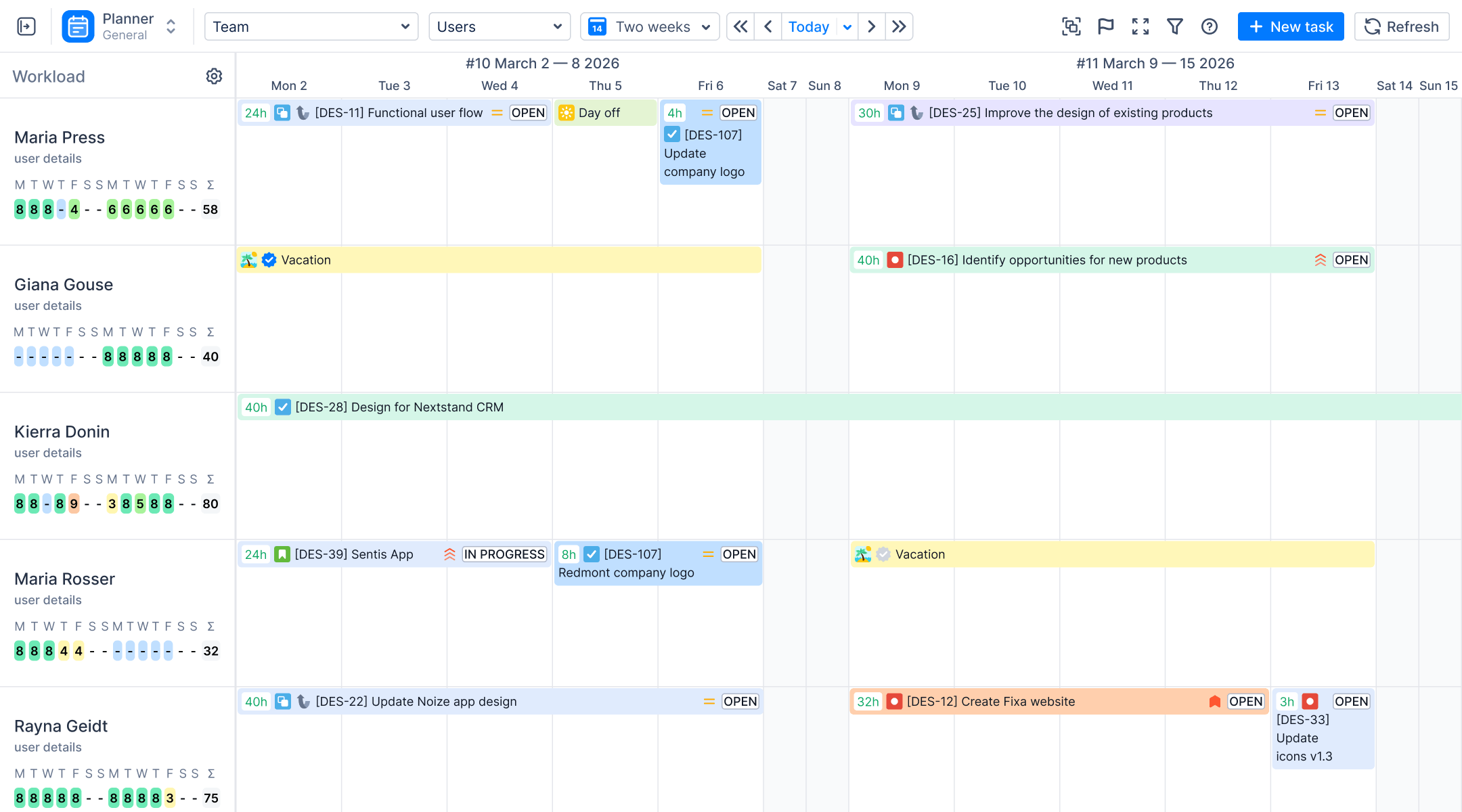
ActivityTimeline is a comprehensive time tracking tool that not only tracks billable hours but also manages resources across multiple teams. It allows you to track billable hours effectively by giving project managers a clear overview of task assignments and time spent on each project.

ActivityTimeline helps allocate resources efficiently and guarantees that employees focus on billable tasks. The intuitive interface and smooth Jira integration help improve your workflow. This makes it a strong choice for businesses looking to increase productivity and profitability.
Case Study: IMCD Group
IMCD Group is a leading chemical distribution company with a presence in over 60 countries and a workforce nearing 5,000 employees.
IMCD Group implemented ActivityTimeline during the extensive growth of their IT department. They were seeking a way to track timesheets in a standardized way across all the different teams. At that time, there was no way to see how much time was spent on specific projects or tickets. This made the billing process complicated.
After implementing ActivityTimeline, tracking billable hours in IMCD became five times faster. The optimized process led them to an approximate saving of over 5 hours each month per manager. These efficiency gains proved vital for different departments within the company.
"Going down from 5 minutes to sign off an invoice to 1 minute across all of the IT consultants. (…) My feedback is very positive and it works really well for us. We've done it really for the retrospective who's spent what time on what area and we haven't really used the capacity planning part. That really is for us the next step to look at the capacity planning part and how we can utilize that better."
James Gibbons, Group Integration Manager at IMCD Group
#2. Timepiece (ex-Time in Status)
Timepiece is a useful time-tracker for keeping stakeholders informed about project progress. If there are many people with a vested interest in how you’re progressing with various projects, then you need a system in place to allow for full transparency. Timepiece provides just that, and much more besides.
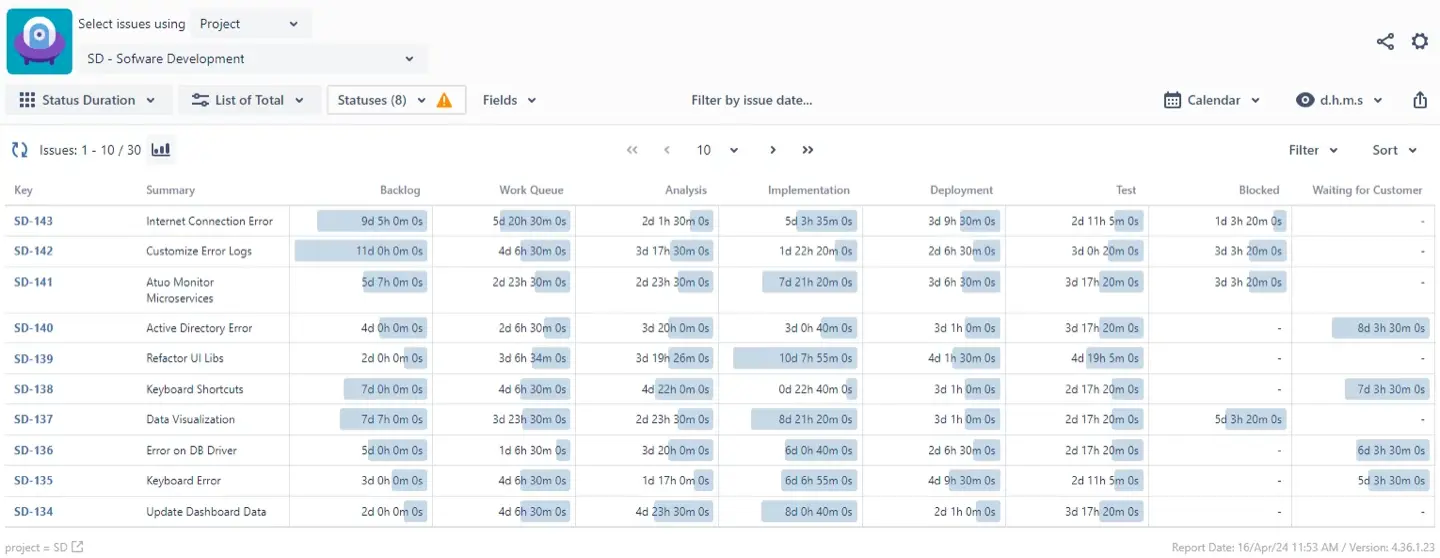
Timepiece is a highly rated Jira app that lets users quickly identify bottlenecks in their workflows, use multiple reports to present time data, and measure performance according to a range of useful metrics.
This is an app that’s especially useful for tracking time across different contexts. With it, you can build a complete picture of how time is being used across your company, with data groupings under categories such as issue age, lead time, and cycle time.
#3. Tempo Timesheets
Tempo Timesheets has been Jira’s staple time-tracking app for a while, and it’s easy to see why. This app features a comprehensive set of features designed to make time-tracking in your company a breeze. It offers a wide range of features, including detailed reports, real-time tracking, and integration with your existing project management tools.
With Tempo, businesses can track billable hours without manual logging errors and use an in-built budgeting feature, allowing teams to monitor project profitability.
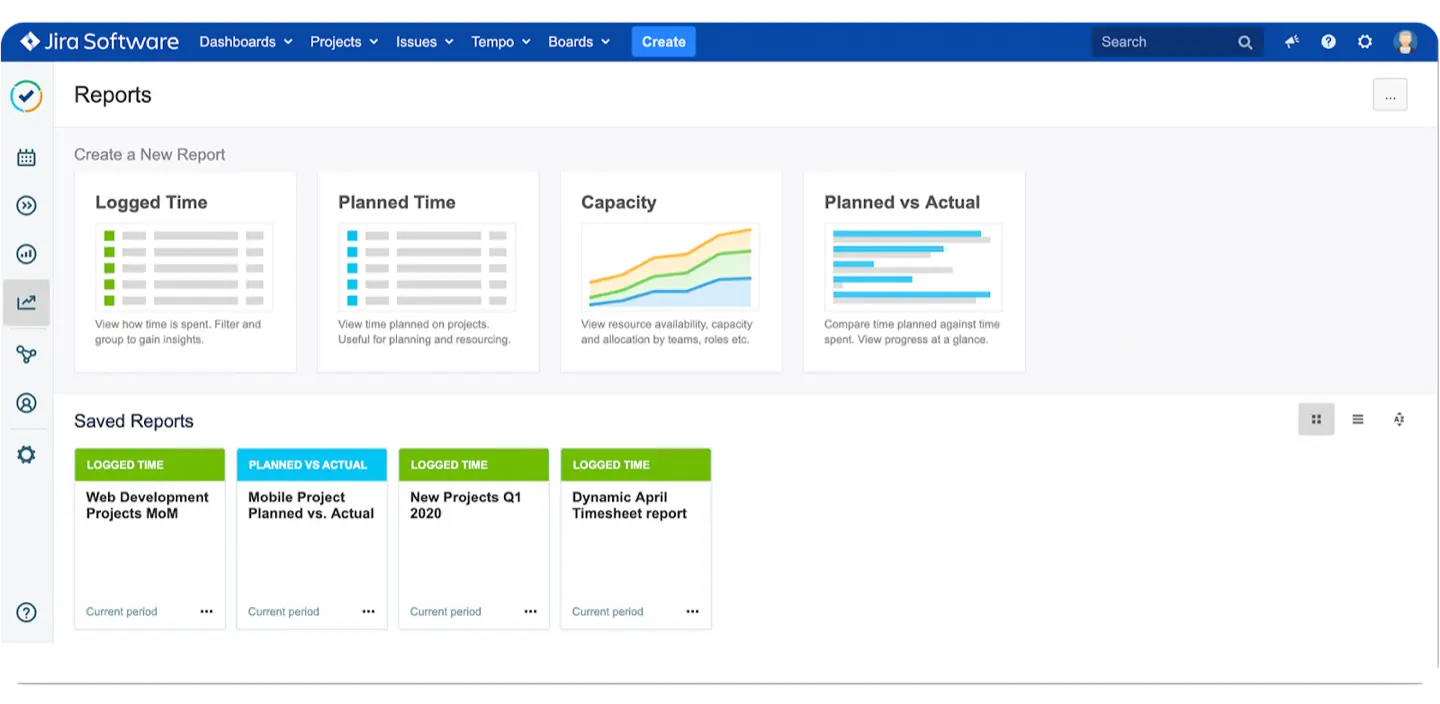
Standout features include automatic time-tracking compatible with Jira projects, automated report generation based on time data gathered, and Google and Microsoft calendar integration. This is a tool that allows you to reliably build a detailed picture of everything going on in your company, and best of all, you don’t have to remember to clock in as the app takes care of time-tracking for you automatically.
ActivityTimeline supports integration with Tempo Timesheets for Jira Cloud to load worklog records that were submitted through the Tempo application. If you need the details on how to synchronize with or migrate from Tempo, visit our Help Center or watch the video below:
How to Track Billable Hours with ActivityTimeline
Tracking billable hours efficiently is crucial for teams and consultants who need to report their time for invoicing or project management. ActivityTimeline provides powerful tools within its Work and Track modules that allow for detailed and flexible time tracking, ensuring accurate monitoring of billable hours.
Step 1: Set Up Time Tracking Features
Set up is no joke. By default, time tracking is enabled in ActivityTimeline, but it can be customized based on your team's needs. To manage these settings, navigate to Configurations → Timesheets Configuration.
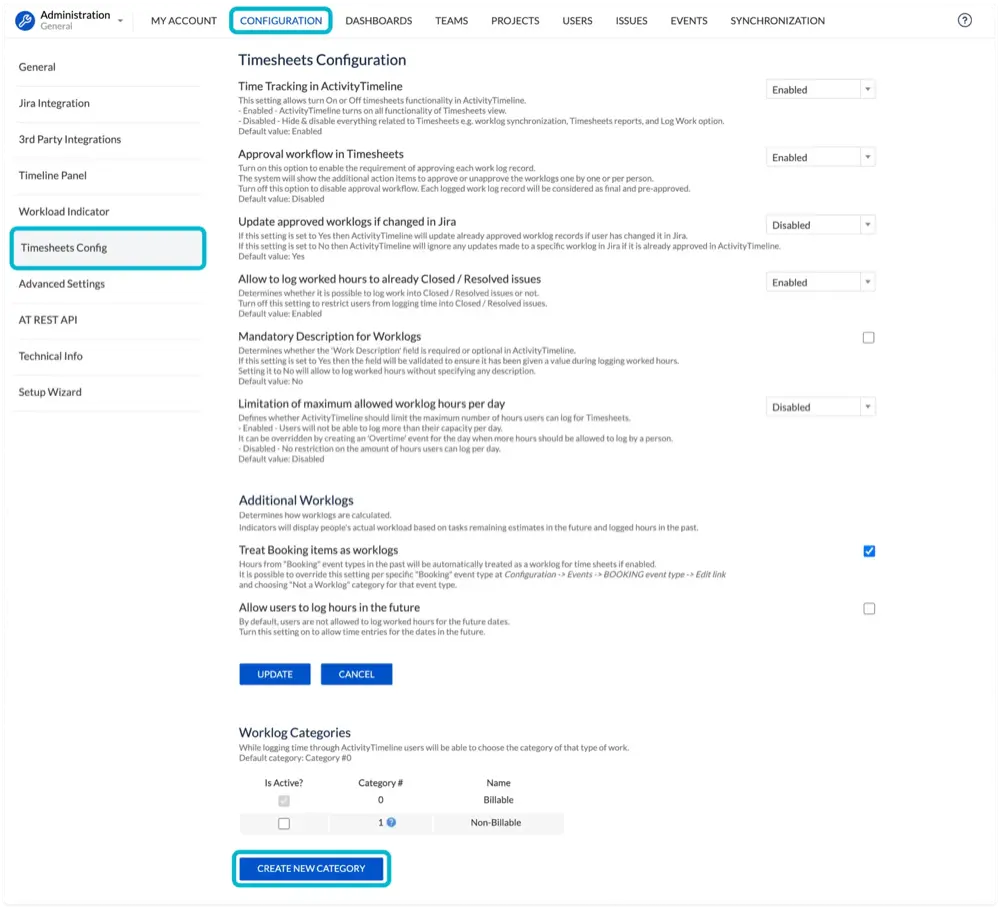
Here, you can specify custom preferences, which include among others:
- Disable Time Tracking: If necessary, disable time tracking across the system.
- Allow Logging into Closed/Resolved Issues: You can restrict or allow time logging into issues that are already closed, giving you control over work entries on finished tasks.
- Limit Worklog Hours: Set a maximum number of worklog hours per day to prevent overbooking. This helps you prevent users from logging more than 8 hours a day in Jira. You can still use an 'Overtime' event if extra work is necessary.
- Mandatory Descriptions for Worklogs: Enable this option to guarantee that every work entry has a clear description. This is useful for auditing or client reports.
- Worklog Categories: Specify types of work that can be tracked by users. You can set up a custom 'Billable' vs 'Non-Billable' dropdown or create new categories for when your team logs work in Jira:
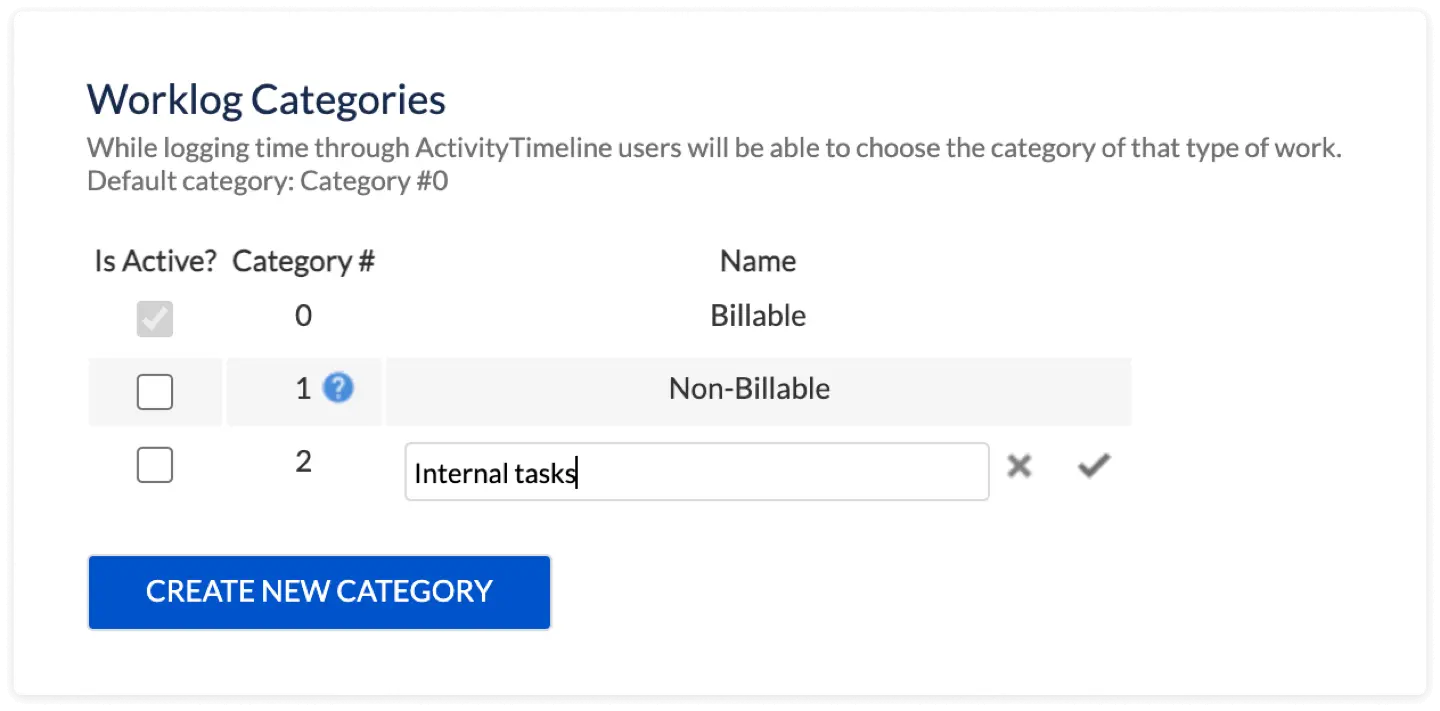
Step 2: Log Billable Hours
Once time tracking is configured, employees can log time against their assigned tasks in two ways:
- From the Workspace: Users can log time directly on their timeline, choosing from predefined categories like 'Billable' and 'Non-Billable'. This allows for quick categorization and ensures clarity in billing reports. Here are a couple of ways to log time:
- Click on the chart
- Click on the ‘Log Work' button
- Click on the issue → ‘Log Work’
- Use the ‘My logged hours’ table
- Click on the ‘Timer’ icon
- Resize existing work logs

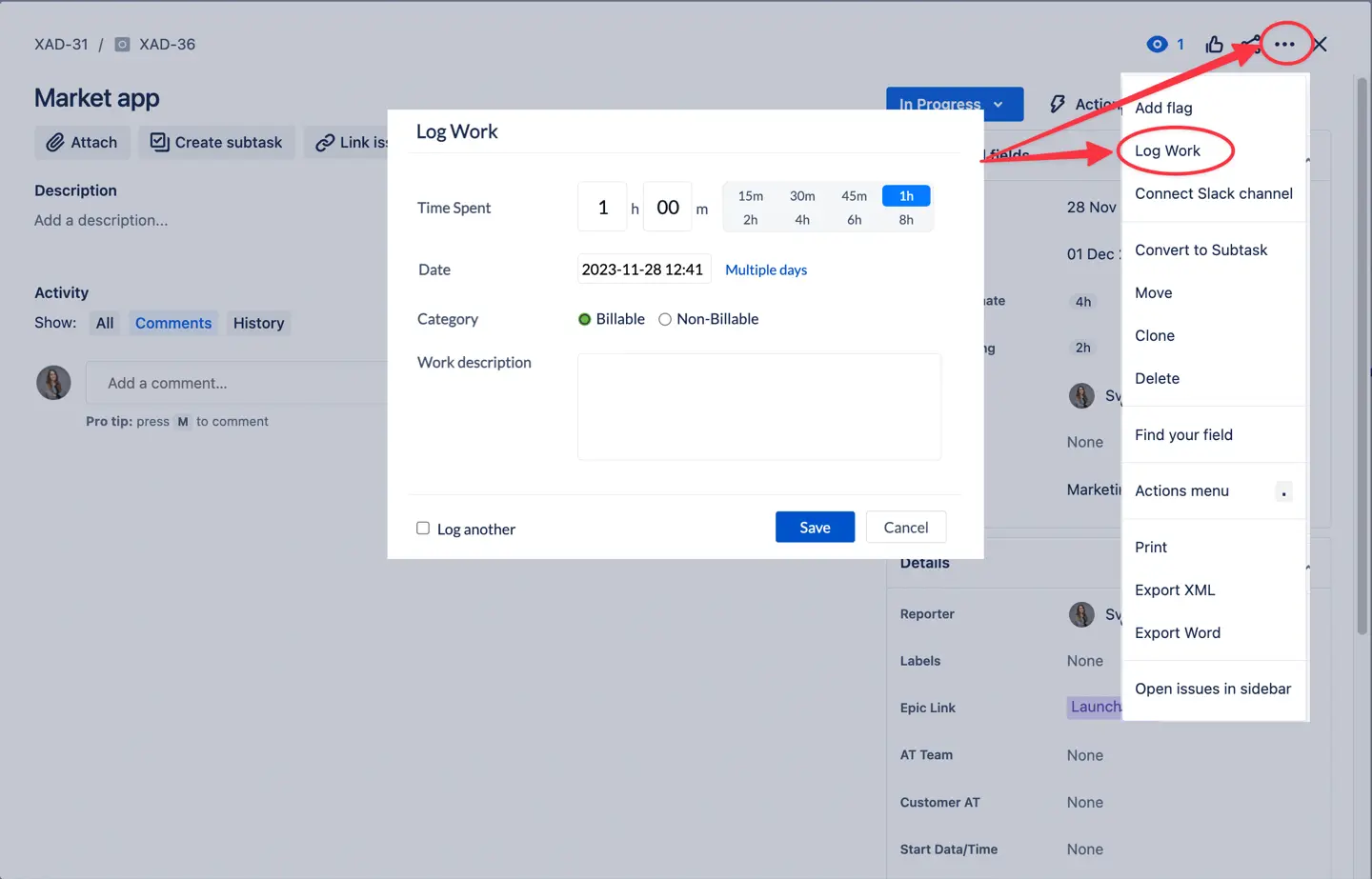
- From Jira Issues: Time can also be logged directly from the Jira issue page using the ActivityTimeline time tracking dialog. The benefit here is that it synchronizes seamlessly with the main ActivityTimeline system, ensuring accurate time capture. Click on the 'Actions' icon → 'Log work' → The ActivityTimeline Log Work dialog will then open.
Or you can click on the show ‘Worklogs’ tab → click ‘Log Work’ or on a timer icon to log time:
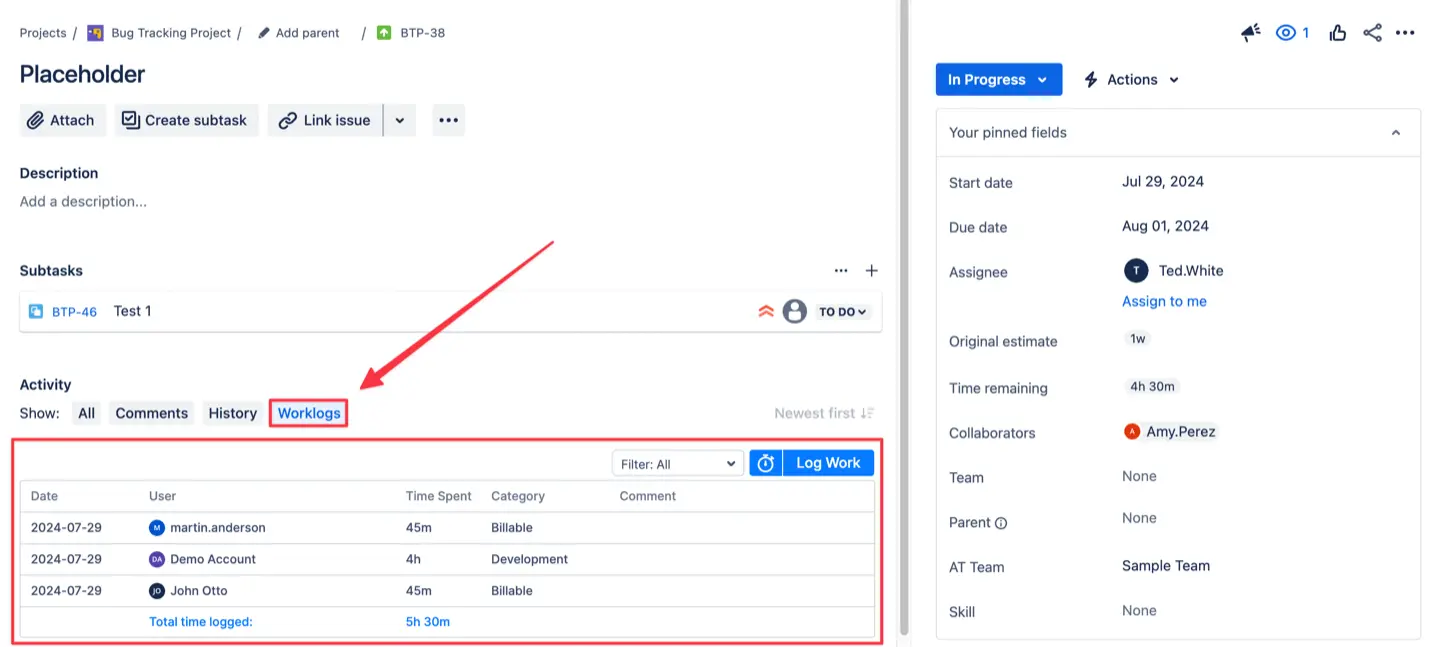
Example: If a developer spends 5 hours coding a new feature, they can log it as 'Billable' in ActivityTimeline. If they also attend a 1-hour internal meeting, that time can be logged as 'Non-Billable.'
Step 3: Treat External Events as Worklogs
In cases where non-Jira related work (like meetings or trainings) needs to be tracked, ActivityTimeline allows such events to be treated as worklogs. Since these tasks have a “Booking” type, enable the ‘Treat Booking items as worklogs’ feature in Timesheets Configuration to capture these activities in your reports. ActivityTimeline will automatically treat estimated hours from "Booking" event types in the past as worklogs.
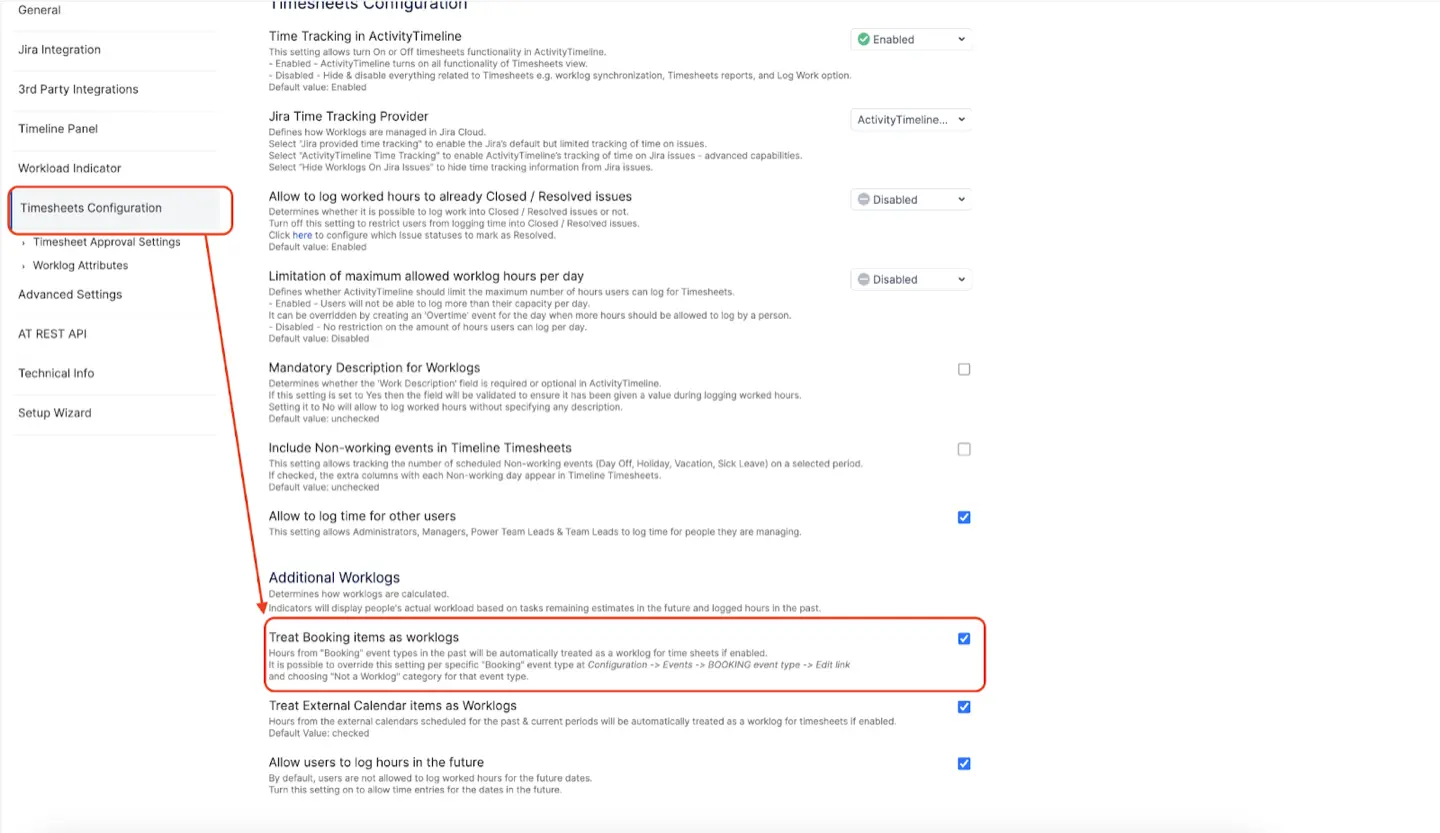
Example: A team lead spends 30% of their time in project meetings. By treating these meetings as worklogs, this time can be accurately reflected in billable hours reports without creating unnecessary Jira issues.
Watch the video to understand how to treat booking events like Jira worklogs in ActivityTimeline:
Step 4: Approval Workflow for Timesheets
If your organization requires timesheet approvals, ActivityTimeline’s Approval Workflow can be enabled to speed up this process. Managers can approve or reject timesheets through the Timesheet Report, allowing them to review entries, confirm billable hours, and check accuracy before sending data for invoicing.
Example: A project manager reviews a consultant’s weekly timesheet, which includes 35 billable hours and 5 non-billable hours. After verifying the entries, they approve the timesheet, making it ready for invoicing.

Step 5: Generate Detailed Billable Hours Reports
ActivityTimeline offers multiple reporting options to analyze billable hours:
- Progress View: Provides a high-level overview of logged hours vs. expected hours.
- Timeline View: A visual breakdown of time entries with color-coded indicators to show over- or under-logged time.
- Detailed View: This view provides granular insight into each worklog, including user, project, issue, and time spent.
- Planned vs. Actual: You can generate a 'Planned vs. Actual' report for your Jira projects to compare estimates with actual worked time.
Example: A manager needs to generate a report on billable hours for a particular client project. Using the Detailed View, they can filter worklogs by category ('Billable') and see exactly how many hours were worked on specific tasks, ensuring precise billing for the client.
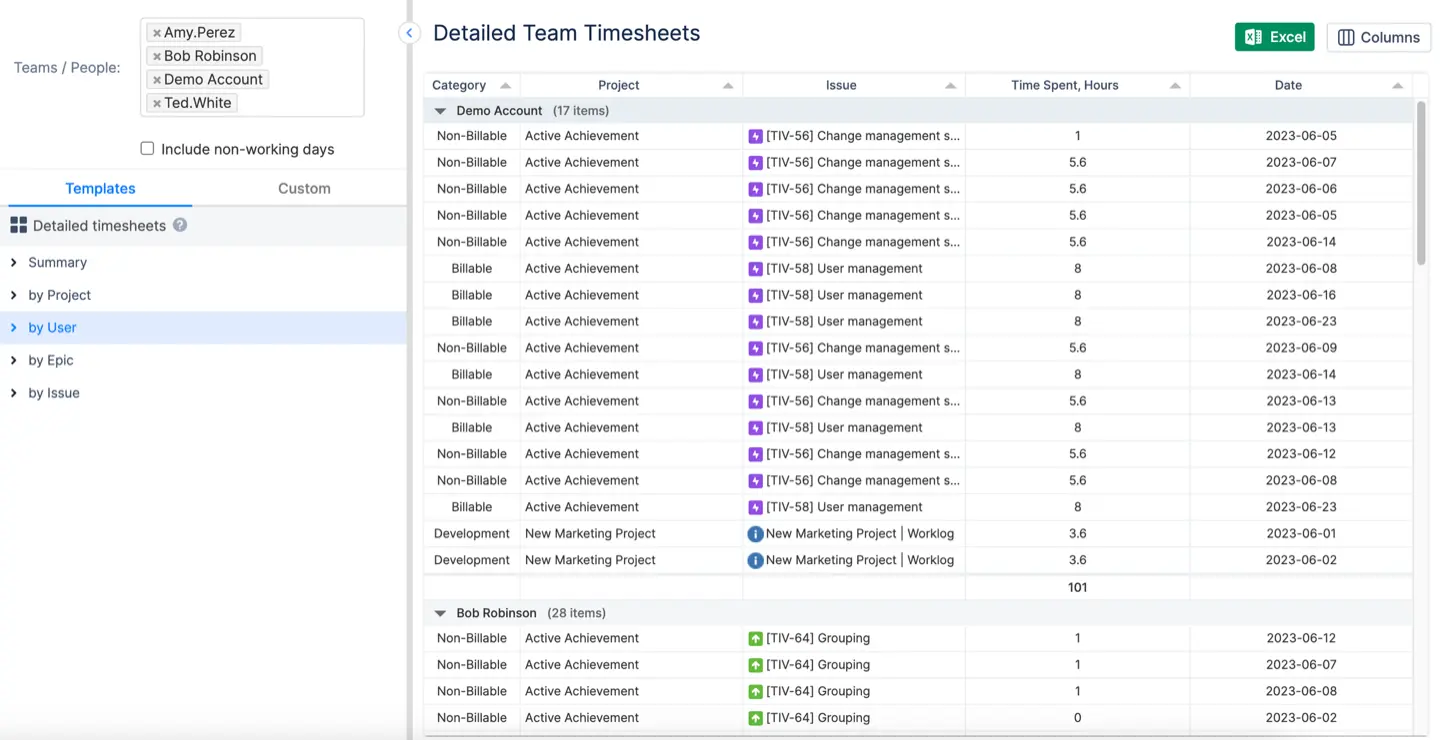
Step 6: Export and Share Reports
ActivityTimeline allows exporting timesheets to Excel for further analysis or sharing with stakeholders. Additionally, customized timesheet dashboards can be saved and shared with relevant team members for continuous monitoring.
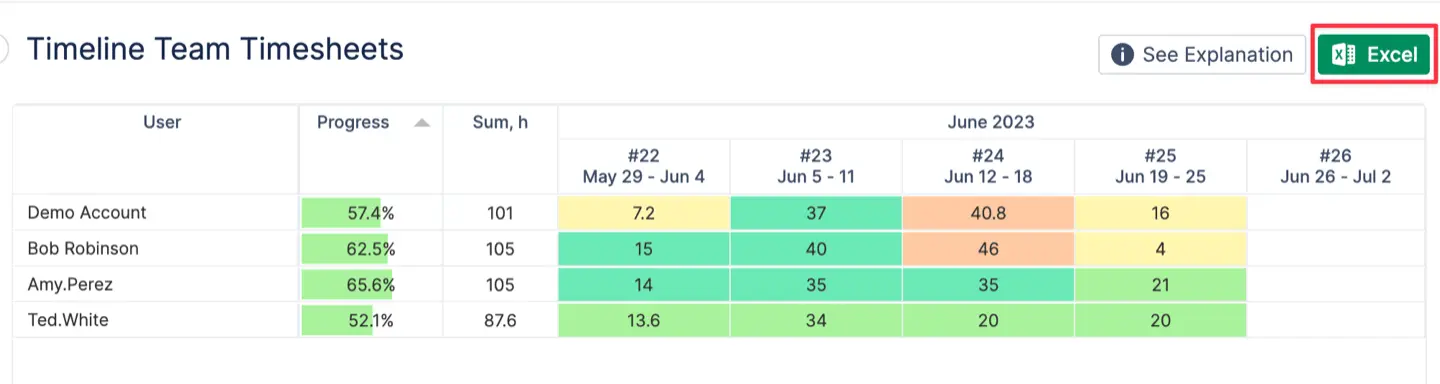
The data in this report is identical to the web version. Here is an example:

Bonus: Billable Hours Tracking Cheat Sheet
To maximize profitability, we recommend establishing effective practices when tracking billable hours. Below are key strategies to help businesses track billable hours effectively and avoid common pitfalls:
Defining Billable vs. Non-Billable Tasks
The first step in tracking hours accurately is clearly defining billable tasks versus non-billable hours. Billable tasks typically include work done directly for clients, while non-billable hours might cover internal meetings or administrative work. Setting these definitions upfront ensures employees know which activities to log as billable, helping prevent overcharging or undercharging clients.
Regularly assess these task types to track billable hours without confusion, improving both transparency and client satisfaction.
Setting Boundaries Between Task Types
To avoid confusion, it’s important to establish clear boundaries between billable and non-billable tasks. Teams should understand which tasks qualify for billing and how to log them. This clarity helps employees accurately record time and ensures consistency throughout your billing process.
For example, consultants can track billable hours for client sessions while categorizing internal discussions as non-billable.
Regular Time Tracking Reviews
To continuously improve your billable hour tracking, it's crucial to regularly review tracked time. This periodic assessment helps identify any inaccuracies or inefficiencies in how employees track billable and non-billable hours. A routine review ensures that all hours are accurately logged and that you can create detailed reports for client billing.
Automating Calculations and Processes
Manual calculation methods often lead to errors. You should use automated tools or Jira apps like ActivityTimeline to manage your data. Specialized tools automatically track time spent on tasks and calculate billable hours. This reduces guesswork and eliminates the need for manual effort. Automation provides a more reliable picture of your team's work and keeps your records precise.
Summary
Accurate billable hour tracking is essential for ensuring fair compensation and optimizing business operations. By implementing Jira add-ons, companies can precisely track time spent on tasks, allowing them to fairly bill clients and enhance project profitability. Tracking data can help identify high-value projects, allowing businesses to focus on the most profitable work. Lastly, time tracking insights contribute to optimizing employee productivity, ensuring that resources are allocated efficiently and tasks are completed effectively.






![Top 11 Time Tracking Software for Consultants [2026]](https://cdn.prod.website-files.com/60c76f07dc83db305171350c/69679a38bef00e707d73bb86_thumbnail_10%20Best%20Time%20Tracking%20Software%20for%20Consultants.png)