
The Jira scheduling process is not merely about assigning dates to tasks; it's about orchestrating a symphony of activities to meet project objectives on time. Jira offers a robust platform to help project managers and teams create, manage, and execute project timelines with precision.
{{key-takeaways}}
Jira Scheduled Issues: Quick Overview
Jira scheduling is a critical aspect of an effective resource management that helps teams plan, track, and execute tasks efficiently. Effective project scheduling also improves communication and coordination among team members and stakeholders, ensuring everyone understands their roles, responsibilities, and deadlines. There are several features and functionalities to aid in scheduling, making it a versatile tool for different types of big or small teams.
Teams can manage tasks on a Kanban board, assign work items (formerly known as issues) to individuals and even to the whole team, set start and due dates, and prioritize them based on importance.

You can also create custom workflows, which can be tailored to match the specific needs of a project. This means that teams can define their processes for how work items move through various stages. This ensures tasks are scheduled and completed to fit their specific project needs. Note that editing these workflows requires admin permissions.
Additionally, the integration with other project management tools and plugins provides advanced scheduling capabilities. These tools allow teams to visualize a Jira timeline, dependencies, and resource allocation, making it easier to manage complex projects and ensure that tasks are completed on time. Identifying dependencies early helps teams avoid scheduling conflicts and project bottlenecks later.
In summary, Jira's scheduled tasks feature empowers teams to plan and execute their projects effectively, promoting better collaboration, transparency, and ultimately, project success.
How to Improve Project Scheduling?
Let's break down the process of creating a Jira schedule into actionable steps:
Assess Project Complexity
Evaluate the complexity of your project. More complex projects may require more detailed scheduling to help you track dependencies and avoid confusion.
Set Realistic Timelines
Avoid overloading your team with unrealistic deadlines. Consider the team's capacity and any external factors that may impact scheduling. Realistic plans keep the team motivated and ensure the final results are high-quality.
Monitor Progress
Regularly track progress to determine if tasks are on track. This allows you to review performance, identify delays and make necessary adjustments. Using Jira dashboards with burndown charts, velocity tracking, and deadline monitoring is a great way to visualize project progress.
Communicate Effectively
Open communication is vital. Keep your team informed about schedule changes and collaborate to resolve issues promptly.
Use Jira Plugins for Resource Planning
Add-ons for Jira Software are great instruments that can facilitate not only your task scheduling and tracking but also help with resource monitoring and project management. You can find various apps to improve your workflow on the Atlassian Marketplace.
For example, ActivityTimeline is designed to improve the coordination and monitoring of tasks, teams, and projects in a single place.
ELVA struggled with project scheduling because their planning data was always outdated. They connected ActivityTimeline with Jira to get a clear, real-time overview of their daily and weekly schedules. This tool gave managers the flexibility to easily extend tasks over several days or weeks based on employee workloads. This streamlined their entire scheduling process and made task management much more efficient.
Task Scheduling with ActivityTimeline: Main Tips
Tip #1: Monitor Tasks with Timelines
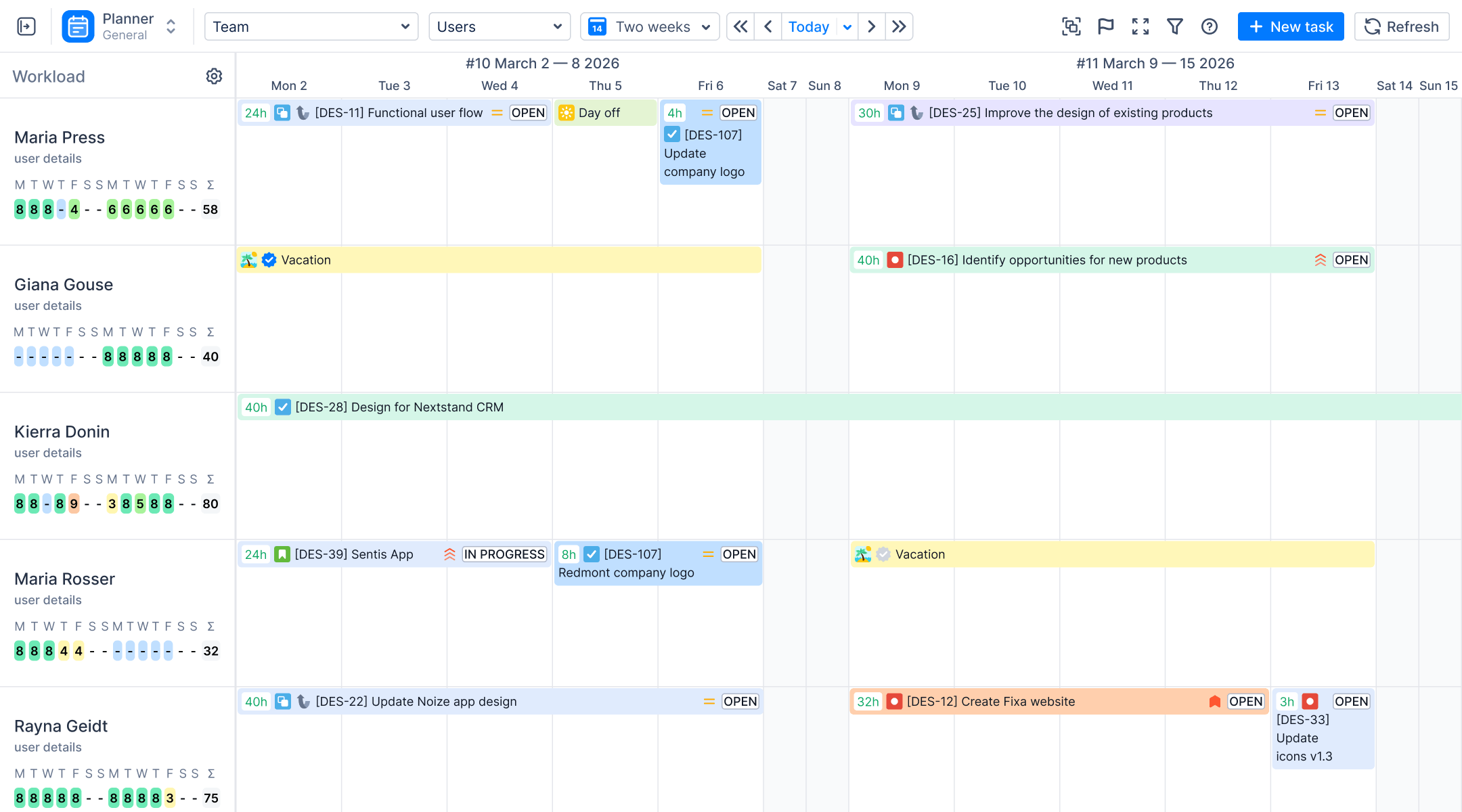
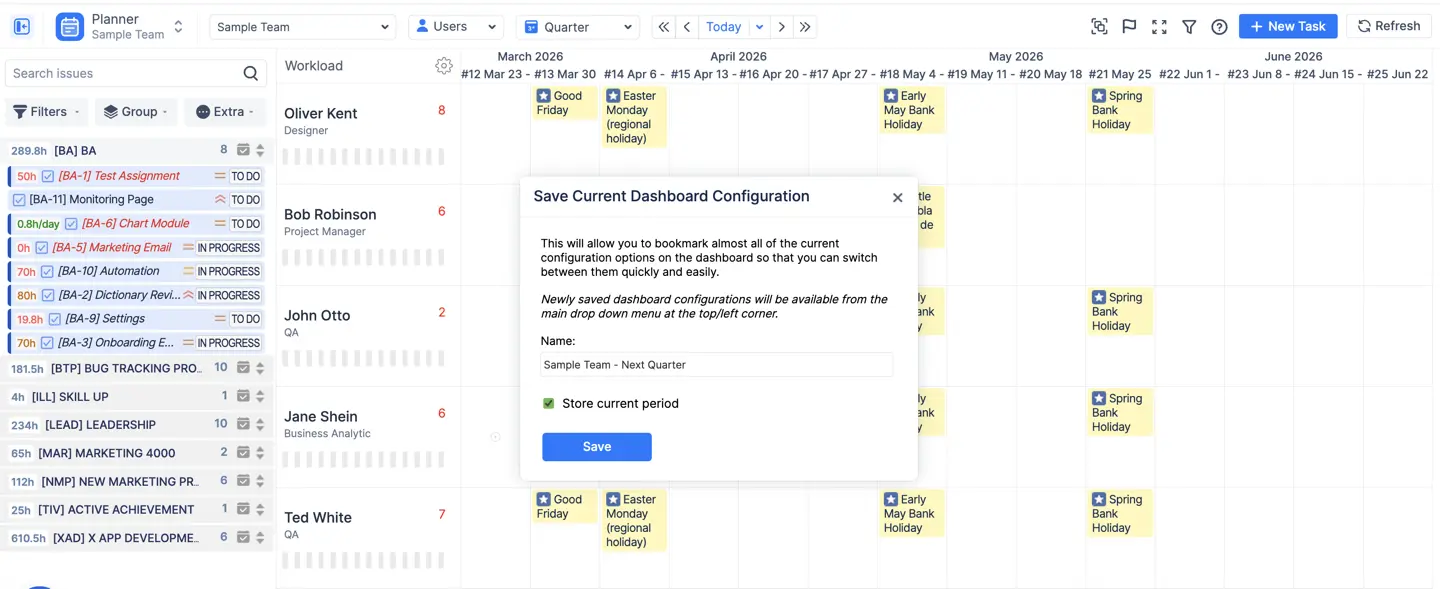
ActivityTimeline provides a special Jira Planner containing everything: projects with issues, a calendar view, Individual and Personal timelines with all the activities (scheduled and planned issues):

You can save these dashboards with specific time periods, such as the next quarter, so they open exactly where you need them.
The Left Panel (Issues Panel) provides an overview of projects with tasks:
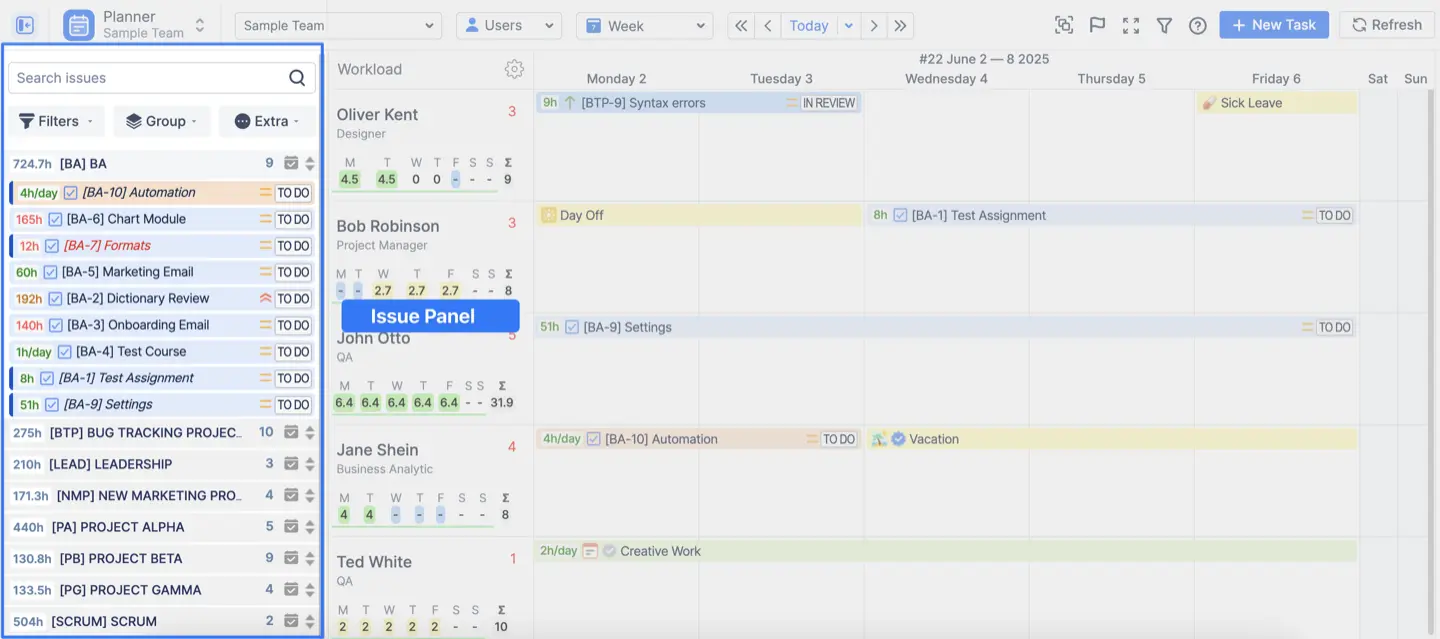
The Right Panel (Timeline Panel) provides a calendar view for managing current and future tasks. Each row corresponds to a person's or team's timeline, and each column represents a day, week, or month depending on your chosen view.
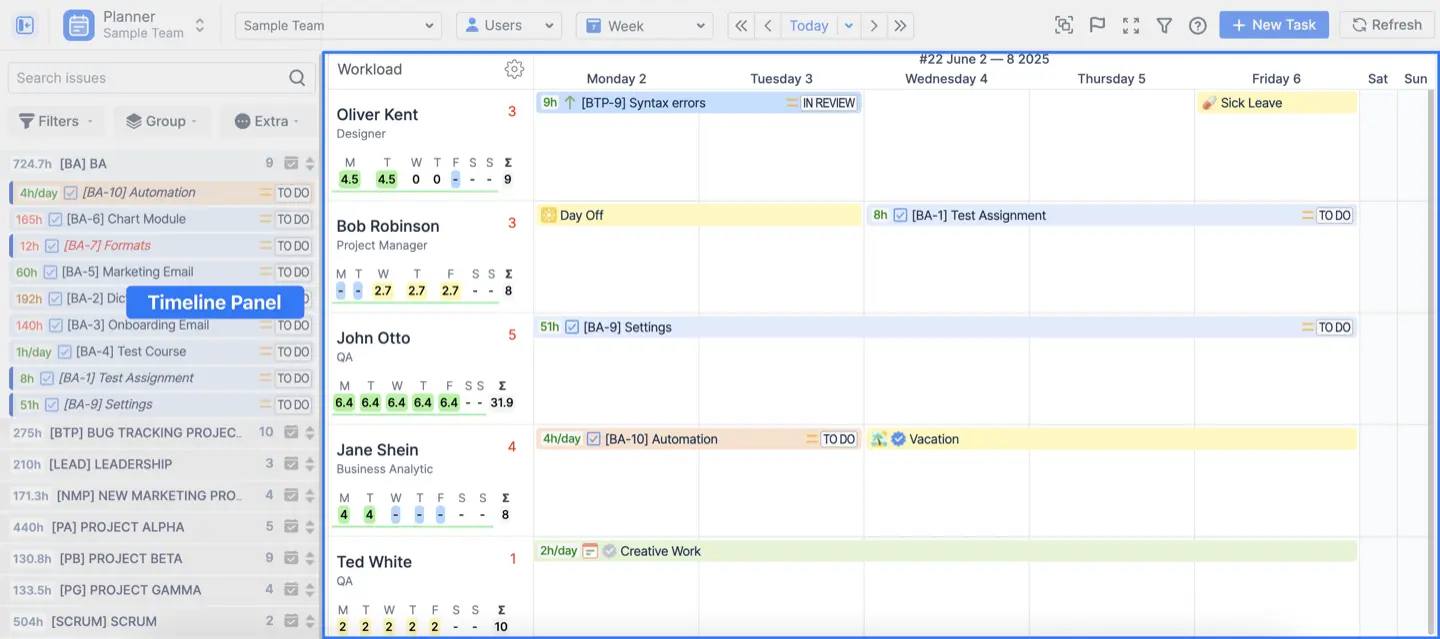
ActivityTimeline is fully synchronized, so you can effortlessly schedule tasks from the left panel to user/team timelines with a simple drag-n-drop:
Or create a new item directly from the dashboard:
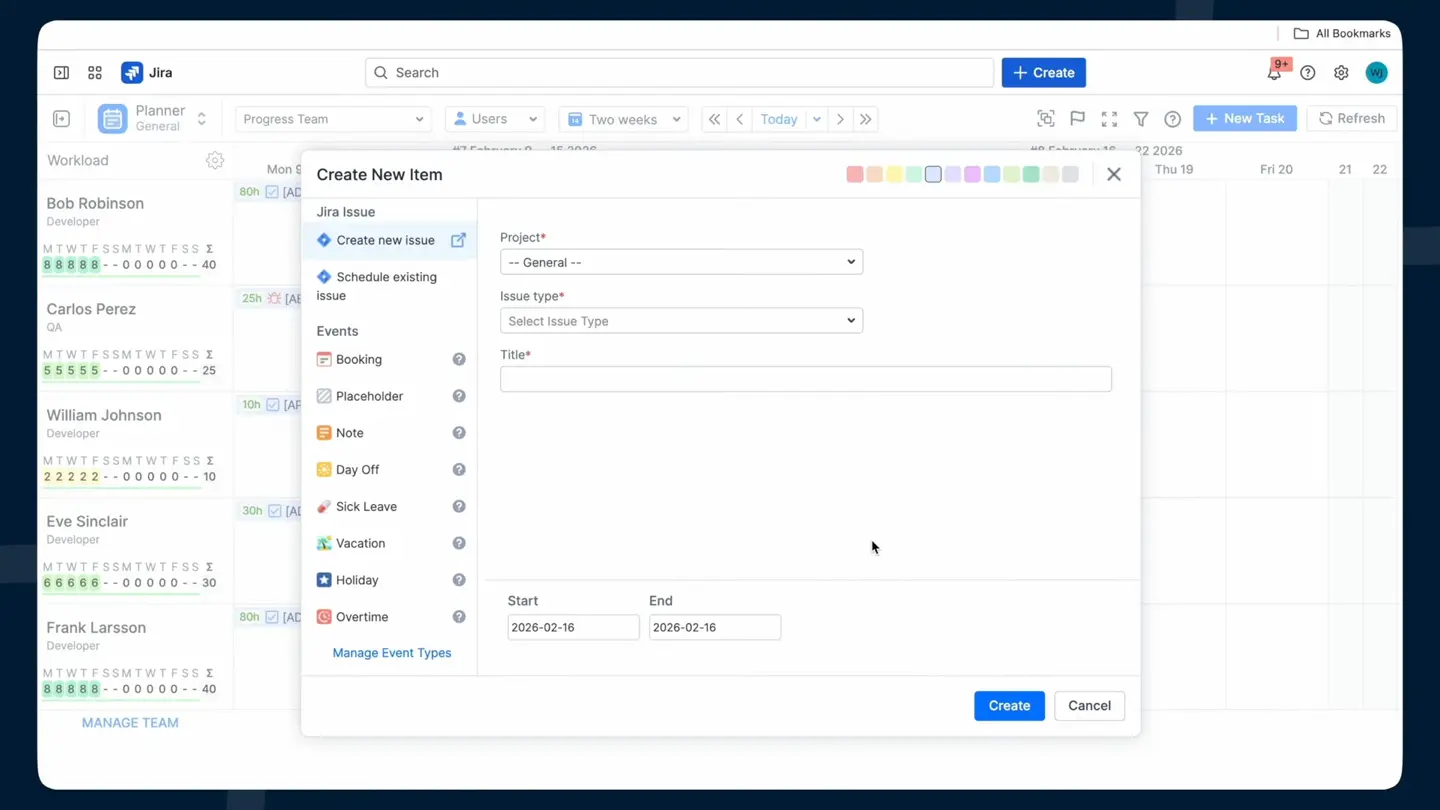
Tip #2: Use Filters and Group Issues
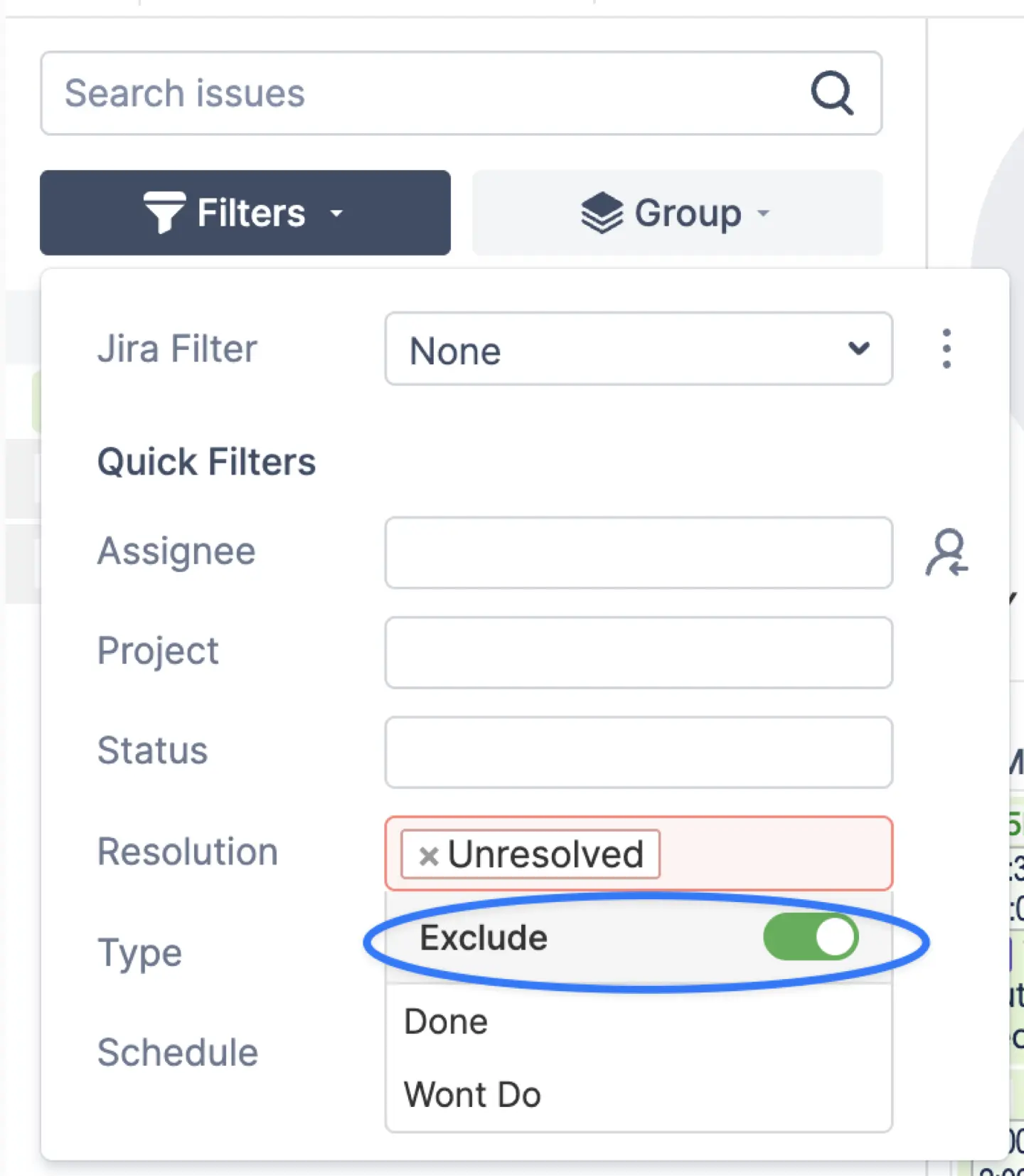
The app's dashboard also incorporates an "Issue Search" field and a range of Quick Filters to enhance issue search functionality. For instance, when seeking an unassigned task to include in your to-do list, simply customize your preferences and apply task filtering. You can even exclude specific results from your view to keep your workspace clean.
You can also group your issues in different ways:
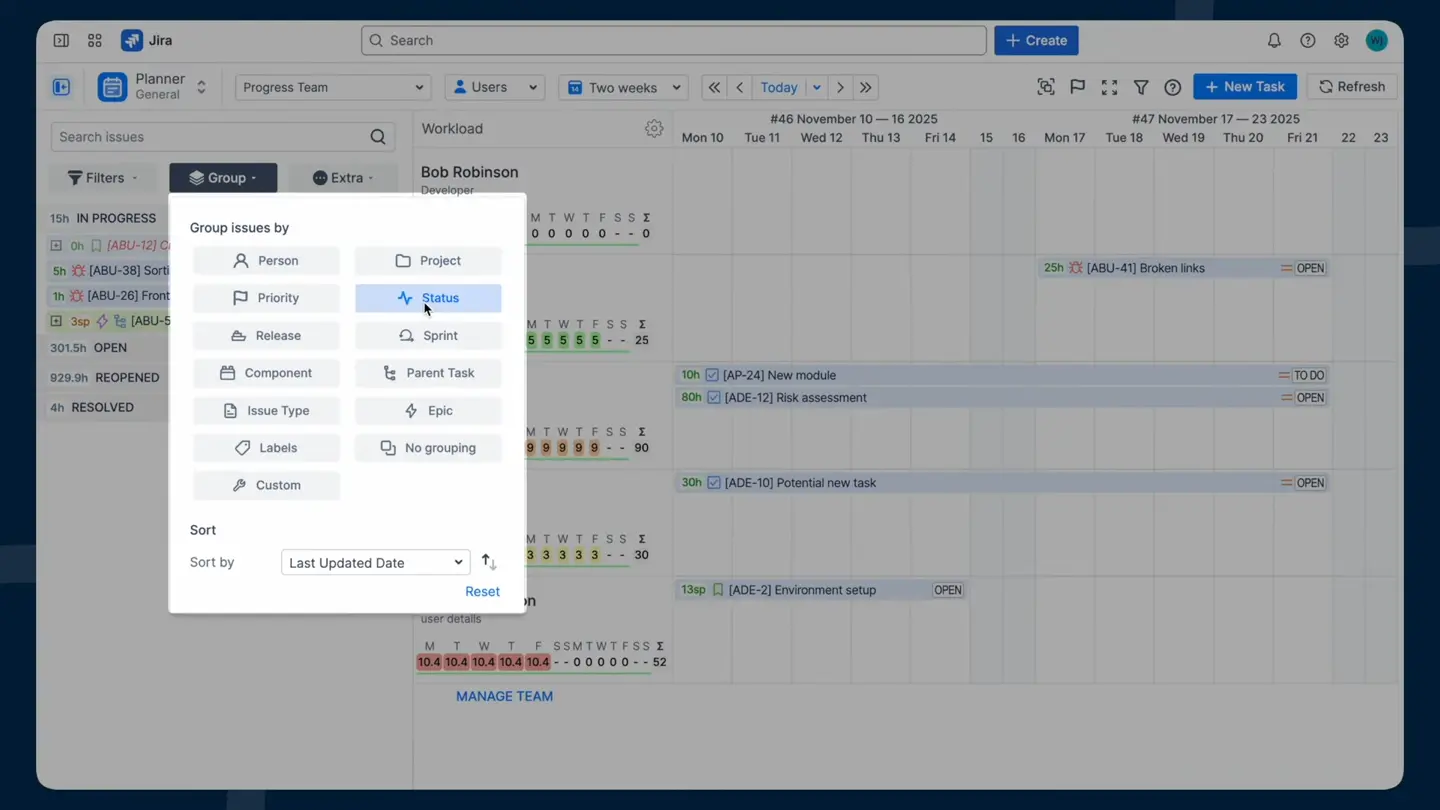
Tip #3: Track Estimates
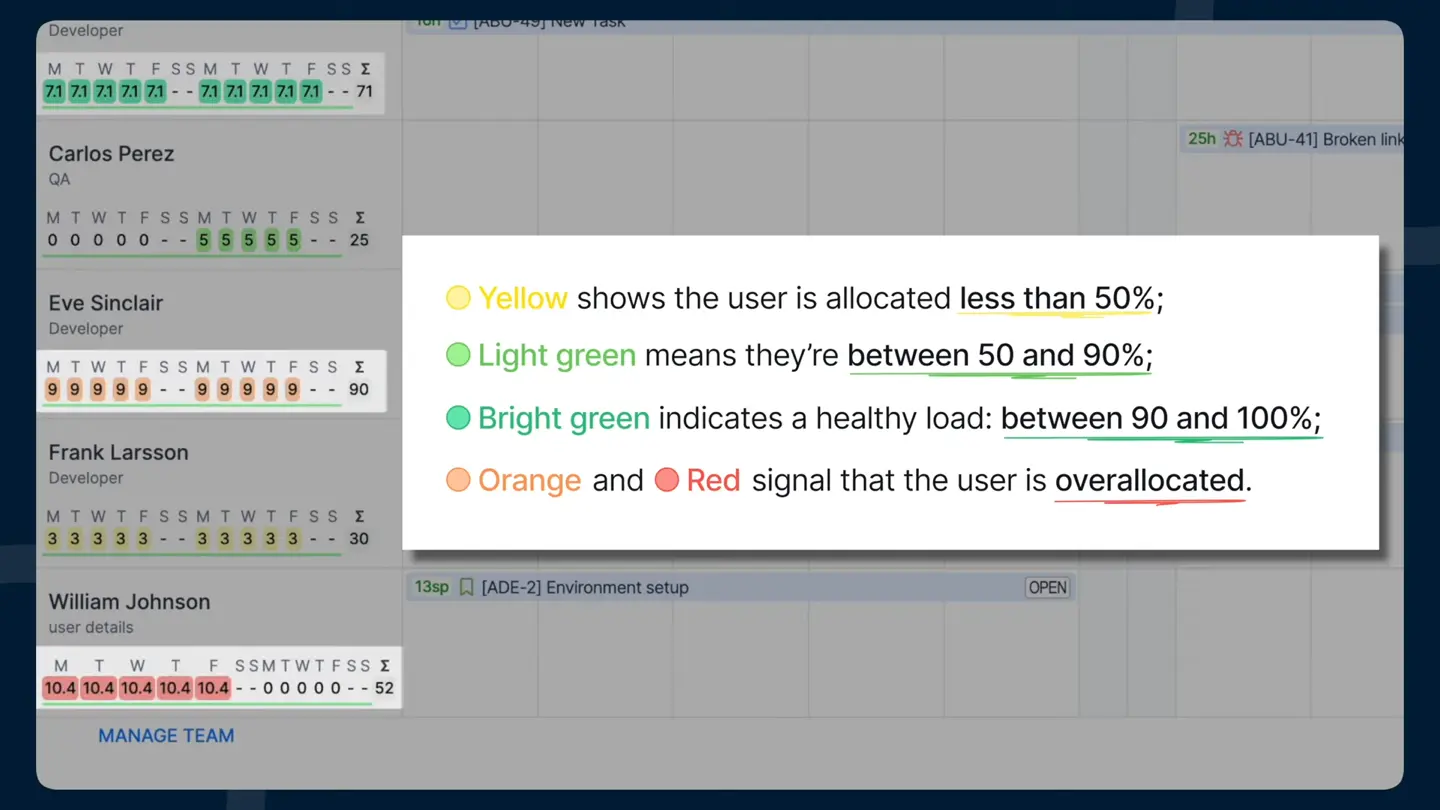
There is also a possibility to set and track estimates of issues. Users can effortlessly see whether tasks are not over or underestimated. Encouraging team members to log work daily ensures that project tracking is accurate and up-to-date.
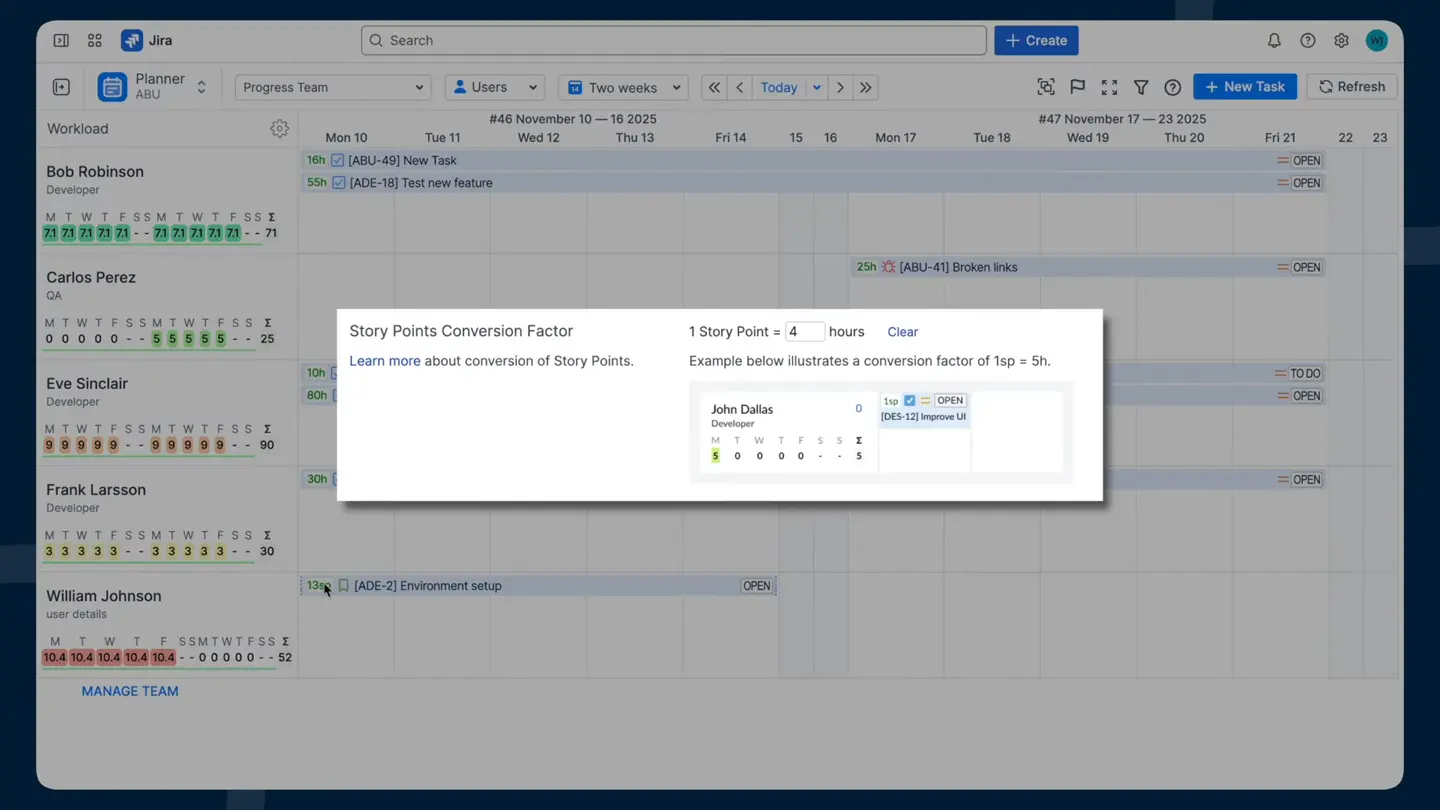
ActivityTimeline supports both time-based tracking and Story Points.
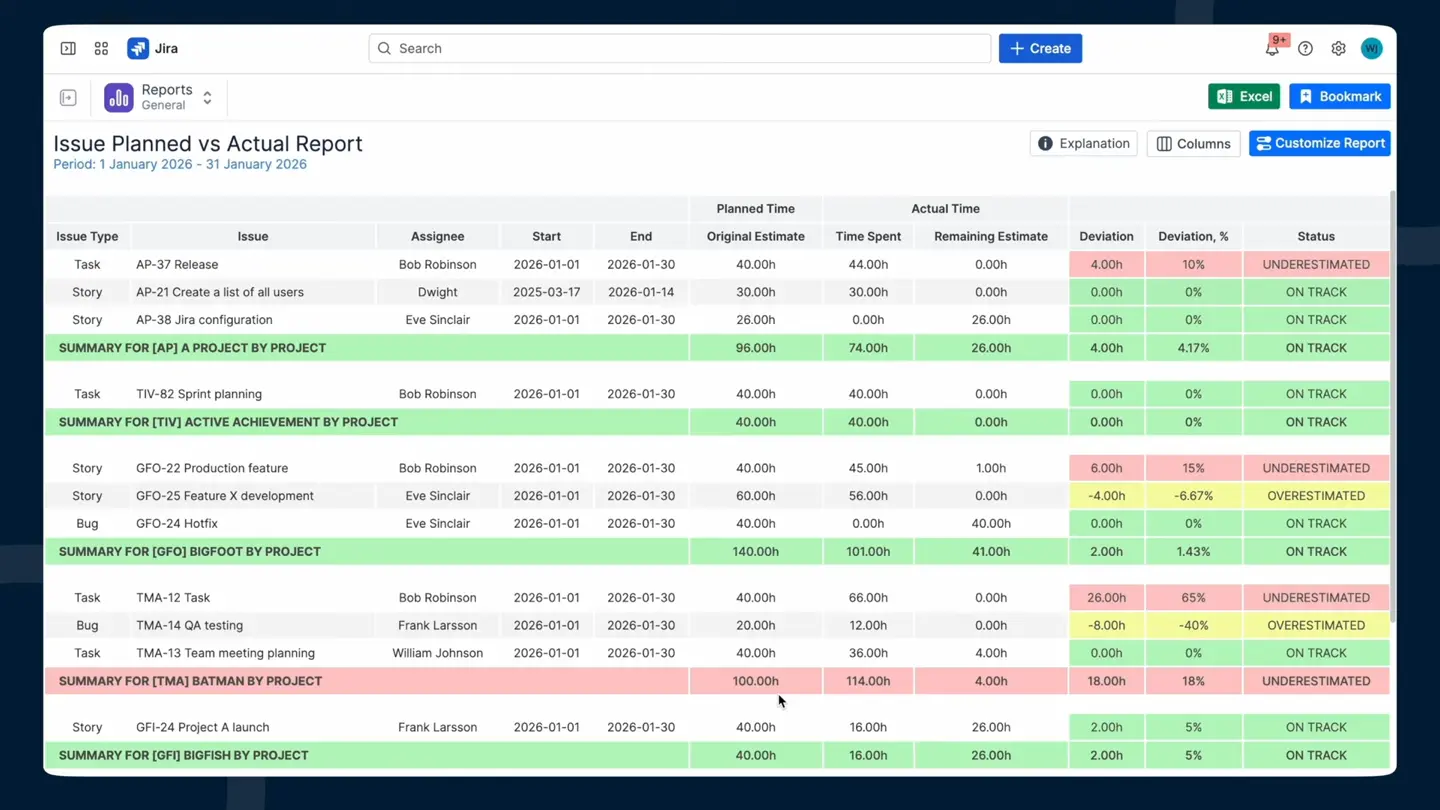
By the way, the ActivityTimeline app also has an advanced reporting section where users can find dozens of useful resource, issue, and project reports. One of them is the Planned vs. Actual report, which allows you to quickly compare task estimates:
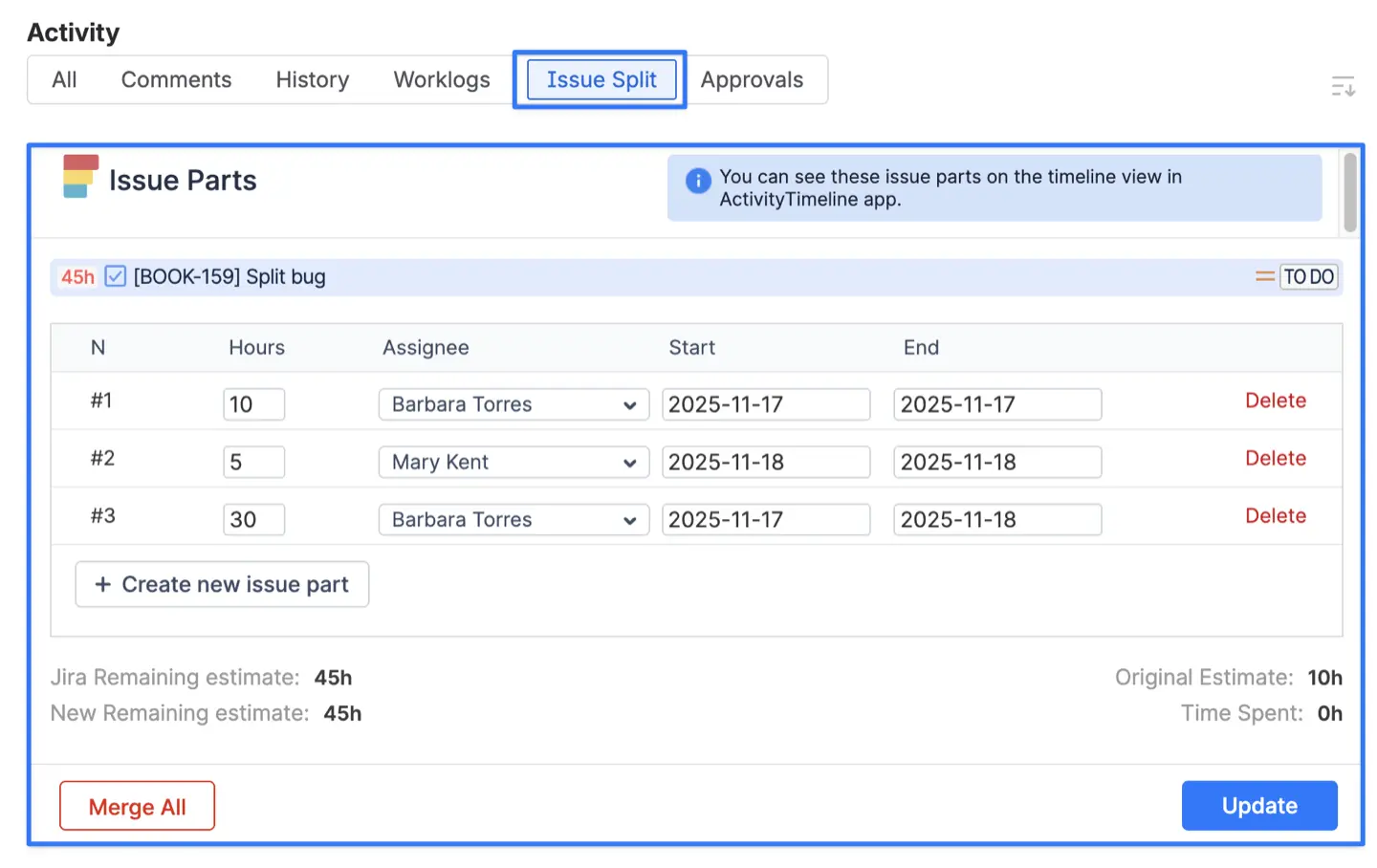
Tip #4: Split Issue Between Multiple Users
One of the most popular ActivityTimeline features is an opportunity to assign the same issue to multiple assignees. Sometimes team members need to work on the same task but Jira has no opportunity to divide it. With the app, you can easily schedule the same task to several users and set different estimates.
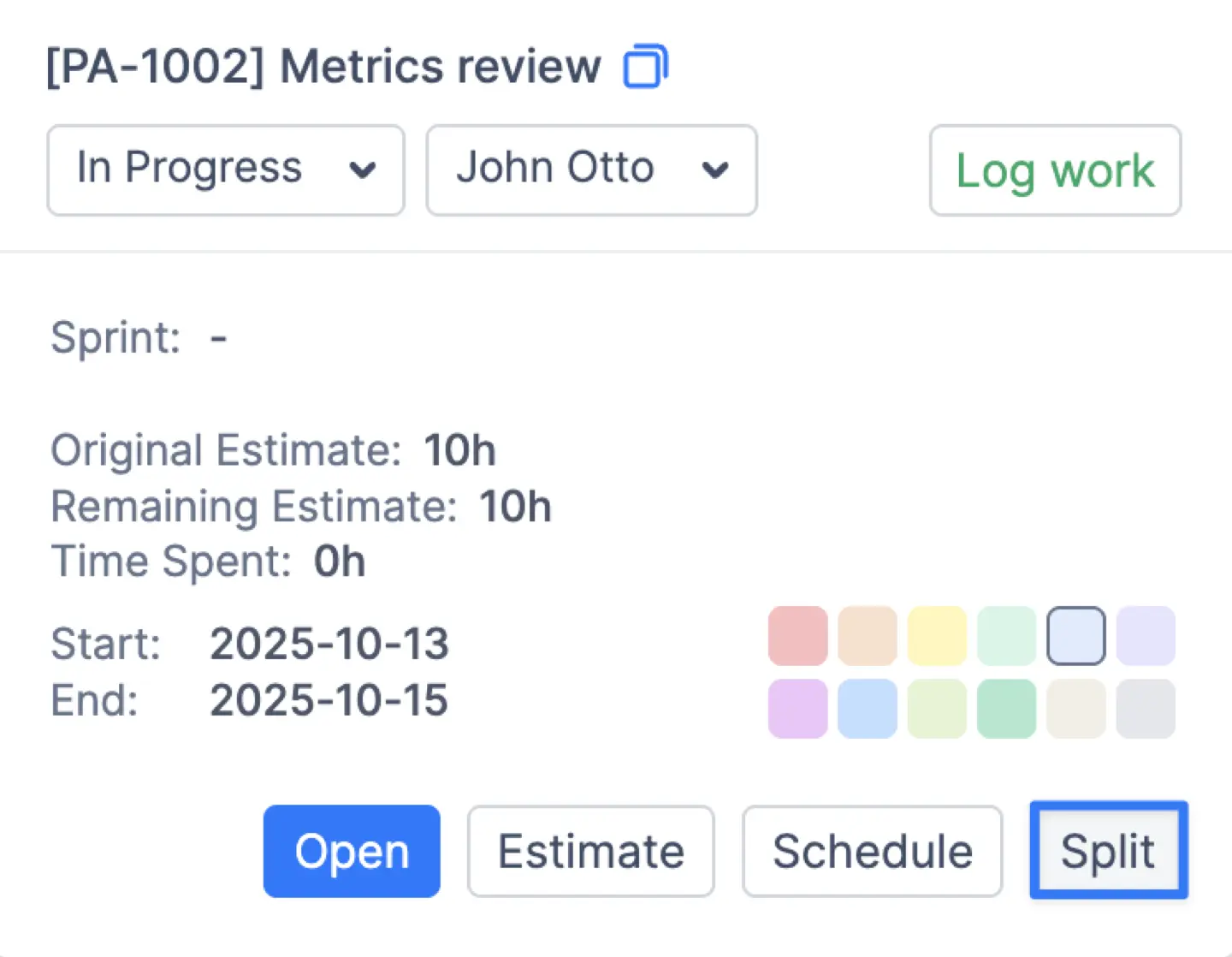
"Issue Split" tab is also inside the native Jira issue screens under the Activity section. This means that once you split and schedule a task across multiple users in ActivityTimeline, team members can see that all directly from Jira, without even needing to open the app.
Tip #5: Try a "Bulk Reschedule" Option
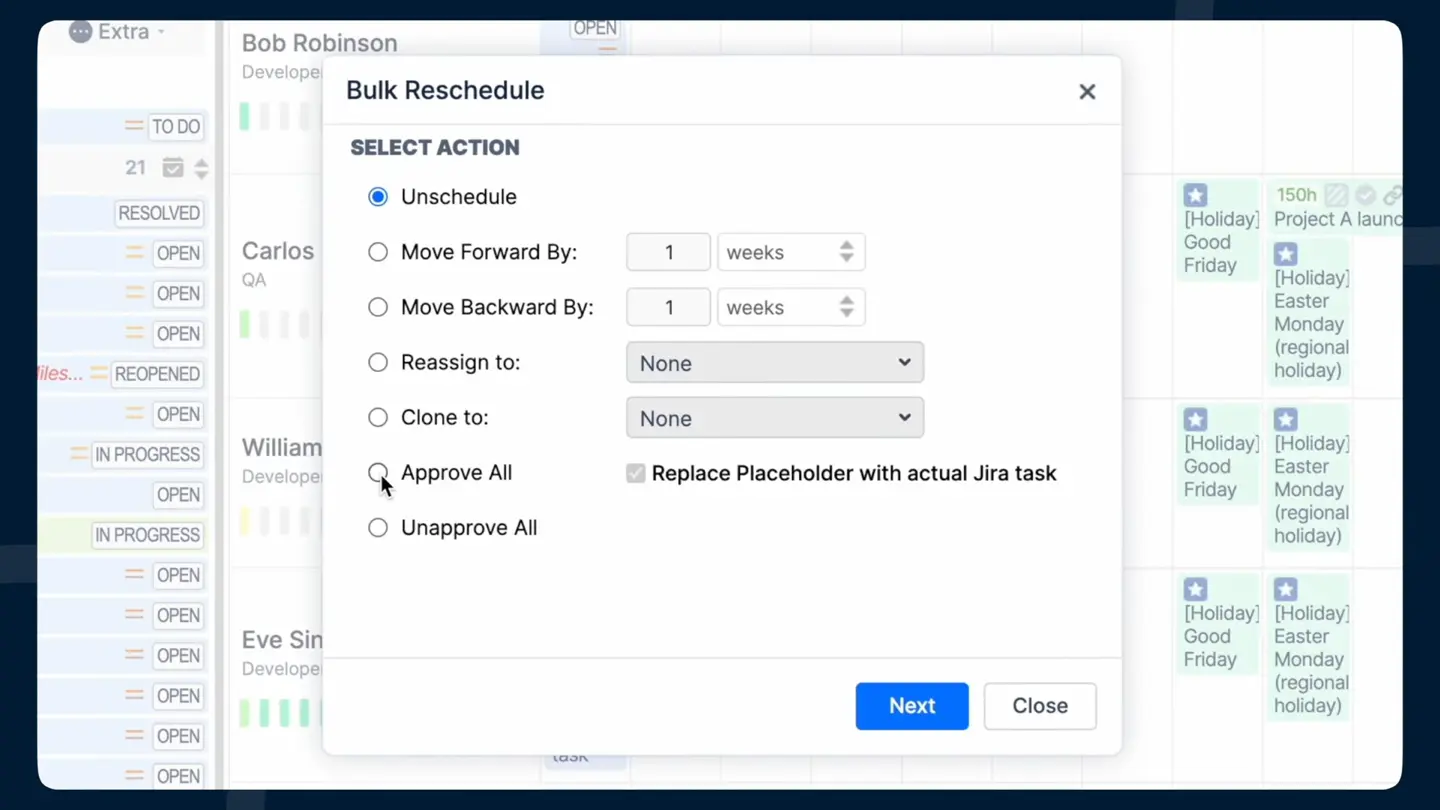
Another great feature is an opportunity to make bulk options with issues at once. For example, you need to forward multiple issues or reassign them to another user, and there is no need to reschedule issues one by one, you can reschedule all of them in several clicks:
Tip #6: Master Holiday Management
Standard Jira does not have a built-in holiday management feature. Project managers and teams always need this during their work. With the help of ActivityTimeline, you can create your own custom events and use the default ones like sick leaves, days off, vacations and holidays, etc. Or, for example, schedule meetings, work trips, and just office events.
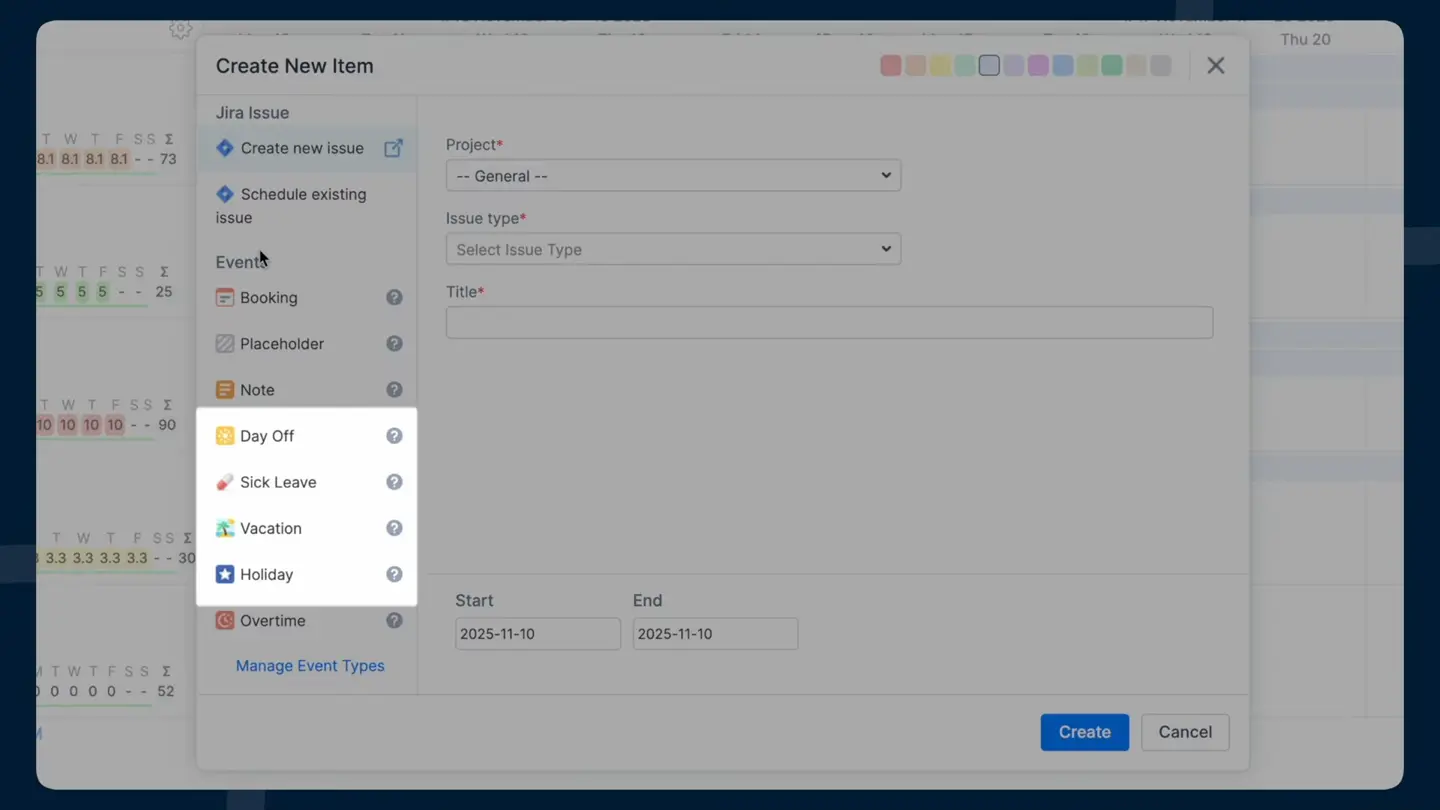
It's also possible to create holiday schemes and assign them to different teams and user groups. This feature is especially helpful if you manage multiple remote teams in different countries.
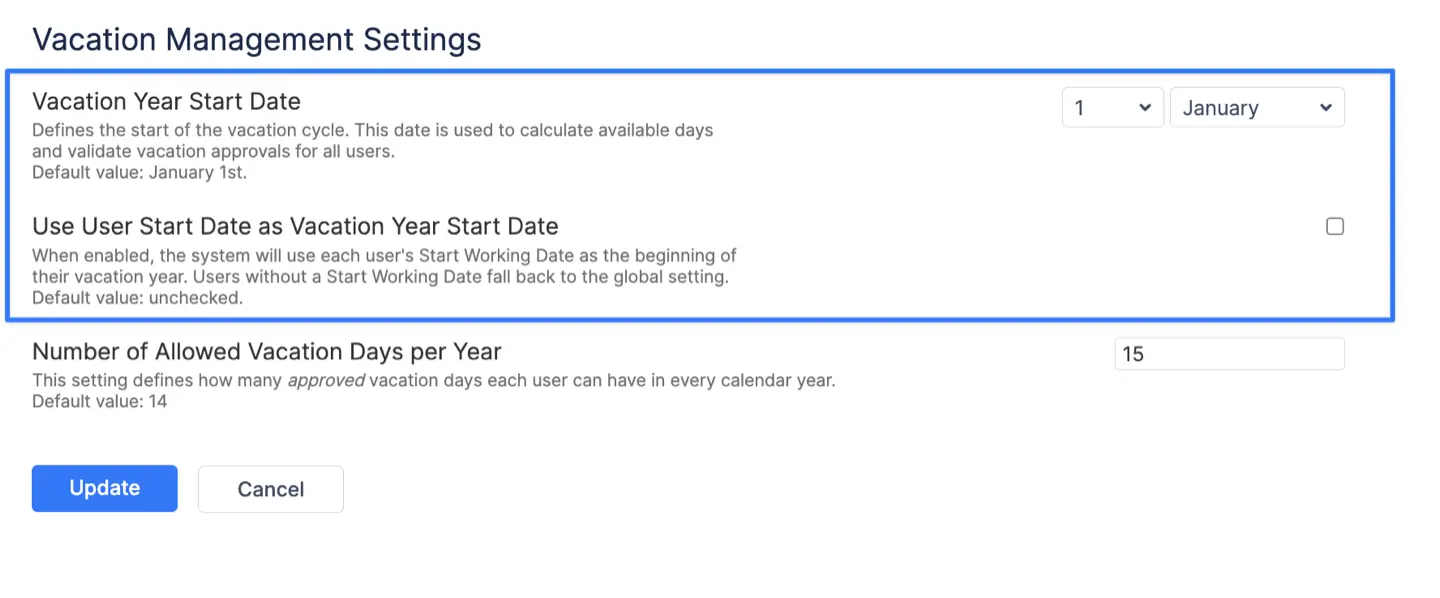
To perfectly align with your company's HR policies, project administrators can configure precise vacation cycle start dates (globally or per individual user) and enable/disable approval workflows for specific event types.
These custom events are included in the reports and timesheets as non-working days for accurate reporting and billing objectives.
Tip #7: Manage Repetitive Tasks
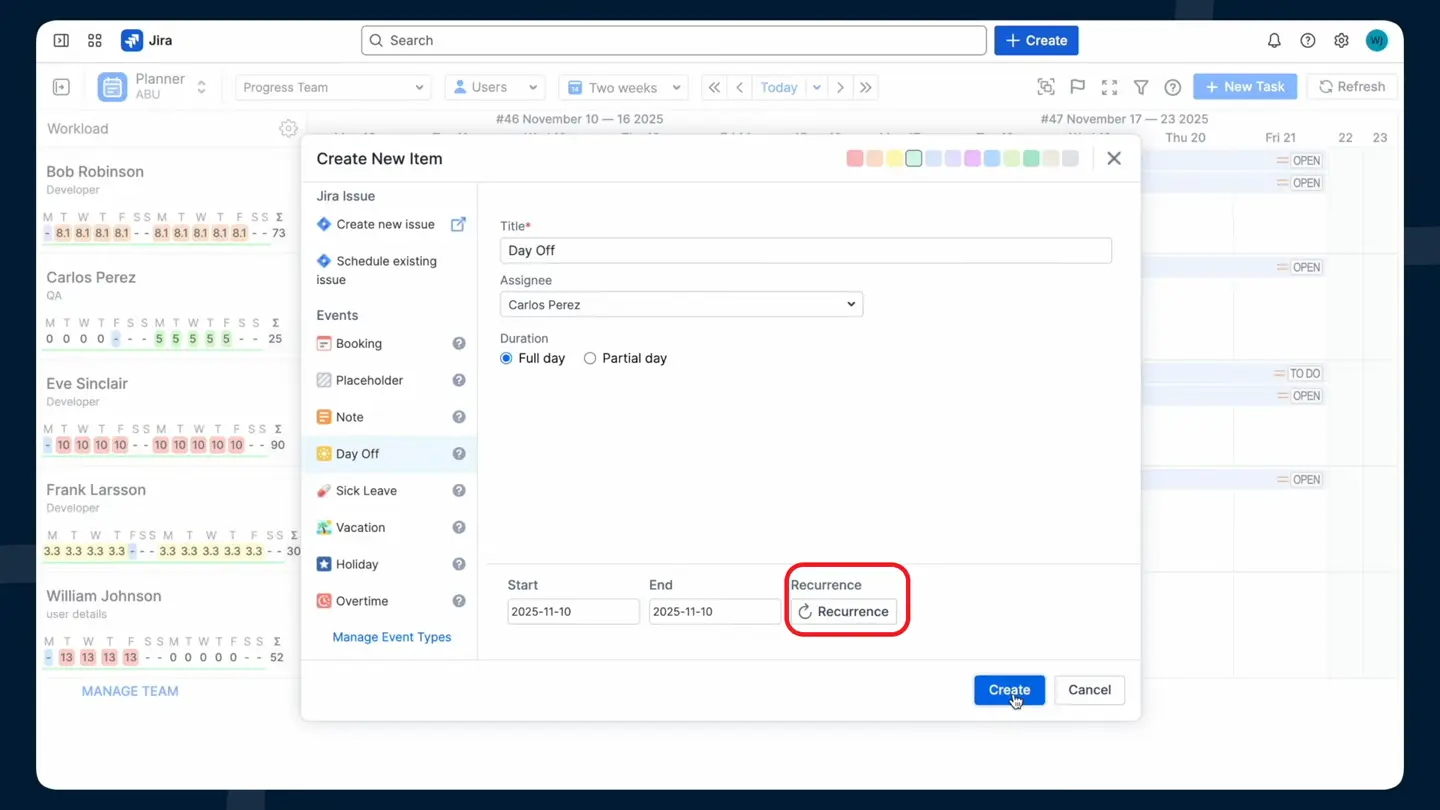
For those who deal with repetitive tasks, ActivityTimeline offers an opportunity to create recurring custom events for the needed period. Let's say you have team meetings every week and want to show them on the calendar. With just a few clicks, you can create bookings for the meetings for each team member and make them happen again and again:
Tip #8: Create Placeholders for Jira Tasks
When it comes to task planning, it can be an overwhelming process. In ActivityTimeline it's not necessary to create Jira tasks. You can just create placeholders for future tasks and assign them to the needed resource or create a placeholder for the existing issue, and if the plan changes, just delete this placeholder from the Jira Timeline.

Conclusion
Mastering Jira scheduling is key to ensuring your projects run smoothly and efficiently. By understanding Jira's features, creating a well-defined scheduler, and leveraging the capabilities of Jira plugins, like ActivityTimeline, you can optimize your project timelines and increase your chances of success.
Remember that Jira scheduling is a dynamic process that requires continuous monitoring and adaptation to deliver outstanding results.