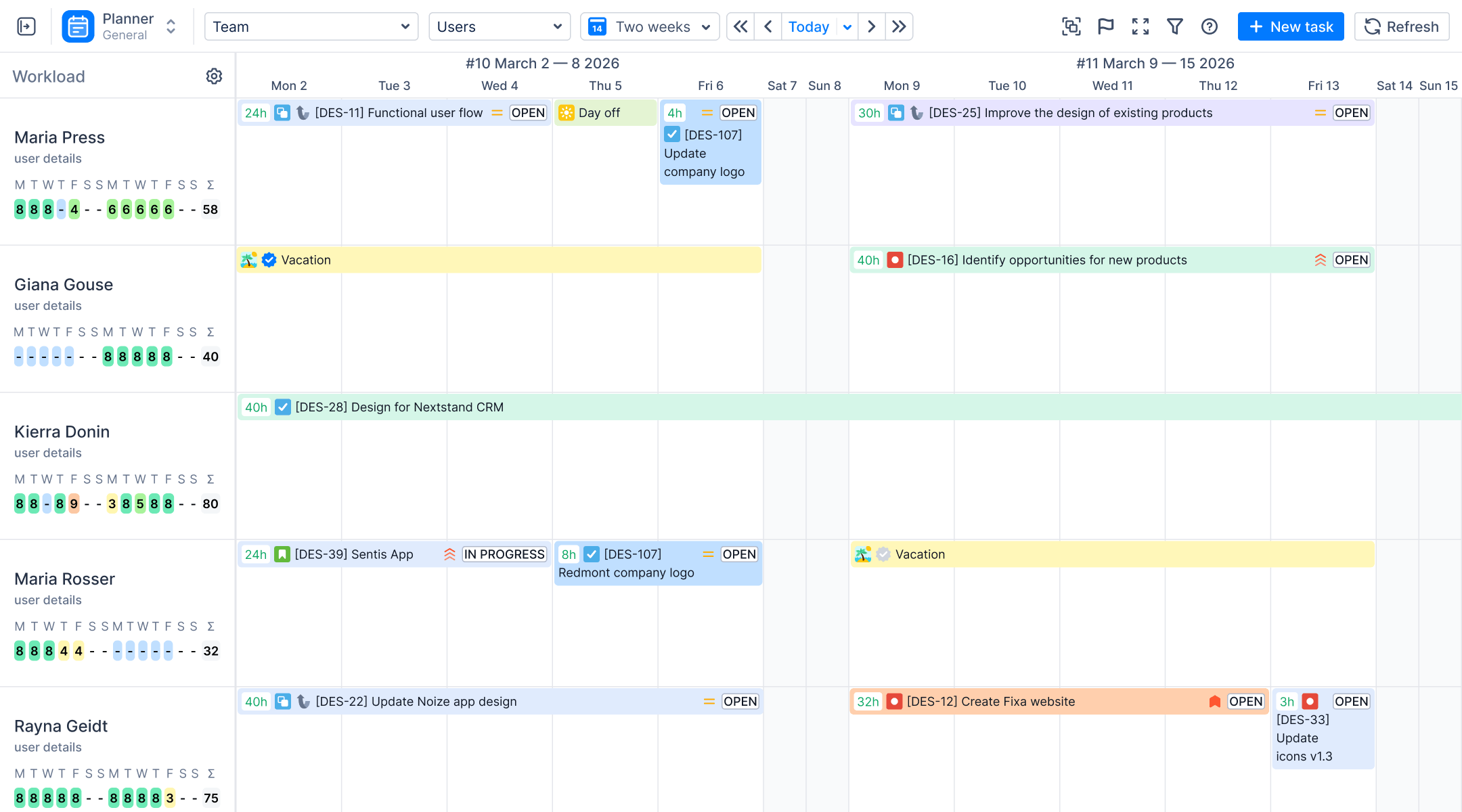

Capacity planning tools help you monitor your team's performance in real time, improving both project planning and resource management. However, not all capacity planning tools are created equal. You might ask, What are the best project planning tools for small businesses? The answer usually depends on whether your team prioritizes deep flexibility or a simple visual layout. In this article, we'll discuss key features to consider when choosing a capacity management tool and review some of the best options available:
- ActivityTimeline + Jira: Easy-to-use resource management tool integrated with Atlassian products.
- Scoro: All-in-one platform for managers to handle everything in one place.
- Toggl Plan: Visual work management with built-in capacity planning features.
- Resource Guru: Resource scheduling and capacity planning to see availability and utilization in real time.
- Kantata: Real-time insights into optimal resource allocation, skills, and project forecasts.
- Runn: Advanced efficient resource utilization and capacity planning software.
What is Capacity Planning?
Capacity planning is the process of making workflows smoother and removing obstacles, typically held by project managers. Here’s an example: if you own a coffee shop, you need to know how many baristas are required for the afternoon shift. By figuring out your customer flow after lunch, you can plan the right number of staff to handle the rush.
Failing to plan capacity effectively can leave you short-staffed or underfunded, which often leads to further problems and financial losses. A lack of an effective workforce planning strategy can lead to a 10–15% loss in annual revenue and a 20–30% drop in productivity during talent transitions.
While human resources are vital, they aren't the only resources you need. Financial limits can hurt your company if demand outstrips your output. Without knowing your capacity, you can't properly predict future needs and production abilities.
Capacity management can’t be the result of a single brainstorming session or group meeting, either, as it’s an ongoing process that can be affected by factors such as seasons, weather, and customer demand.
To plan capacity for the long term, you need to equip yourself with the right tool to do the job. Discover tools for capacity planning that’ll take care of the heavy lifting, and your job will be much easier. In this guide, we’ll assess top-rated project planning platforms and go over effective strategies to help you maximize productivity.
Benefits of Capacity Planning in Resource Management
The strategic use of capacity planning tools can significantly improve resource management, affecting both operational efficiency and financial performance. These tools help you become more agile, respond quickly to market demands, and deliver better customer experiences.
When companies invest in effective capacity planning tools, they can:
- Gain Predictive Insights: Use advanced analytics to predict future resource needs and prepare for them, reducing the risk of shortages or excess.
- Optimize Workforce Management: Schedule the right number of employees based on projected demand to boost productivity and cut costs linked to overstaffing or understaffing.
- Improve Budget Allocation: Allocate budgets more effectively by knowing when and where resources are needed, avoiding unnecessary spending and enhancing financial performance.
- Enhance Strategic Planning: Integrate with project management and other business systems to support informed decision-making and long-term planning.
- Reduce Bottlenecks: Identify potential constraints early to ensure smooth operations and maintain consistent productivity levels.
- Prevent Employee Burnout: Monitor individual workloads to avoid over-utilization; this ensures a healthy work-life balance and reduces employee turnover.
- Implement Skills-Based Planning: Match specific team talents with relevant project requirements; this ensures that the most qualified people handle the most critical tasks.
Using these planning tools strategically streamlines operations; it also creates a more resilient and adaptable business model. With the right capacity planning tools, companies can stay ahead of the competition, seize opportunities, and manage risks effectively.
Capacity planning tools also promote better communication and collaboration within teams by providing a clear view of resource availability and project timelines. This transparency boosts operational efficiency and employee morale, as team members can clearly see their roles and contributions.
Advanced predictive analytics and AI capabilities in these tools allow for more accurate forecasting and planning. You can foresee potential disruptions and address them proactively, this ensures continuous productivity and service delivery. This foresight is crucial where agility and responsiveness matter.
Investing in capacity planning tools leads to more informed decision-making. Project managers can access real-time data and comprehensive reports, making strategic choices based on solid evidence. This reduces the risk of costly errors and ensures efficient alignment of resources with long-term goals.
{{rich-cta-4}}
How to Choose the Right Capacity Planning Tool
Selecting a comprehensive capacity planning tool requires careful thought because one size does not fit all. Each business has its unique requirements and constraints. Here’s a structured approach to help you make an informed decision:
- Evaluate Business Goals. Understand your company’s short-term and long-term objectives. Are you aiming for increased efficiency, cost reduction, or perhaps enhanced productivity?
- Current Resource Utilization. Review how your resources are being currently utilized. Is there a pattern of over-utilization or under-utilization?
- Identify Pain Points. Pinpoint areas where you face bottlenecks or inefficiencies to gauge the exact features you'll need in a capacity planning tool.
Key Features to Look for In Capacity Planning Software
Once you understand your needs, the next step is to compare different tools. Consider these factors:
- Core Functionality: Check what each tool can do. Does it offer resource allocation, scheduling, reporting, and data visualization?
- Scalability: Ensure the tool can grow with your business and adapt to your changing needs.
- Integration: See if it integrates with other tools for a full view of resource use and the team's capacity.
- User Interface and Visualization: Look for visuals like graphs and charts to help you spot trends and inefficiencies.
- Cost and Value: Compare costs. Most tools charge based on the number of users or features.
- Support and Community: Read reviews and testimonials. Good customer support can greatly improve your experience.
If you’re short on time for doing in-depth research, don’t worry. Below we have gathered five most interesting options to date that cover different needs project managers may have concerning capacity planning.
Top Capacity Planning Tools
🥇 ActivityTimeline + Jira
ActivityTimeline is a powerful tool for Jira users to make resource and capacity planning easier. As Atlassian is one of the biggest ecosystems, this Jira plugin helps numerous teams around the world. It comes with many features that improve visibility, planning, and reporting, which makes it great for teams wanting to optimize their project management.

Features
- Planner: Use this module for high-level resource management; it features Workload and Availability Indicators to track hours per person. You can even assign one task to several people.
- Workspace: This module serves as a personal hub for employees; it includes individual and team timelines to help everyone manage their schedules. Team members can track their progress and control their workload effortlessly; this ensures no tasks are missed on the personal schedule panel.
- Timesheets: Create simple time tracking reports to see how much time is spent on specific tasks; you can group data by user, sprint, or release. This module allows you to distinguish between billable and non-billable hours; you can also export these records to Excel.
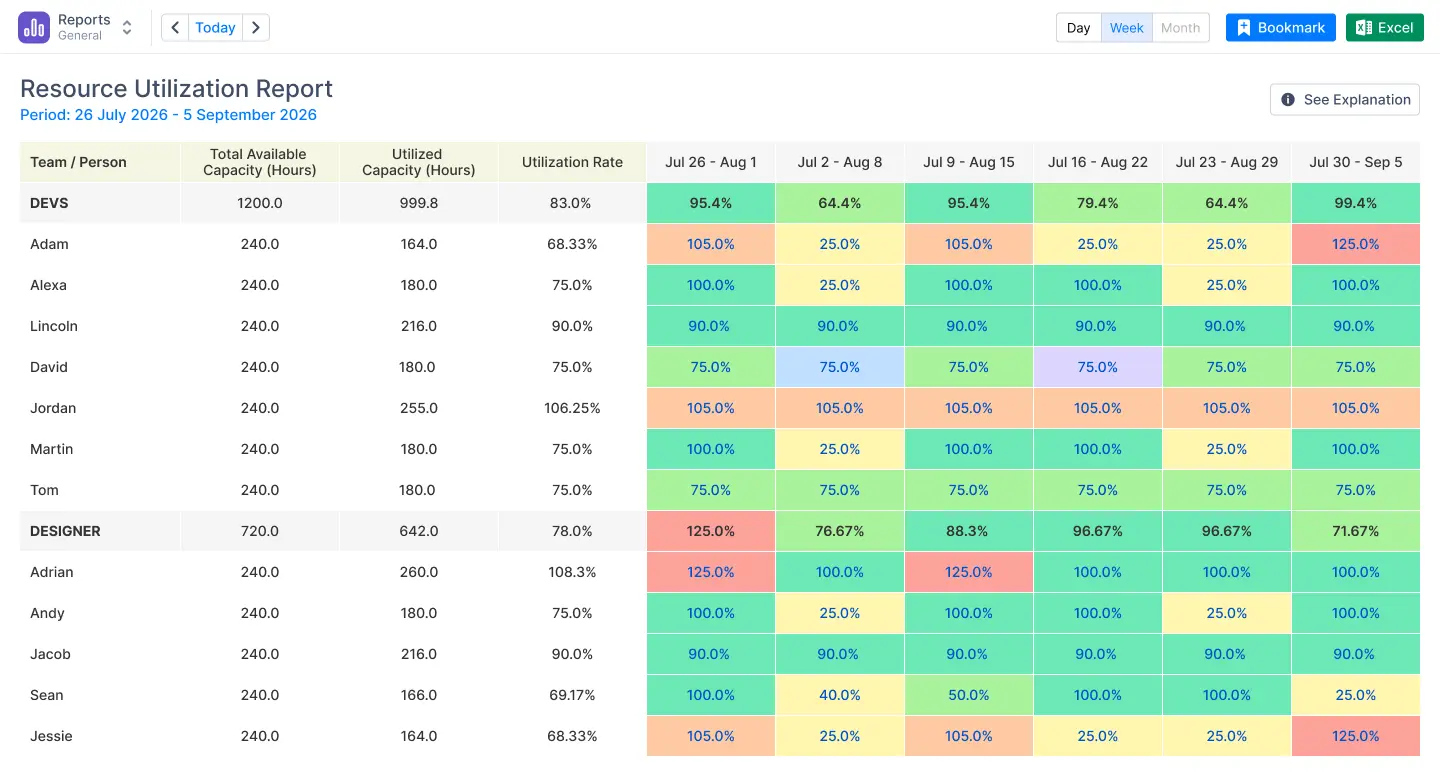
- Reports: Access advanced analytics such as the Resource Utilization Report; this helps you prevent team burnout by tracking used capacity. The module also includes the Planned vs. Actual report; this allows you to compare original estimates with real execution to identify project bottlenecks.
Loto-Québec implemented ActivityTimeline to address the challenge of matching employee skills with specific project initiatives; this provided the transparency needed to balance workloads across their IT department. This data-driven approach allowed team leaders to justify new hiring and reprioritize tasks based on real-time capacity.
Proper visualizations make a real difference when you are making informed decisions while managing your resources. That’s why ActivityTimeline offers various resources and project reports and charts along with showing your team members' timelines, allowing you to measure performance and review historical data. For example, one of the most popular reports, Resource Utilization Report, provides a detailed view of team workloads over a selected period, helping to avoid both underutilization and overloading of tasks:
ActivityTimeline scales well for both small teams and large organizations. It integrates smoothly with Jira and other applications like BigPicture and Jira Plans, offering extensive project management capabilities. This makes it perfect for companies needing thorough capacity planning.
Pricing
ActivityTimeline provides flexible pricing based on deployment options:
- Cloud: Monthly rates start at a $10 flat fee for up to 10 users; for larger teams, costs range from $2.50 to $0.10 per user. Annual plans start at $100 and scale up to $129,950 for 100,000 users.
- Data Center: Sold as an annual subscription starting at $1,900 for up to 50 users. For large enterprises, pricing caps at $89,900 for over 150,001 users.
A 30-day free trial is available for both options; however, for Data Center apps, you can extend this trial up to five times for a total of six months.
Customers Wall of Love
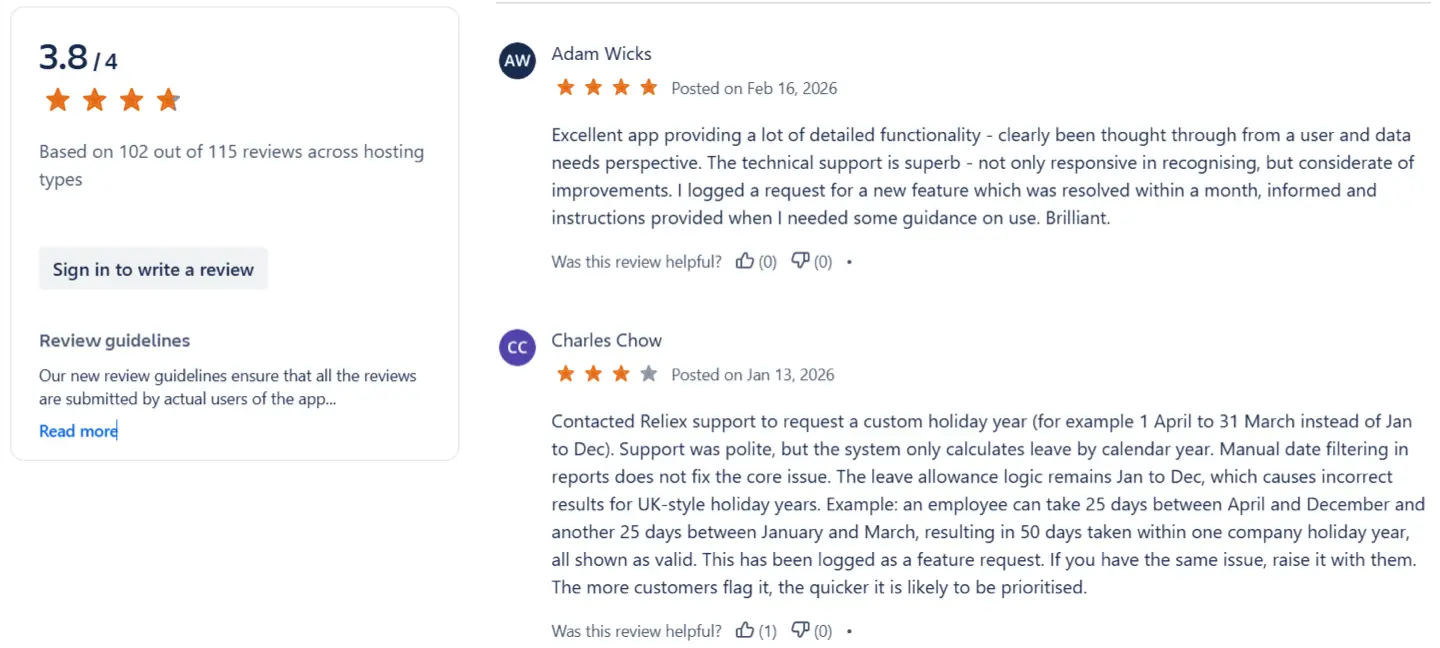
Customers love ActivityTimeline’s easy-to-use interface, the customization options, and how well it improves scheduling efficiency. The support team is praised for being highly responsive and helpful, enhancing the user experience based on the user feedback. Also, the tool has detailed documentation, which helps new customers onboard smoothly.
🥈 Scoro
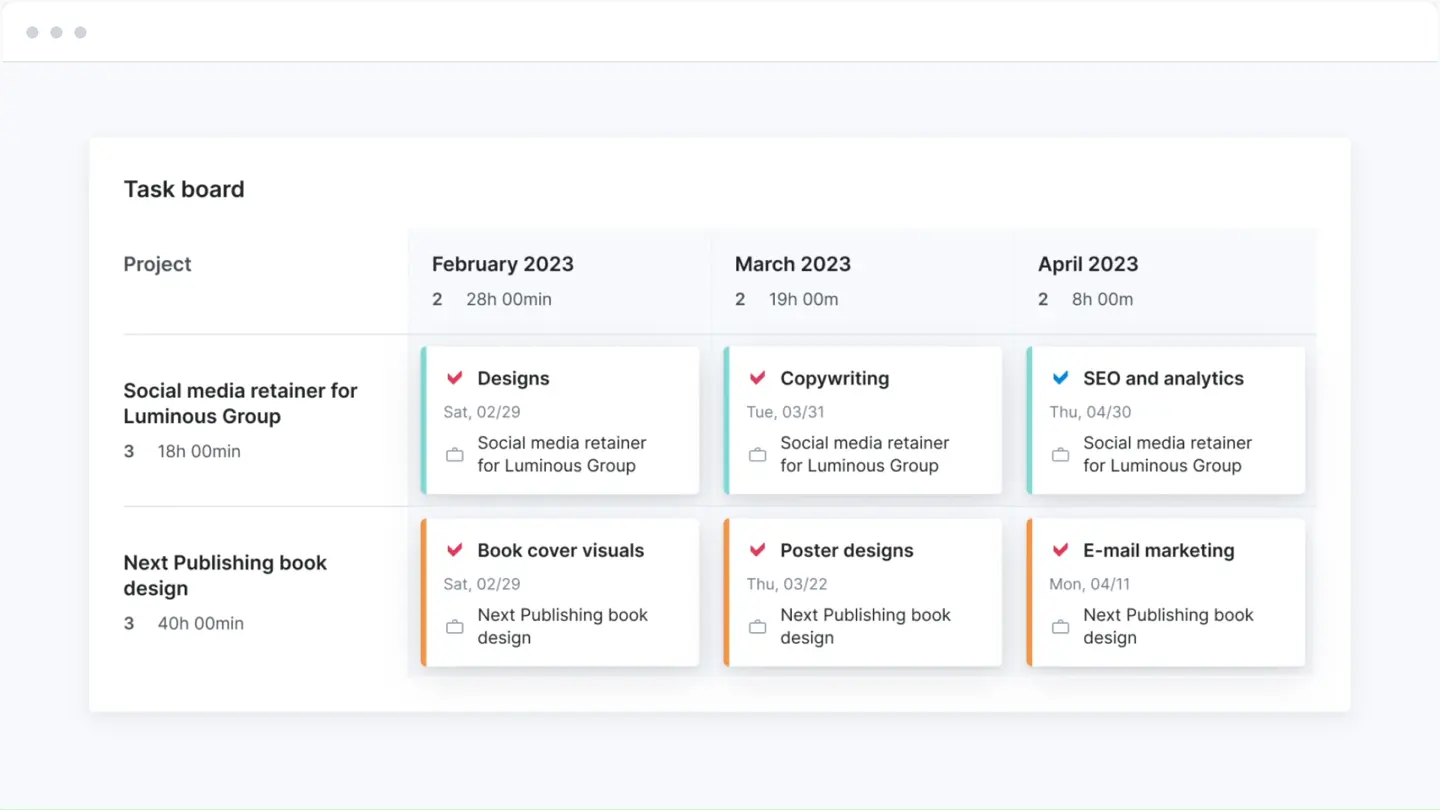
Scoro is an all-in-one work management software for consultancies, agencies, and other professional service businesses, awarded a category leader this spring by G2. It offers tools for managing projects, resources, and finances, helping businesses run everything from one platform. Scoro is great for teams wanting better visibility, profitability, and efficiency.
Features
- Project Management. Manage projects from start to finish: estimate project scope, plan schedules, track progress, and issue invoices. The tool provides detailed reports and dashboards for a complete view of project performance. You can also manage recurring client work through built-in retainer management tools.
- Resource Planning and Forecasting. Project managers can identify potential resource shortages, make decisions on outsourcing or hiring, and balance workloads to ensure optimal use of resources. Teams can track both billable and non-billable time with timers and timesheets.
- Financial and Cost Management. Scoro offers insights into project, client, and service profitability. You can track supplier bills and purchase orders to keep costs under control while integrating accounting software to smooth data flow.
- Sales, CRM, and Collaboration. The platform has a CRM system to manage customer accounts and track sales pipelines. This helps businesses improve their sales processes and customer relationships.
- AI. Scoro features AI-powered insights that automate actions and allow users to find data.
Scoro is scalable and suitable for businesses of various sizes. It integrates with tools like Google Calendar, Microsoft Exchange, Jira, QuickBooks, and Xero, enhancing its capabilities and allowing seamless data synchronization.
Pricing
Scoro offers four pricing plans:
- Core: $$19.90 annually ($23.90 monthly). Includes basic project management, task lists, calendars, and basic financial reports.
- Growth: $32.90 annually ($38.90 monthly). Adds Gantt charts, project templates, multiple currencies, and detailed financial reports.
- Performance: $49.90 annually ($59.90 monthly). Includes project budgeting, retainer management, and utilization reporting.
- Enterprise: Custom pricing. Includes all Pro features plus better access control, more customization, and extra financial tools.
Scoro offers a 14-day free trial.
What Customers Say About Scoro
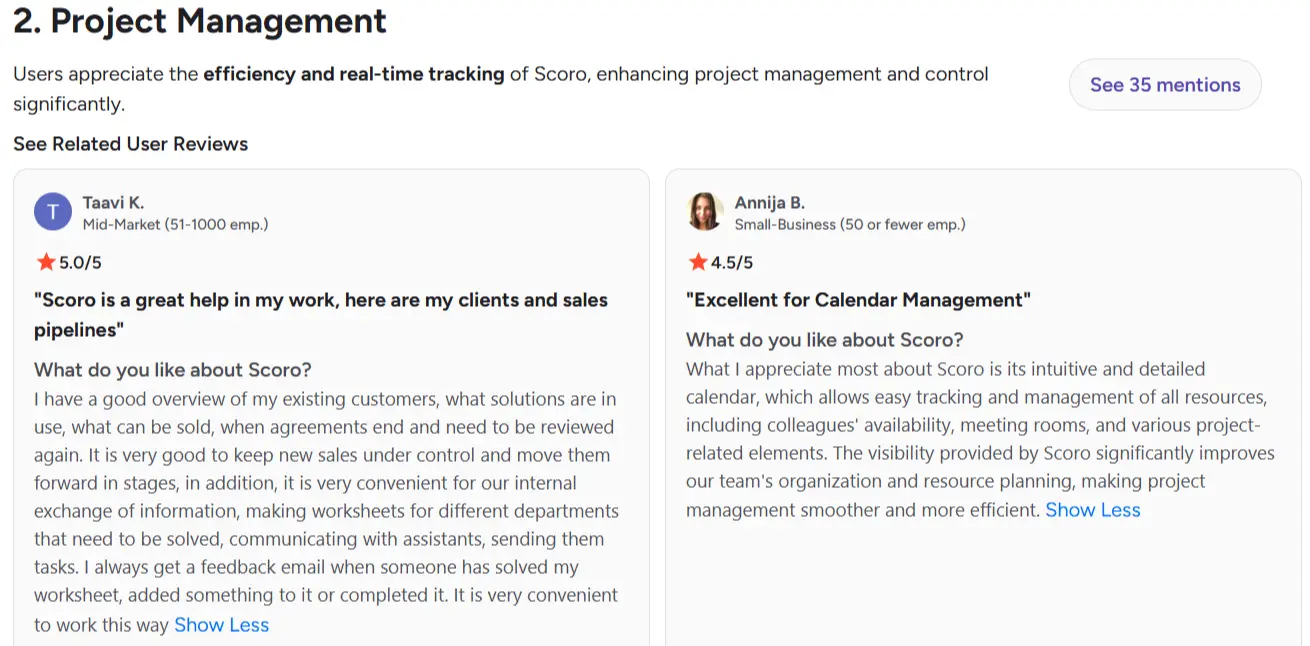
Users love Scoro for streamlining project management and providing real-time insights into resources and profitability. It’s easy to use with an intuitive interface and has a helpful onboarding process. The support team is friendly and knowledgeable. Users also value how Scoro combines multiple tools into one system, reducing excess complexity.
🥉 Toggl Plan
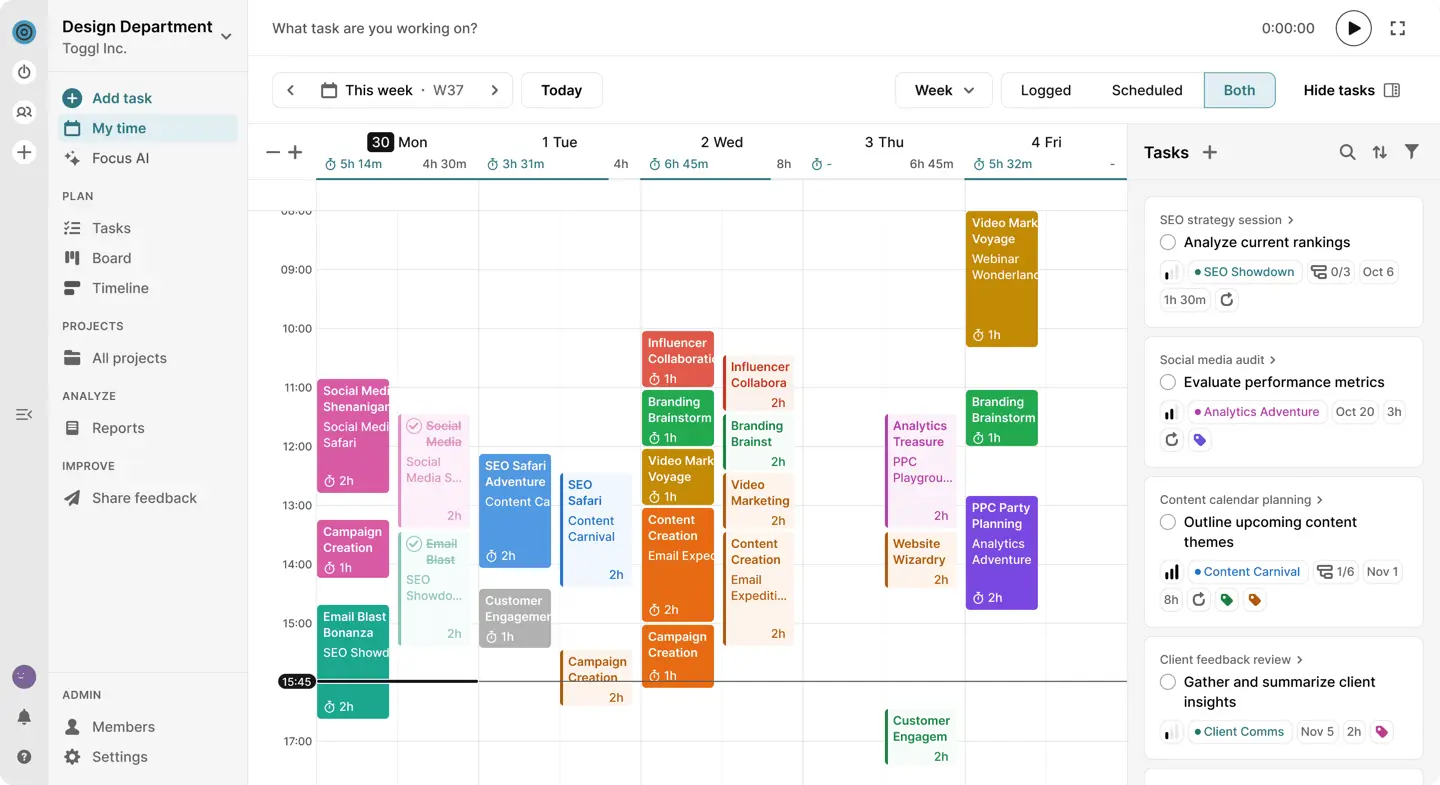
Toggl Focus is a user-friendly tool for planning and scheduling. It is perfect for small and medium teams. The software simplifies project and resource management with visual timelines. You can see everyone's schedule and workload at a glance. It is ideal for creative agencies, consultancies, and implementation teams. It helps them work efficiently while avoiding burnout.
Note: Toggl Plan is now Toggl Focus (a streamlined tool with native time tracking). Existing users can still access the original Toggl Plan app.
Features
- Drag-and-Drop Scheduling. Toggl Plan's easy drag-and-drop feature lets you quickly schedule and reschedule tasks. Manage their workloads well and avoid conflicts, especially when team members are on multiple projects. You can now use an AI-assisted importer to generate tasks instantly from text or screenshots.
- Visual Timelines. You get clear visual timelines and a precise Calendar view showing team availability and project deadlines. With Toggl, managers can easily balance workloads and use resources wisely. Color-coded plans make spotting available team members easy.
- Flexible Task Management. You can customize task cards with attachments, checklists, and comments. This keeps all task-related information in one place and accessible. Additionally, the new cross-project boards allow you to manage tasks from all projects in a single view.
- Notifications and Zoom Levels. Toggl Plan sends email and in-app notifications to keep everyone informed about changes. The zoom feature lets you view schedules monthly, quarterly, or yearly, giving a full overview of projects and capacity.
Toggl Focus is flexible for various team sizes and industries. It integrates with Toggl Track for time tracking and features like Google Calendar import and Single Sign-On (SSO). It’s available on iOS and Android, so you can manage projects on the go.
Pricing
Toggl Focus offers a Free plan for up to 5 users. Annual billing saves you 18% on paid plans.
- Free: $0 (up to 5 users). Includes basic time tracking and 100+ integrations.
- Starter: $9 annually ($11 monthly). Includes project and resource management with team timelines.
- Premium: $20 annually ($24 monthly). Includes profitability analysis, fixed fee projects, and advanced reporting.
- Enterprise: Custom pricing. Offers tailored solutions for large teams with dedicated support.
What Customers Say About Toggl
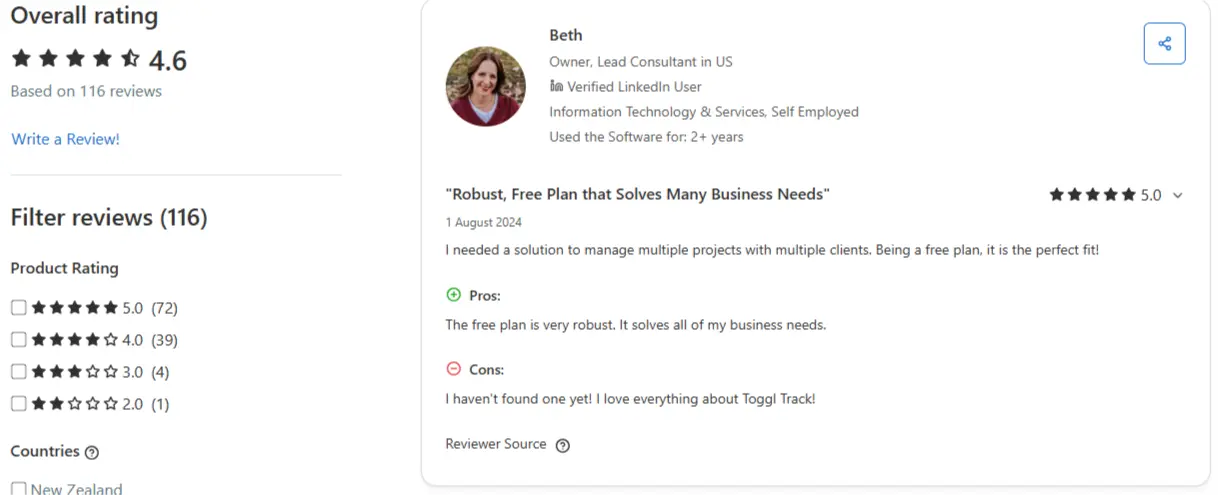
The most frequent feedback is about how simple and easy Toggl Focus is to use. The drag-and-drop feature and visual timelines make scheduling easy. Users appreciate the ability to see both the big picture and details of their projects, helping them avoid overwork and stress. The mobile apps and great customer support also add to the positive experience, making Toggl Focus a reliable choice for project management.
✨ Resource Guru
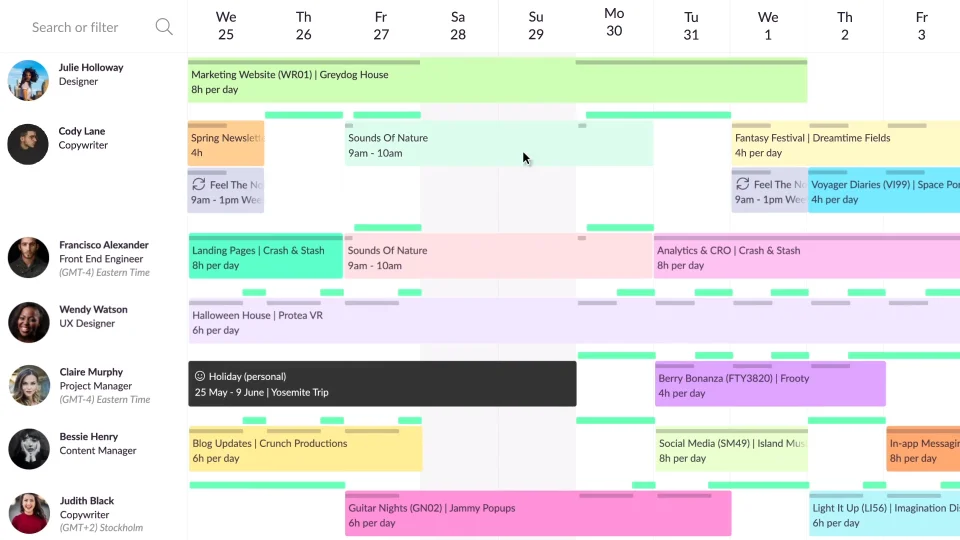
Resource Guru is a resource scheduling and capacity planning tool built to help teams see availability and utilization in real time, balance workloads, and plan upcoming projects with fewer surprises. It supports planning for people and other resources using heatmap views and availability bars, plus placeholders and tentative bookings to map out pipeline demand before work is confirmed. It also includes clash management, a waiting list for bookings that need adjustments, and approval workflows to help protect team capacity for in-demand people and resources.
Features
- Heatmap views and availability bars: Quickly spot over- or under-utilization across people and other resources, plus the split between billable and non-billable work
- Availability planning: Set individual working hours, plan around vacations and sick days, and accommodate time zones
- Placeholders and tentative bookings: Forecast future demand and hold space for unconfirmed work
- Clashes, waiting list, and approvals: Flag conflicts, keep a waiting list for bookings that need changes, and use an approval workflow to control bookings for in-demand people and resources
- Timesheets and reporting: Track utilization rates and compare forecast vs actual hours to improve future plans
Pricing
Resource Guru offers three pricing plans, plus a 30-day free trial with no credit card needed. Some features vary by plan.
- Grasshopper Plan: $4.16 per person, per month; other resources $2.08 each
- Blackbelt Plan: $6.65 per person, per month; other resources $3.33 each
- Master Plan: $10 per person, per month; other resources $5 each
What customers say about Resource Guru
Reviewers consistently point to the clear, visual scheduling experience and the improved visibility into availability and capacity, which helps reduce coordination overhead. The most common requests tend to focus on more flexible visuals and color options, plus deeper reporting, easier exports, and additional integrations.
✨ Kantata
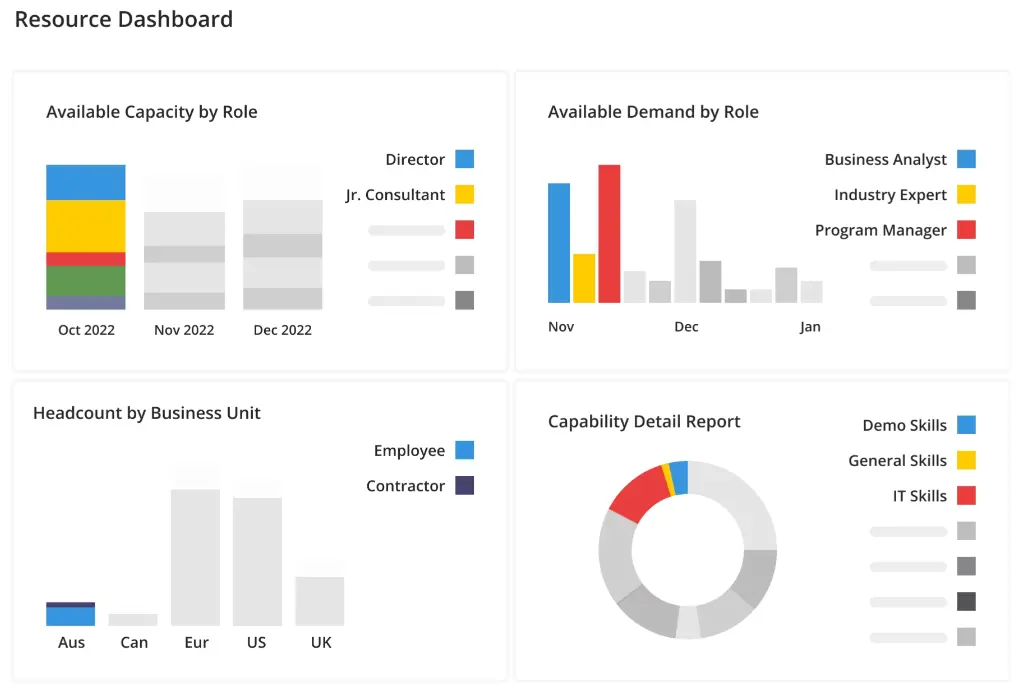
Kantata (formerly Mavenlink + Kimble) is a comprehensive platform for resource and project management. It is designed for professional services organizations looking to optimize their workforce and manage projects efficiently. As a G2 Leader it provides real-time insights into how resources are used, tracks skills, and helps with project forecasts. Its all-in-one approach covers everything from planning and scheduling to financial tracking and team collaboration.
Features
- Resource Capacity Planning and AI Forecasting. Forecast and plan resource needs ahead of time. Manage project timing, demand, and profit while preventing burnout and finding areas for improvement.
- Demand and AI Forecasting. Kantata provides a centralized platform for real-time resource updates and smart staffing decisions. It lets managers evaluate multiple plans at once and see the impact of these decisions. AI-driven insights surface next-best actions proactively, helping you stay ahead of potential roadblocks.
- Skills Inventory. Kantata aligns skills with project needs, identifying gaps and offering development opportunities for employees. This improves project delivery and profitability while supporting workforce development.
- Managing Your Talent Network. Kantata allows the integration of external partners, roles, and skills into resource planning, enhancing staffing flexibility and ensuring the best team is available for every project.
Kantata provides two specialized paths. Kantata OX is an open infrastructure designed for fast-growing teams requiring quick value and easy integrations. Kantata SX is built natively on Salesforce, tailored for global enterprises requiring multi-entity management and complex regulatory compliance.
Kantata scales with businesses, supporting growing teams and complex projects. Its robust integration capabilities allow businesses to connect Kantata with other systems, enhancing workflow efficiency.
Pricing
Kantata offers tailored pricing solutions based on the specific needs of each organization. For detailed pricing information, businesses should contact Kantata directly.
What Customers Say About Kantata
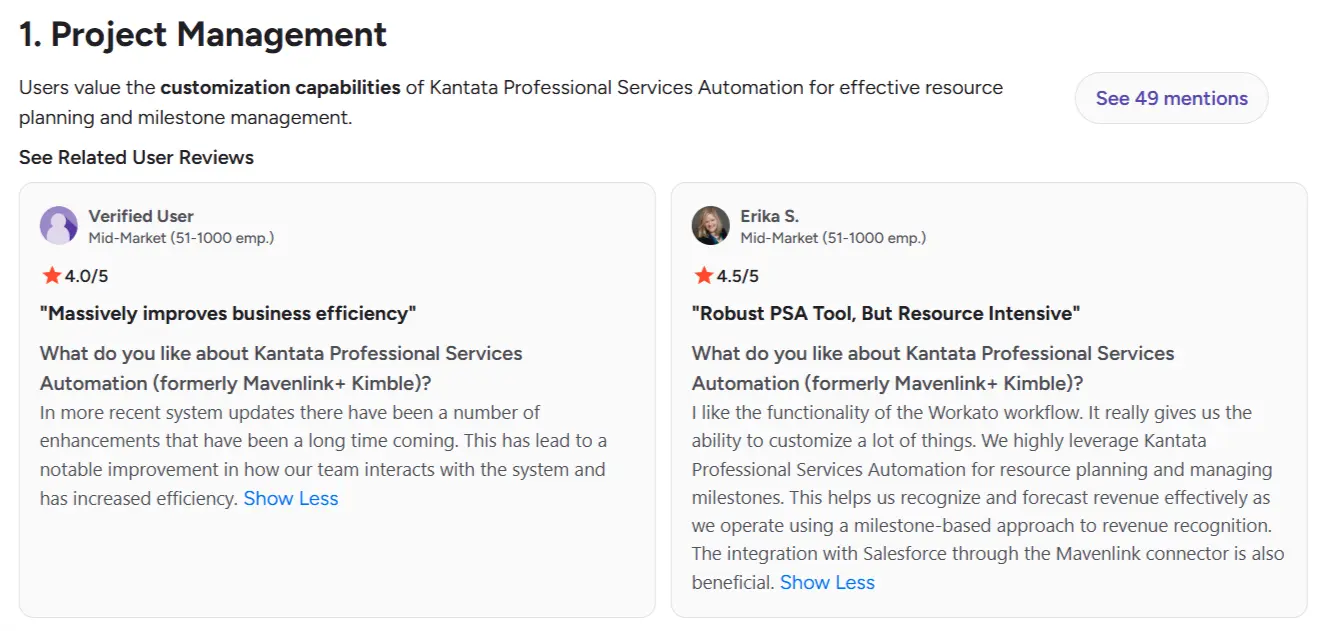
Users report that Kantata helps uncover and solve hidden problems, providing valuable insights into their operations. Testimonials highlight Kantata's ability to enhance project delivery and optimize resource use, making it a highly valued tool in professional services. However, many users find the learning curve challenging; the interface can be complex and sometimes feels unintuitive. Fortunately, strong customer support helps teams navigate these complexities.
✨ Runn
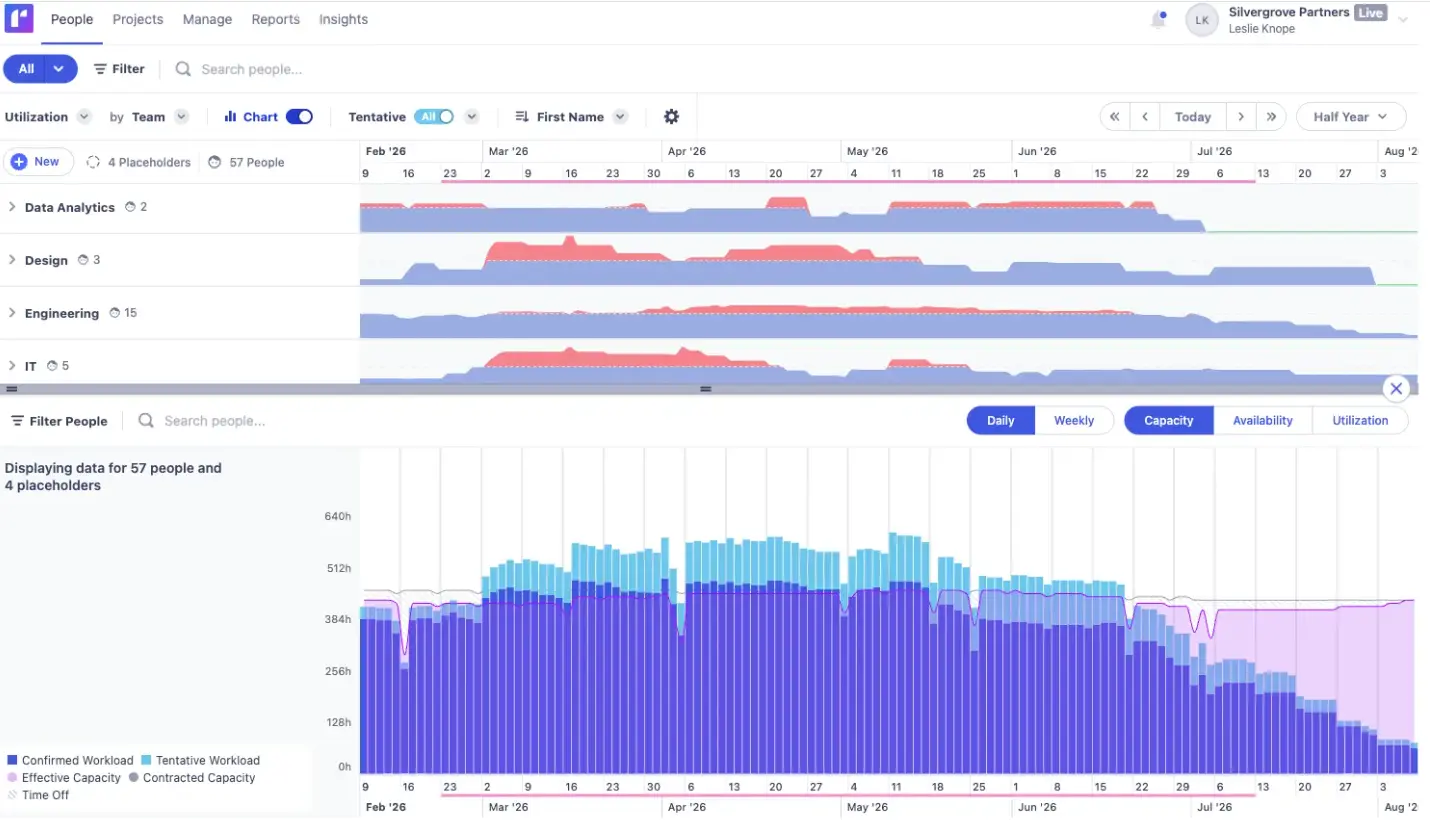
Runn is a modern resource management software designed to help teams efficiently allocate resources, manage capacity, and plan projects. It caters to various industries such as software engineering, architecture, consultancies, and agencies. With its user-friendly interface and robust features, Runn simplifies project management and optimizes team utilization.
Features
- Resource Scheduling: Runn makes it easy for managers to assign team members to projects. It shows schedules clearly to help spot available resources and track specific skills, ensuring the right expertise is allocated to every project to maximize impact.
- Capacity Management: Runn provides a full view of team capacity, helping managers balance workloads and plan effectively. It allows for custom work hours and includes time off and holidays, showing a clear picture of resource availability. This helps prevent burnout by evenly spreading workloads.
- Project Planning and Forecasting: Runn's tools help businesses plan, budget, and track projects with confidence. Its advanced forecasting features eliminate guesswork and allow proactive decision-making on capacity, projects, and finances.
- Real-Time Insights and Reporting: Runn provides deep insights into team workloads and usage. Its reporting features offer a detailed look at project and resource metrics, supporting data-driven decisions to monitor team health and business goals.
Runn is designed to grow with businesses. It supports various industries and offers features like timesheets, reporting, and API integrations, making it suitable for both small teams and large enterprises. Integrations with CRM systems and financial software enhance its capabilities and streamline workflows.
Pricing
Runn offers flexible, resource-based pricing, meaning the total cost scales directly with the number of "resource seats" your team needs. A 30-day free trial is available for both paid tiers to test all features before committing.
- Lite: $9 per resource seat/month. This plan covers basic project and resource management.
- Standard: $13 per resource seat/month. This includes advanced features like financial reporting and timesheets.
- Advanced: Custom pricing for large organizations requiring strategic clarity and dedicated support.
If you require more than 100 resource seats, you can contact their sales team to unlock volume discounts.
What Customers Say About Runn
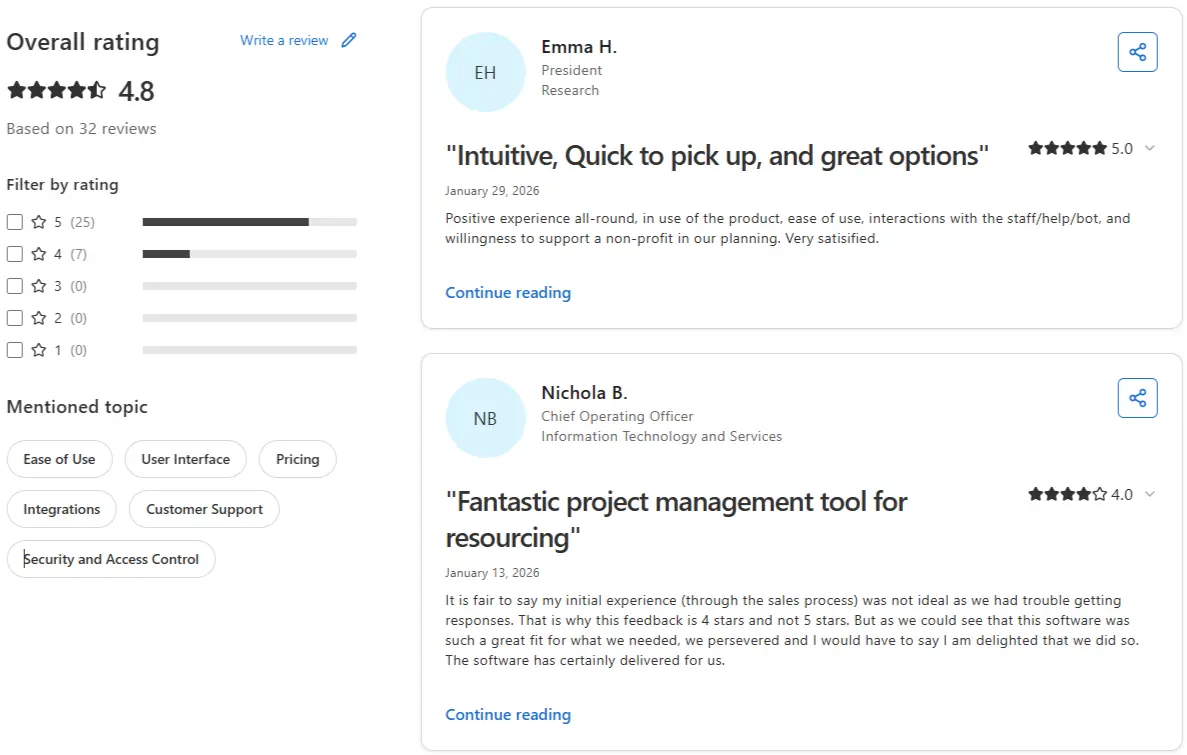
Users report that Runn stands out for its ease of use and intuitive visual interface. Its real-time insights and forecasting features help make informed decisions. Users also appreciate the flexibility in setting custom work hours and managing time off, which helps avoid burnout. While users appreciate the highly responsive customer support and the powerful open API for custom data handling, some find the reporting customization and Excel exports to be limited.
Summary
Advanced capacity planning tools make workflows smoother, reduce costs, and ensure full use of resources.
When picking a tool, consider your business needs, such as software compatibility, scalability, and ease of use. Following best practices in capacity planning and using the right resource capacity planning tools helps avoid problems like bad forecasts and missing data.
By setting clear goals, making a solid planning process, and checking your plans regularly, you can adjust to new demands and support growth.
In the end, the combination of the right resource capacity planning software and careful scheduling will help your team achieve more goals. Investing time and resources in this will boost productivity, efficiency, and satisfaction.




![Jira Teams with ActivityTimeline: Comprehensive Guide [2026]](https://cdn.prod.website-files.com/60c76f07dc83db305171350c/6a15952034cfc5cca020eedd_thumbnail_Jira%20Teams%20with%20ActivityTimeline.png)


.png)